
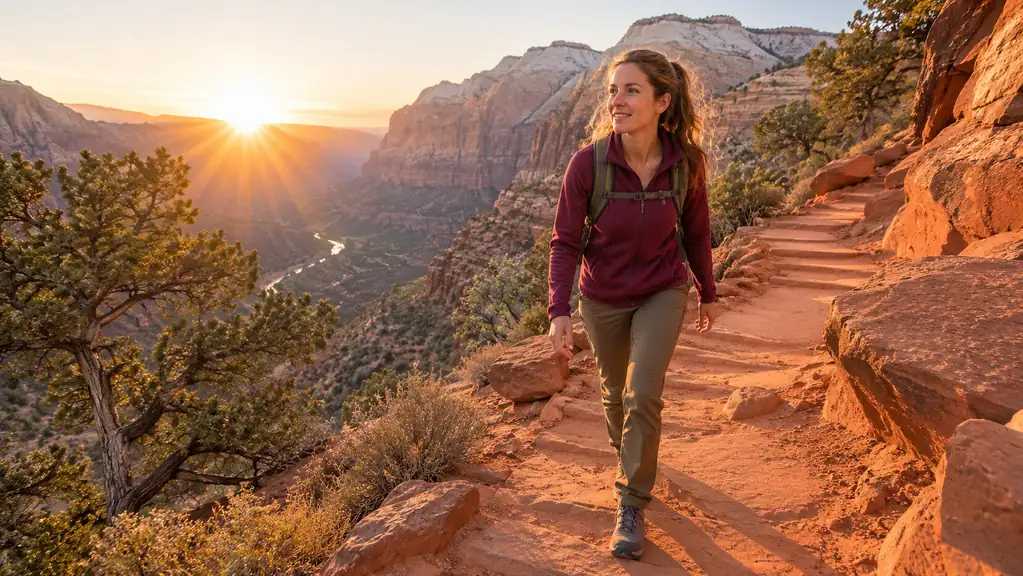
Six miles into a ten mile day at Mount Charleston, I used to start negotiating with myself. Not about the climb. About the pack. My shoulders would ache, my lower back would join in, and I would spend the last hour thinking about getting the thing off me instead of looking at the aspens. The fix was not more training. It was a smaller, better daypack. For the past two seasons I have carried the Osprey Daylite Plus on nearly every hike Ray and I do, from the sandstone loops at Red Rock Canyon to a week of shuttle rides in Zion, and it changed how the miles feel.
A daypack is not a fashion choice. It is the piece of equipment that decides whether your water, lunch, layer and keys travel comfortably or dig into your shoulders for four hours. The Daylite Plus is listed at 1.3 pounds, with five pockets, water repellent fabric and a padded sleeve sized for up to a 14 inch laptop. Here are ten reasons that combination makes a 4 to 10 mile hike easier, in the order I actually notice them on the trail.
The pack weighs 1.3 pounds. What that saves you shows up around mile eight.
Five pockets, water repellent fabric, adjustable backstraps, and a padded sleeve. The Daylite Plus is the pack I keep reaching for on a Saturday.
Amazon Check Today's Price on Amazon →Five pockets end the dig for your keys
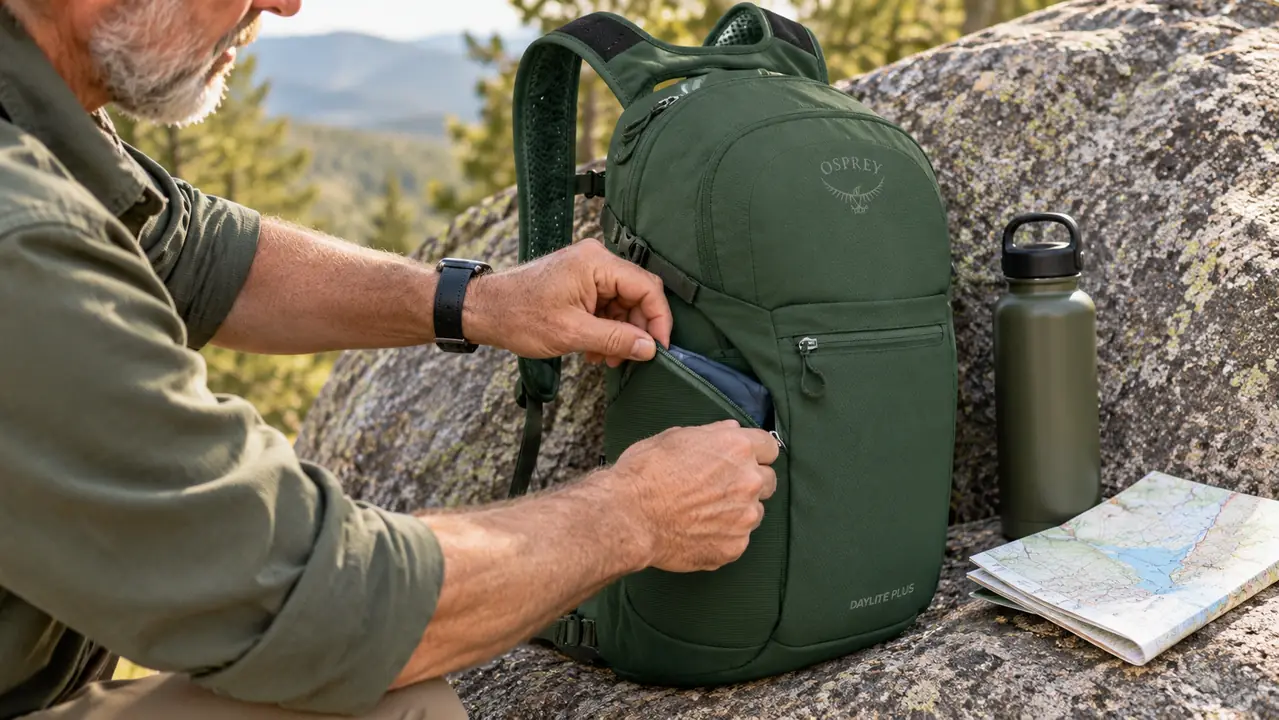
Five pockets sounds like a line on a spec sheet until you are standing at a trail junction in a cold wind with one hand inside a bag. I keep lunch and my extra layer in the main compartment, my phone and car keys in a pocket I can reach without taking the pack off, and the small things, sunscreen, lip balm, a couple of tissues, in a third. Nothing migrates. Nothing ends up at the bottom under a sandwich. On a ten mile day I open the pack maybe four times, and every time I know exactly which zipper to pull.
1.3 pounds never turns into a shoulder ache
The Daylite Plus is listed at 1.3 pounds, and I want to be straight with you about what that means. It is not weightless, and on a hot afternoon with two liters of water inside you will feel it. But the base weight is low enough that the load stays under the threshold where my shoulders start filing complaints. The heaviest thing in my pack is almost always water, which feels correct. A pack should carry your supplies, not add another supply of its own.
A water repellent shell handles the shower you did not plan for
Mountain weather turns. I have left a trailhead in full sun and come back in a drizzle more than once. The Daylite Plus is rated water repellent, which is not the same as waterproof, and I do not treat it as such. What it actually means is that a twenty minute shower does not soak through to my fleece, and my phone stays dry in its pocket. I still wrap anything that truly cannot get wet in a zip bag. Water repellent fabric plus a little common sense covers almost every day hike I take.
A padded sleeve keeps a tablet and map from getting crushed
The padded sleeve on the Osprey is sized for up to a 14 inch laptop, which reads like a commuter feature, and it is one, but I use it on the trail for a tablet with the maps downloaded and a folded paper map of the Zion trails. The padding means neither gets bent when I set the pack down on a rock at lunch. Interior organization keeps cords and a battery brick from tangling into a knot. If you hike with a camera or a tablet, this is a small thing that saves a bad afternoon.
Adjustable backstraps fit over a jacket at 7 a.m. and a t shirt at noon
Desert mornings at Red Rock are cold. By eleven I have stripped down and tied the fleece around my waist. The backstraps are adjustable, so I loosen them at the trailhead when I am layered and tighten them two hours later without taking the pack off. Ray does the same with his. It sounds minor. It is the difference between a pack that rides against your back and one that swings loose and rubs. Fit is most of comfort, and adjustable straps are how you get fit on a body that changes through the day.
The Daylite Plus weighs 1.3 pounds. By mile three I had stopped noticing it, and that is the entire job.
Both hands stay free on the rocky bits
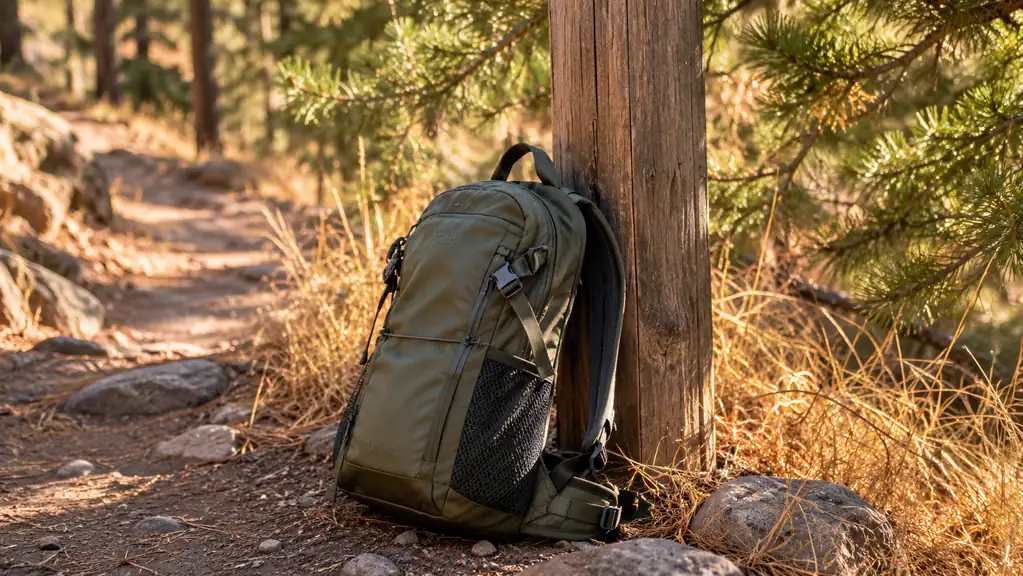
Some of the routes I do, including the Calico Hills trails at Red Rock, have sections where you are using your hands as much as your feet. A shoulder bag is a bad idea there. It swings, it shifts your balance, it gets in the way of the next step. A pack with backstraps sits against your spine and stays put. I have climbed over more than a few rock steps with the Daylite Plus on and I never once thought about it, which is exactly what I want from gear on a stretch that needs my attention.
One zipper closure you can work with cold fingers
Everything on this pack closes with a zipper, which matters more than you would guess in November. I have fumbled with drawstrings and small buckles on other packs while wearing gloves. A zipper pull is easy to find by feel and easy to yank with two fingers. It also means the main compartment actually closes all the way instead of gaping open in a gust. Small thing. Noticed on every single hike.
The 18.9 by 11 by 9.4 inch footprint fits behind the seat
The pack measures 18.9 inches tall, 11 inches wide and 9.4 inches deep. That is small enough to sit on the floor behind the passenger seat of our Outback without being in anyone's way, and small enough that I can carry it into a visitor center without feeling like I am wearing a suitcase. On the Zion shuttle, where you cannot drive yourself, it stayed on my lap without blocking the aisle. A daypack should not create a second logistics problem on the way to the trailhead.
Spot clean only means trail dust comes off with a damp cloth
The care instructions on this Osprey say spot clean only. After a season of canyon dust and one unfortunate encounter with a peanut butter sandwich, a damp cloth and five minutes took care of everything. I have not put it in a machine and I do not plan to. There is something to be said for gear you can clean up on the tailgate of a car with a rag and a bottle of water, then hang to dry on the porch before the next Saturday.
Recycled polyester that holds up to sandstone and car trunks
The listing notes 100 percent recycled polyester and bluesign APPROVED materials. I care about that, but I care more about whether the fabric lasts. Two seasons of sandstone, granite, being dropped on the ground and shoved under a seat, and the shell is intact, the zippers still run clean, and the seams have not started to fray. The places the backstraps attach are still solid. Gear that lasts is the only kind worth buying twice, and this one is not asking to be replaced.
What I'd Skip
Two things I would skip. First, do not buy the Daylite Plus as an overnight pack. It is a daypack, and stretching it past a long day hike will make you unhappy before the first night is over. Second, if you hike in sustained rain, add a dry bag or a pack cover to your kit, because water repellent is not waterproof and I would rather you hear that from me than find out on a ridge. And if your days regularly run past ten miles with a heavy load, look at something built for that job. What I would not skip is the pack itself. On the hikes I actually take, four to ten miles with Ray on a Saturday, the Osprey carries five pockets, adjustable backstraps and 1.3 pounds of base weight, and that covers nearly everything I need it to.
Two seasons, two parks, one pack I keep picking up off the closet floor
1.3 pounds. Five pockets. Water repellent fabric. A padded sleeve for up to a 14 inch laptop. Built for day hikes, shuttle rides and the drive home.
Amazon Check Today's Price on Amazon →