
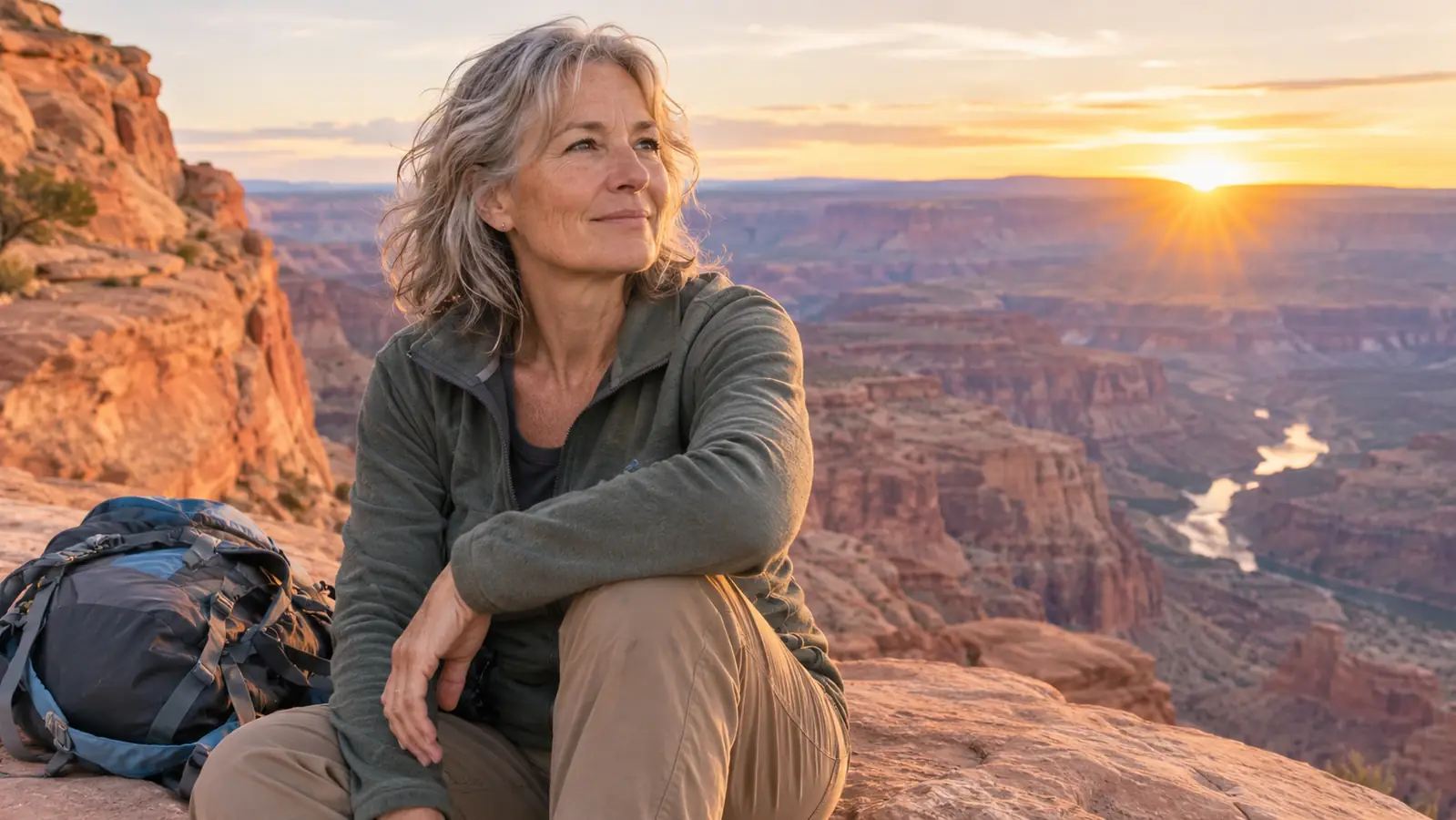
I bought my first daypack the way most people do. I grabbed whatever was on the shelf the week before a trip and hoped. That one lasted two seasons. The next one lasted longer, but it sat wrong on my shoulders after mile five, and by the time Ray and I came down from Scout Lookout at Zion I was hunched forward like I was carrying groceries. So when I went looking again, I had a short list. Light. Simple. Enough room for a rain shell, water, lunch and my knee brace, without turning every stop into a packing puzzle.
The Osprey Daylite Plus is what I ended up with. I have now carried it through a full spring and summer of day hikes at Red Rock Canyon and Mount Charleston, plus one long road trip through Utah in the silver Outback, and it is the first daypack I have owned that I stopped thinking about halfway up a climb. Not because it is fancy. Because nothing on it fights me.
The Quick Verdict
A 1.3 pound pack that carries a full day of gear and then gets out of the way. Buy it if you hike four to ten miles and want one bag for the trail and the drive.
Amazon Check Today's Price →The 1.3 Pound Pack I Stopped Noticing by Mile Three
Light enough for a fast four mile loop at Red Rock, roomy enough for a full day at Bryce. This is the daypack I reach for without deciding anything.
Amazon Check Today's Price on Amazon →How I've Used It
Most of my hiking happens close to home. Red Rock Canyon is twenty five minutes from the house and I am usually on a trail there twice a week, four to six miles, early enough that the sandstone is still cool. Mount Charleston is the weekend trip, longer and higher and cold enough in the morning that I start with a fleece on and peel it off by the second mile. Ray comes on those. He is sixty one and walks faster than I do, which means I am always the one asking to stop, and the pack is usually what I am stopping for.
The Utah trip was the real test. Seven days, four parks, one silver Outback with a trunk full of camp chairs and a cooler. The Daylite Plus did double duty. It rode on my back at Bryce and the Grand Canyon, and between hikes it sat on the floor of the passenger seat holding the things I did not want to dig for: a paperback, my reading glasses, the folder of park maps, a spare pair of socks. That is the part I did not expect. A trail pack that also works as the bag you carry into a visitor center is worth more than the sum of its parts.
In all of that, I have loaded it the same way every time. Water in the main compartment, sitting against my back. Rain shell on top of that. Lunch in the front pocket where I can reach it without taking the pack off. Knee brace in a smaller pocket where it stays out of the sand. Keys, phone and lip balm in the one pocket I can open with a single hand. Once I settled on that arrangement in April, I never rearranged it again, and that is the quiet kind of usefulness I care about most now.
One Tuesday in late May sticks with me. I left the house at six with the pack already loaded from the night before, walked the four mile loop at Red Rock, and was back in my kitchen by nine with coffee still warm in the pot. The reason I mention it is that I did nothing to the pack. I did not repack it, I did not hunt for anything, I did not touch a strap, I did not set it down to rearrange the load. I have owned bags where a short hike still cost me ten minutes of fiddling on both ends, and the difference between that and this is the difference between a habit and a chore.
What 1.3 Pounds Feels Like by Mile Eight
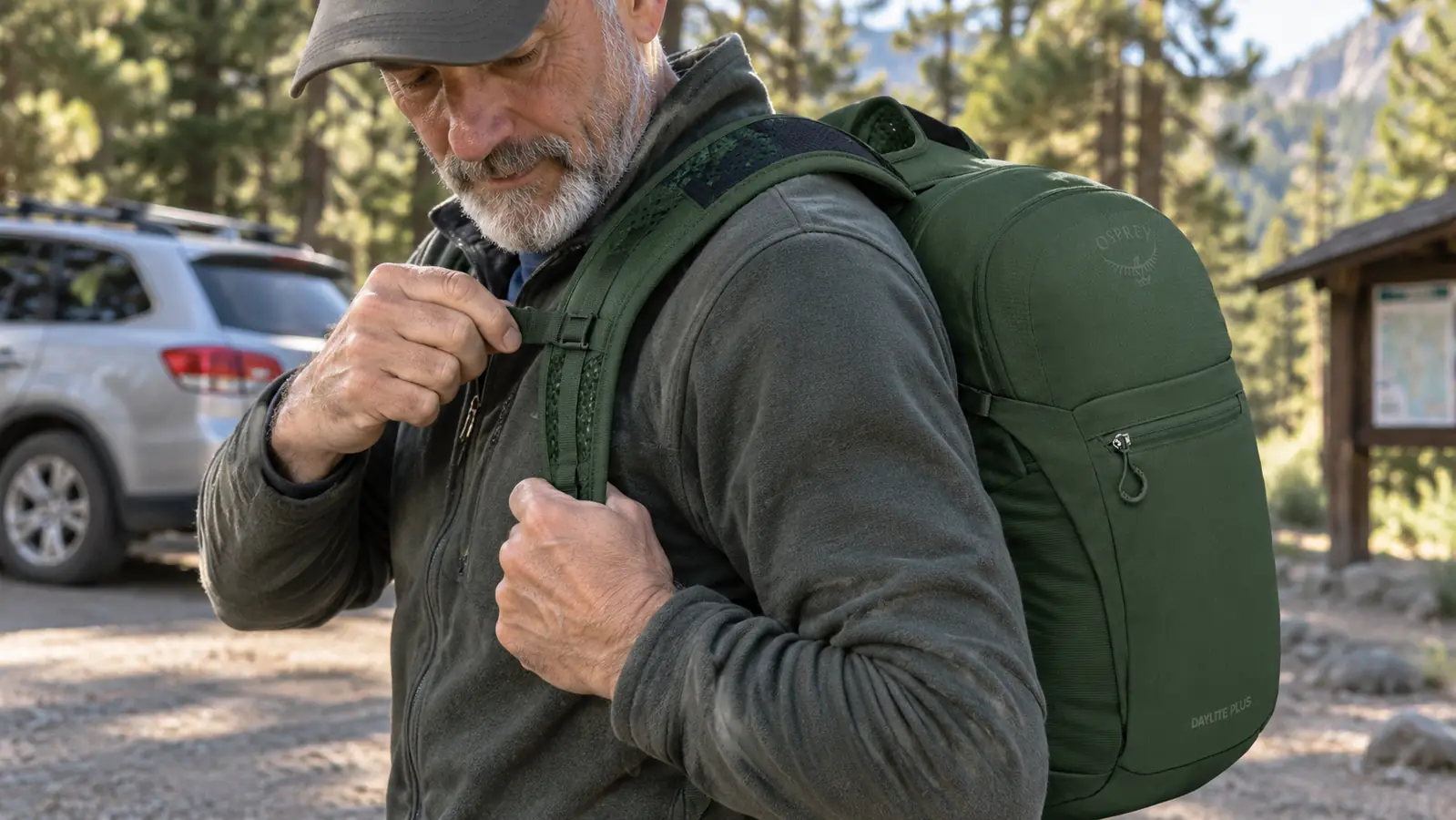
The listed weight is 1.3 pounds and the listed dimensions are 18.9 inches tall, 11 inches wide and 9.4 inches deep. Numbers like that do not mean much until you have worn the pack for a while. What I can tell you is that the weight is not really the point. Empty, the Daylite Plus is barely there. Loaded with two liters of water, a shell, lunch and a small first aid kit, it is somewhere around nine or ten pounds, and it is still barely there, because the load sits close and high instead of sagging down and pulling me backward.
That matters to me more than it used to. My left knee has been complaining on long downhills since a bad step at Calico Basin two years ago, and a pack that swings or drags makes me compensate with my lower back. On the four mile descent from the Charleston overlook, the Daylite Plus stayed put. I tightened the adjustable straps once at the top and did not touch them again until the parking lot. Ray wore it for one stretch when I wanted my hands free for the camera, and it fit him with two pulls on the same straps.
For comparison, the pack I used before this one weighed closer to two and a half pounds empty and carried all of that weight in the wrong place, low and away from my back. I did not understand the difference until I walked the same three miles up Pine Creek with each of them on back to back weekends. The old one had my shoulders aching at the halfway point and I stopped twice on the way up. The Daylite Plus let me notice the heat and the grade and nothing else. Same trail, same water, same pace, and one of those mornings felt like work.
I want to be careful about what this pack is, because I have read reviews that oversold it. It is not a backpacking pack. I do not sleep on the trail and I have never carried more than about fifteen pounds in it. Past that weight, the whole thing starts to feel like a sack with straps, and you will feel every step in your neck by the end of the day. But for a day, for the four to ten mile range I actually hike, the carry is steady and unremarkable in the way I want my gear to be unremarkable. I have finished eight mile days with it and forgotten I was wearing anything at all.
Five Pockets, Five Jobs
Osprey lists five pockets on this pack, and within a month I had assigned every one of them a job. The main compartment takes the water, the shell, lunch on a big day, and the knee brace when I am not wearing it. The padded sleeve against the back holds a tablet on road trips and stays empty on the trail, where it acts as a flat panel between my gear and my spine. What I like is that the count is right. There are enough pockets to separate wet from dry and clean from dusty, and not so many that I spend the morning patting myself down trying to remember which one holds the sunscreen.
The front pocket is where the day actually happens. Sunscreen, a granola bar, my phone, the paper map I print because I do not trust myself with a screen in bright sun. It opens wide enough to reach into with the pack still on one shoulder, which sounds like a small thing until you have spent a season fully unloading a bag at every single stop. On the North Rim road, with the wind coming across and my hands cold, being able to get at a snack without setting anything down made the difference between a good hour and a bad one.
I also learned which pocket not to use. The front pocket is the tempting place for a water bottle, and I tried it for two weeks in April. A full bottle in there pulls the whole bag forward and turns a light pack into something that swings at your hip on every step. Once I moved the water into the main compartment against my back, the carry settled down and stayed settled for the rest of the season. Small lesson, and one I would not have learned from the product page, but it changed how the pack felt on every hike after that.
The remaining pockets take the small things. Keys. Glasses. A folded bandana. The little bag of ibuprofen I have carried since I turned fifty. Nothing migrates. Nothing ends up buried at the bottom of the main compartment under a water bottle. That is the whole test for me, and after four months of steady use the Daylite Plus still passes it, which is more than I could say for the two packs that came before it.
The 14 Inch Sleeve on a Trail Pack
The padded sleeve is rated for devices up to 14 inches, which tells you what Osprey thinks this pack is for. The title calls it a commuter backpack, and it is one. That is not a criticism. It means the pack has a second life. On the drive to Zion, mine held a tablet and the folder of reservations. On the way home it held receipts and a bag of jerky. At the motel it was the bag I carried inside instead of dragging the whole trunk through the lobby, and at the trailhead it was already packed and waiting.
If you never carry a device, that sleeve is just a stiff panel against your back, and I happen to like what it does to the shape of the load. If you are the kind of person who hikes in the morning and answers email from a coffee shop in the afternoon, this is the reason to pick this pack over a stripped down trail bag. It is a small design decision that makes one bag do two jobs on a road trip, and road trips are most of my hiking year.
Rain, Dust and the Red Rock Test
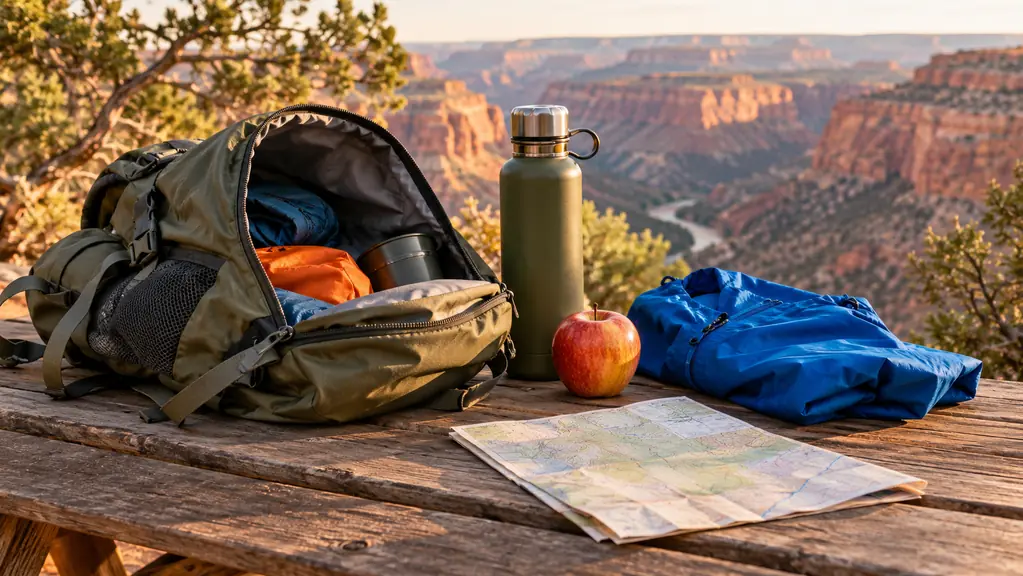
The fabric is water repellent, which is not the same as waterproof, and Osprey does not pretend otherwise. I have been caught in two real rain events with it. The first was a fast afternoon storm at Red Rock that lasted ten minutes and left the outside of the pack beaded while my lunch stayed dry. The second was a longer, colder drizzle on the North Rim road, and after about forty minutes of steady rain I could feel dampness working in at the seams. Nothing inside was ruined and my jacket was fine. But if you hike in wet country, put your layers in a dry bag and treat the pack as a shield, not a guarantee.
I will also say this about how it wears. Mine has been dragged across sandstone, set down on gravel, wedged against the wheel well in the Outback for a week straight, and sat on more picnic tables than I can count. There are no pulled threads and no worn corners, and the zippers still run clean, which surprises me given how much red dust they have eaten since March. I am not gentle with gear. I expect to get several more seasons out of this one.
Dust is the other half of the story, and here is where I have to be honest about care. The instructions say spot clean only, which means the fine red sand that gets into every seam on this property is staying there. Mine looks like it has been hiking, because it has. I rinse it with a hose, wipe the straps with a damp cloth, let it dry in the shade and call it done. I would rather have that than a pack that needs a washing machine cycle and comes out with the finish stripped off it.
What I Liked
- 1.3 pounds, and it carries like less when the load sits close
- Stays put on long downhills, which my left knee notices
- Five pockets that keep a day organized without extra pouches
- Water repellent enough for desert storms and short drizzle
- Works as a travel bag and a trail bag on the same trip
- Adjustable backstraps fit both me and Ray without a negotiation
Where It Falls Short
- Water repellent, not waterproof. Forty minutes of steady rain and the seams start to feel damp.
- Spot clean only, so the red sand in mine is permanent
- No real structure, so it carries best under about fifteen pounds
- The padded device sleeve is wasted volume if you never carry a tablet or laptop
- On a hot afternoon it rides warm against your back
Eight miles at Mount Charleston with two liters of water, a shell, lunch and a knee brace, and the strap marks were gone before I finished my coffee in the parking lot.
Who This Is For
If you hike four to ten miles and come home the same day, this is the pack I would hand you. It suits a hiker who wants one bag for the trail, the drive and the visitor center, and who would rather have five useful pockets than a frame and a set of straps you never adjust. It suits someone like me, with a knee that makes a stable load worth more than an extra liter of capacity, and someone like Ray, who wants to borrow it and not fuss with the fit.
Who Should Skip It
Skip it if you carry more than about fifteen pounds, if you backpack overnight, or if you hike in country where it rains for hours at a time. Skip it if you want a bag that stands up on its own when you set it down, or if you need a pack that carries weight on your hips instead of your shoulders, because this one does not. And skip it if you already own a packable daypack that stuffs into its own pocket and does the job, since the two overlap more than the catalogs admit. I set this pack next to a packable bag side by side and the honest summary is this: the heavier pack carries better, the lighter one disappears into a suitcase. Which sentence you nodded at tells you what to buy.
The Pack That Ended My Morning Gear Shuffle
1.3 pounds, five pockets, water repellent recycled fabric, and a carry that holds steady on long downhills. Four months in, it is the daypack I pick up without thinking about it, which is the best thing I can say about any piece of gear.
Amazon Check Today's Price on Amazon →