
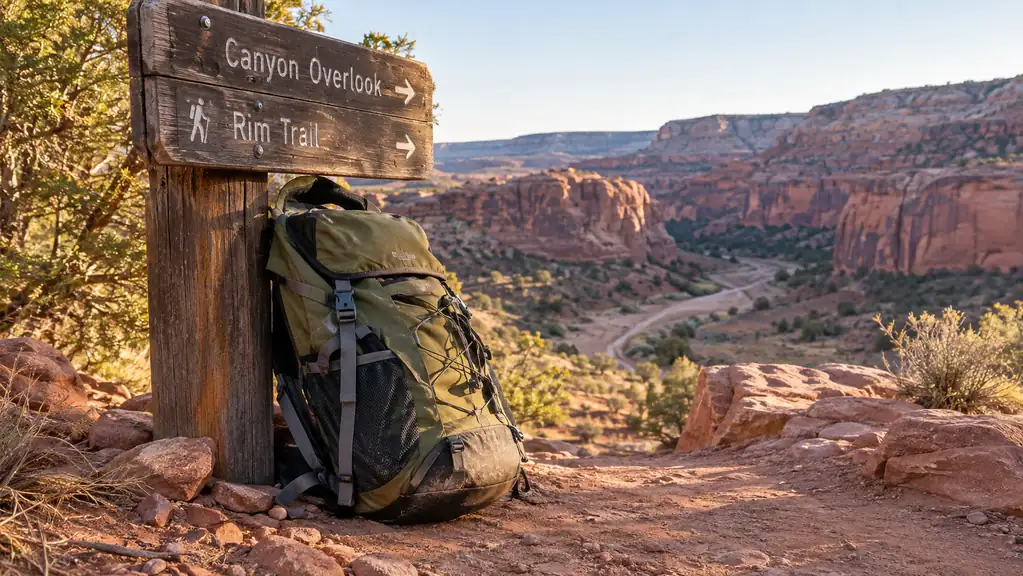
Six miles into a rim trail outside Zion last spring, my left knee started its usual complaining on the downhill, and the pack question answered itself. I had the Osprey Daylite Plus on my back and a packable daypack folded into the car console, and by the time Ray and I reached the trailhead I knew which one was coming on the next trip. The short answer: the Osprey is the pack I carry when the hike is the whole point of the day. A packable daypack is the one I carry when the hike is a side trip between two nights in a motel. Same six miles. Two very different packs.
Here is the practical version for anyone doing 4 to 10 miles at a time. The Osprey Daylite Plus weighs 1.3 pounds, has five pockets and a padded sleeve that fits a laptop up to 14 inches, and it carries a rain shell, two liters of water, lunch and a first aid kit without the straps digging into my shoulders. A packable daypack weighs a couple of ounces, folds into its own pocket, and disappears into a duffel until the day you need it. One is built for the trail. The other is built for the trip. Deciding between them takes about thirty seconds once you are honest about which trip you are actually taking.
| Osprey Daylite Plus | Packable Daypack (Sea to Summit Ultra-Sil) | |
|---|---|---|
| Weight | 1.3 pounds, noticeable in the hand but not on the back | A couple of ounces, you forget it is in the bag |
| Packed size | Does not fold into itself, it takes a shelf in the closet | Folds into its own pocket, about the size of a clenched fist |
| Loaded comfort on a long day | Adjustable backstraps, the load stays settled through mile six | Thin unpadded straps, everything hangs off your shoulders by mile four |
| Tech protection | Padded sleeve fits a laptop up to 14 inches | No sleeve and no padding, a tablet rides flat against your back |
| Organization | Five pockets plus interior spots for cords and small items | One main compartment and a small zip pocket |
| Weather | Water repellent finish, a passing shower beads up and rolls off | Light fabric shrugs off a drizzle, then soaks through in steady rain |
| Abrasion | 100 percent recycled polyester that tolerates being set down on granite | Ultra light fabric snags on brush, juniper and rough rock |
| Best for | Days where the trail is the whole point | Trips where the bag has to disappear into a suitcase |
Where the Osprey Daylite Plus Wins
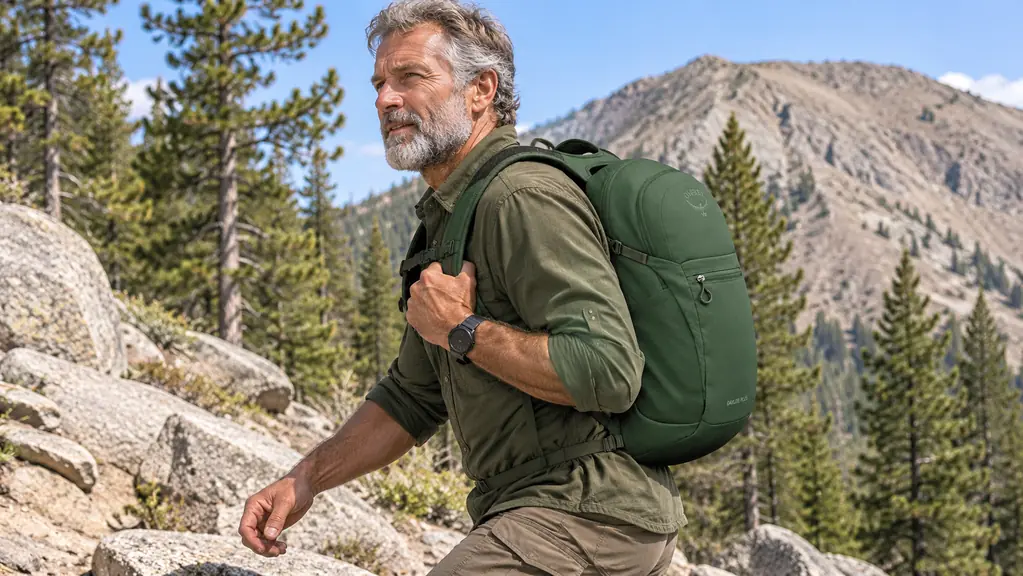
Loaded comfort is where the Osprey pulls away, and it is the reason I stopped second guessing. On an eight mile out and back up Mount Charleston in June, I carried two liters of water, a rain shell, lunch for two, a first aid kit and the small camera Ray insists on bringing. That is close to nine pounds. The adjustable backstraps let me set the pack where I wanted it, high and close, so it moved with me instead of bouncing against me on the rocky sections. The pack measures 18.9 inches tall, 11 inches wide and 9.4 inches deep, which turns out to be a shape that sits against your back rather than hanging off it, and that is half of why the load stays put. My knee still complained on the last mile of downhill, because knees do that, but my shoulders and lower back finished the day fine. The stuffable pack with the same load had me tugging at the straps every twenty minutes. I tried to fix that first by rolling a fleece into the bottom of the packable for structure, which is the trick everyone suggests and which I believed for exactly one trip. It helped for about a mile. By mile three the fabric had folded in on itself again, the weight had slid to the low corner, and the edge of the strap had found the same spot on my collarbone it always finds. I finished that loop with my thumb hooked under the strap to take the pressure off.
Organization is the second thing, and it matters more than it sounds on paper. The Daylite Plus has five pockets, and the inside has places for cords and small items so the whole bag does not turn into loose trail mix by noon. I know where my keys are. I know where the permit is. On a windy overlook at Red Rock in April, with my shell half off and the wind trying to take it, I had the map out and back in the bag inside a minute. The packable version of that same moment means sitting down on the rock and unpacking the whole bag to find the car key. The padded sleeve fits a laptop up to 14 inches, which reads like a commuter feature until you are on a road trip and want the tablet out of the duffel for the drive home.
The materials held up better than I expected for something this light. The body fabric is 100 percent recycled polyester with a water repellent finish, and a passing shower on a Bryce rim trail beaded up and rolled off while Ray was still digging for his pack cover. Care is spot clean only, which suits me fine, because I am not putting a pack in a washing machine. After two seasons of being set down on granite and dragged in and out of the Outback, the seams and the zipper are still doing their jobs.
Mile four is where packs get honest. The Osprey still felt like a pack. The stuffable one felt like a grocery bag with straps.
Where a Packable Daypack Wins
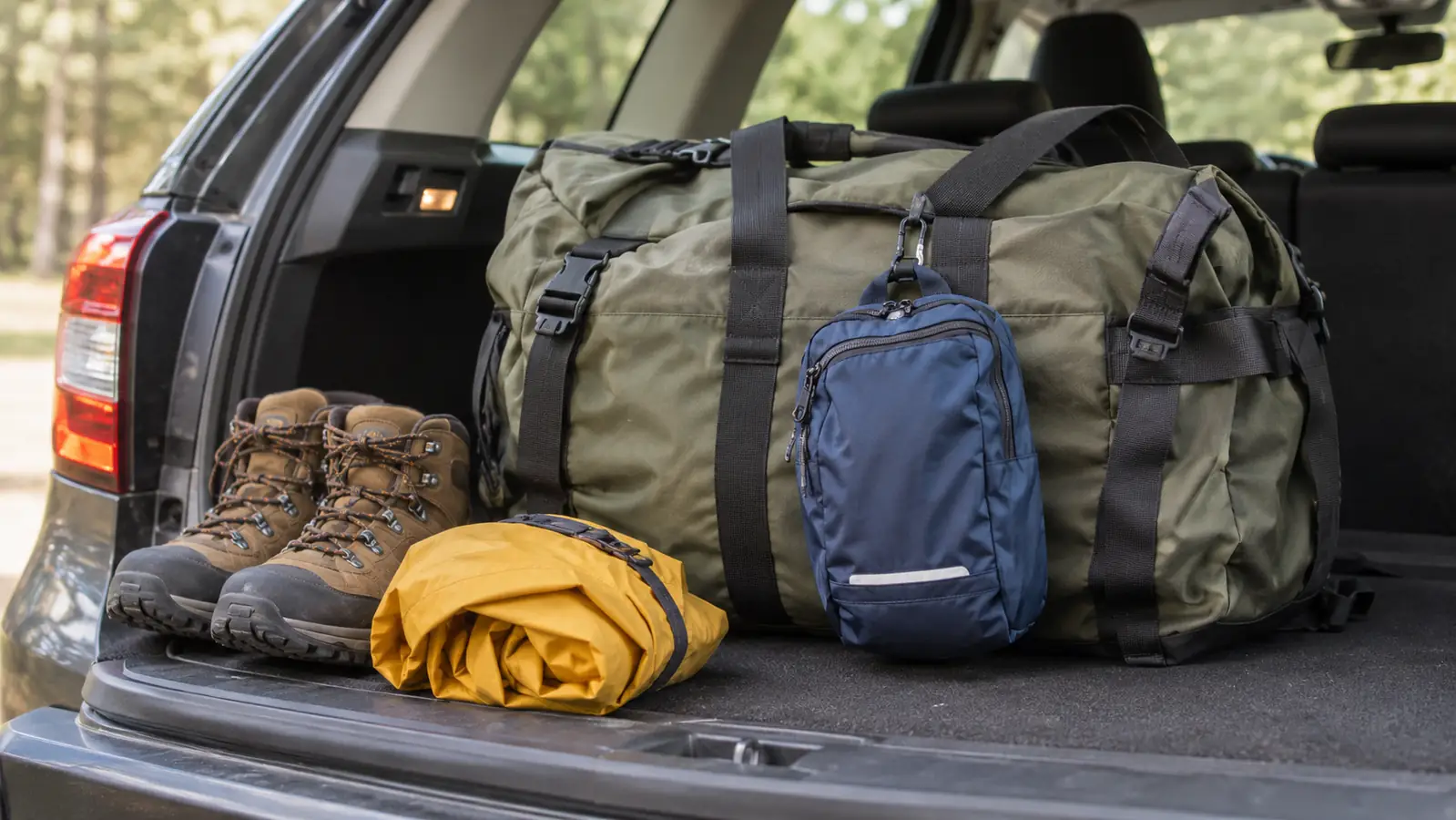
Weight and packability, and it is not close. A packable daypack like the Sea to Summit Ultra-Sil weighs a couple of ounces and folds into its own pocket until it is about the size of a clenched fist. Mine lives in the lid of the duffel I take on road trips, and I have stopped counting it as luggage. On the Grand Canyon trip last September it rode in the back of the Outback for four days and came out exactly twice: once for a flat mile along the rim at sunset, and once for the walk from the motel to dinner. It carried water, a jacket and my wallet both times, and I did not notice it was in the car the rest of the trip. If you fly with one carry on and want a day bag waiting at the other end, nothing I have found replaces that trick. I have also used it as the overflow bag when the duffel came home heavier than it left, which happens on any trip involving a visitor center gift shop. The Osprey cannot do any of that. It does not fold into itself and it never will.
It is also the better call when the day is not really a hike. On the Zion trip we spent one afternoon walking the town and the visitor center, three flat miles at most, and the packable one carried water, a jacket and my wallet without complaint. Thin straps are fine for that. I have used it on the shuttle bus too, where a real pack is just something else to swing into somebody's knees. Where it falls apart is mile four of an actual trail with nine pounds in it. The fabric is ultra light and it snags. Brush, a rough granite slab, the corner of a picnic table. I have a small pull in mine from a juniper branch on a Bryce rim path that I have decided to live with, and that pull is honest testimony about what the fabric is for. It is not a defect. It is a material doing exactly what it was chosen to do, which is weigh nothing.
If the trail is the point of the day, this is the pack that goes with you
The Daylite Plus carries a loaded six to ten mile day without your shoulders paying for it. Five pockets, a padded sleeve for a laptop up to 14 inches, water repellent fabric, and 1.3 pounds before you load a thing.
Amazon Check Today's Price on Amazon →What a Six Mile Day Actually Asks of a Pack
Most day hikers on a 4 to 10 mile trail are carrying more than they think. I weighed mine on the kitchen scale before a February hike at Red Rock, out of curiosity more than anything, and the number was 8.6 pounds. Two liters of water is about four and a half pounds of that before you drink any of it. Add lunch, a rain shell, a light layer, a first aid kit, sunscreen, phone, keys and a map, and you are at eight or nine pounds with a pack that started out weighing almost nothing. That load is the entire argument. Eight pounds on thin straps is a different experience from eight pounds on a pack whose backstraps you can actually adjust to fit your own back. The water is the part people underestimate. Two liters is not a lot of hiking. It is a lot of weight.
The second thing a real day asks for is somewhere to put the small stuff. On a windy overlook, with your jacket half off and the car key somewhere in the bottom of the bag, five pockets stop being a feature list and start being the difference between a calm ten minutes and an emptying out of everything onto a rock. That is the part I did not value until I had carried both packs on the same trail in the same month. Ray is the one who finally said it out loud. He watched me dump the stuffable pack onto a boulder for the second time in one afternoon and asked why I did not just bring the other one. He was right, and I did not have an answer.
What Neither Pack Does Well
Neither one is waterproof. The Daylite Plus is water repellent, which handles a shower and not a downpour, and the packable fabric wets out in steady rain. If you hike in weather, a pack cover or a dry bag for the important items is not optional with either one. I also would not machine wash either of them. Spot clean is the instruction on the Osprey and good sense on the stuffable one.
And neither pack fixes a heavy load. If you are regularly carrying more than ten pounds, a bulky layer, or a full camera kit, the honest answer is that both of these are the wrong shape for the job. A bigger daypack with a real hipbelt is the correct tool there, and pretending otherwise is how people end up sore and annoyed at the trailhead. These two are for the light, fast, one day out and back kind of hiking that most of us actually do.
How I Tested Both
I hike four to ten miles at a time, mostly at Red Rock Canyon and up Mount Charleston, with one or two road trips a year to Utah and Arizona. Ray comes along on the weekend hikes. I am 58 and my left knee has opinions on long downhills, so load carriage is not an abstract question for me. I started carrying the Daylite Plus in March of the first season, on a five mile loop at Red Rock that I use as a baseline because I know every rock on it and can tell when a pack is making a difference. The packable joined in September, on a three mile town walk in Springdale, which is a soft way to start. By the following spring I had both of them on the same trails in the same weather, and that is when the comparison stopped being theoretical and became a decision I make in the driveway.
The Daylite Plus went on every hike where I expected to be out more than three hours. The packable one rode in the duffel on every road trip and came out for town days, visitor center walks, and one short flat rim path where I knew the load would stay under five pounds. I did not baby either of them. Both got set down in dust, both got rained on, both got shoved into the back of the silver Outback next to Ray's boots. The only thing I actively avoided was rock scrambling with the stuffable one, after the juniper snag taught me what that fabric does when it meets something with an edge. The Osprey got no such protection and needed none.
Who Should Buy Which
Buy the Osprey Daylite Plus if your normal day is a real trail, four to ten miles, with water, lunch and a layer in the bag. Buy it if you want one pack that goes from the trailhead to a motel lobby without looking out of place, or if you carry a laptop up to 14 inches on shorter trips. Buy it if your knees or shoulders have started to make load carriage a consideration, because 1.3 pounds of well organized pack beats a couple of ounces of nothing on a loaded day. That last one is the whole reason I kept reaching for it, and I say that as somebody who wanted the featherweight option to win.
Buy a packable daypack if you travel and want a spare bag that disappears, if your days out are short and flat, or if you already own a real daypack and want a second bag for the suitcase. It is a supplement, not a replacement. Most people I know who hike regularly end up owning both, and the packable one lives permanently in the luggage while the real pack hangs by the door.
One pack for the trail, one for the suitcase. Start with the trail.
The Daylite Plus is the one I reach for when the day is the hike. Five pockets, a padded sleeve that fits a laptop up to 14 inches, water repellent fabric, and spot clean care that takes five minutes.
Amazon Check Today's Price on Amazon →