
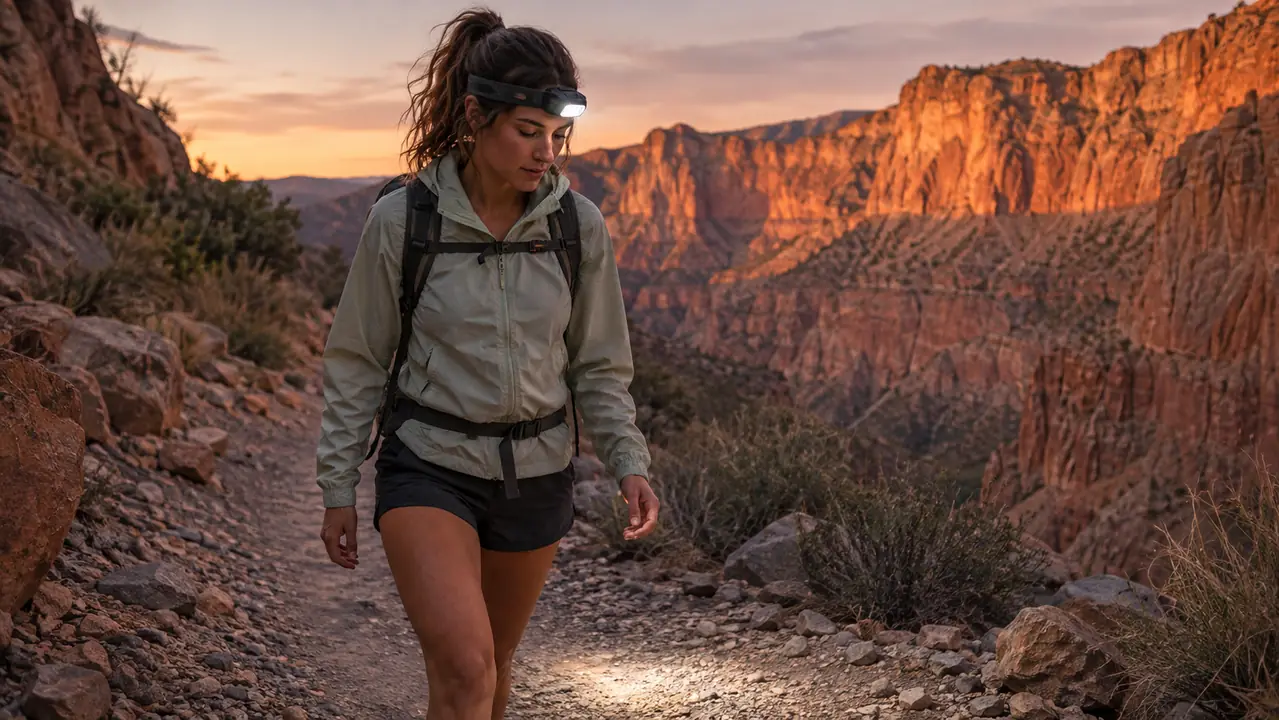
Ray and I came down from Calico Tanks later than we meant to. The sun dropped behind the Calico Hills and the trail went from gold to gray in about twenty minutes. I had my phone in one hand and a trekking pole in the other, picking my way through loose gravel with a sore left knee and a light that kept sliding off the rock every time I moved my thumb. That last mile took us forty minutes. It should have taken fifteen.
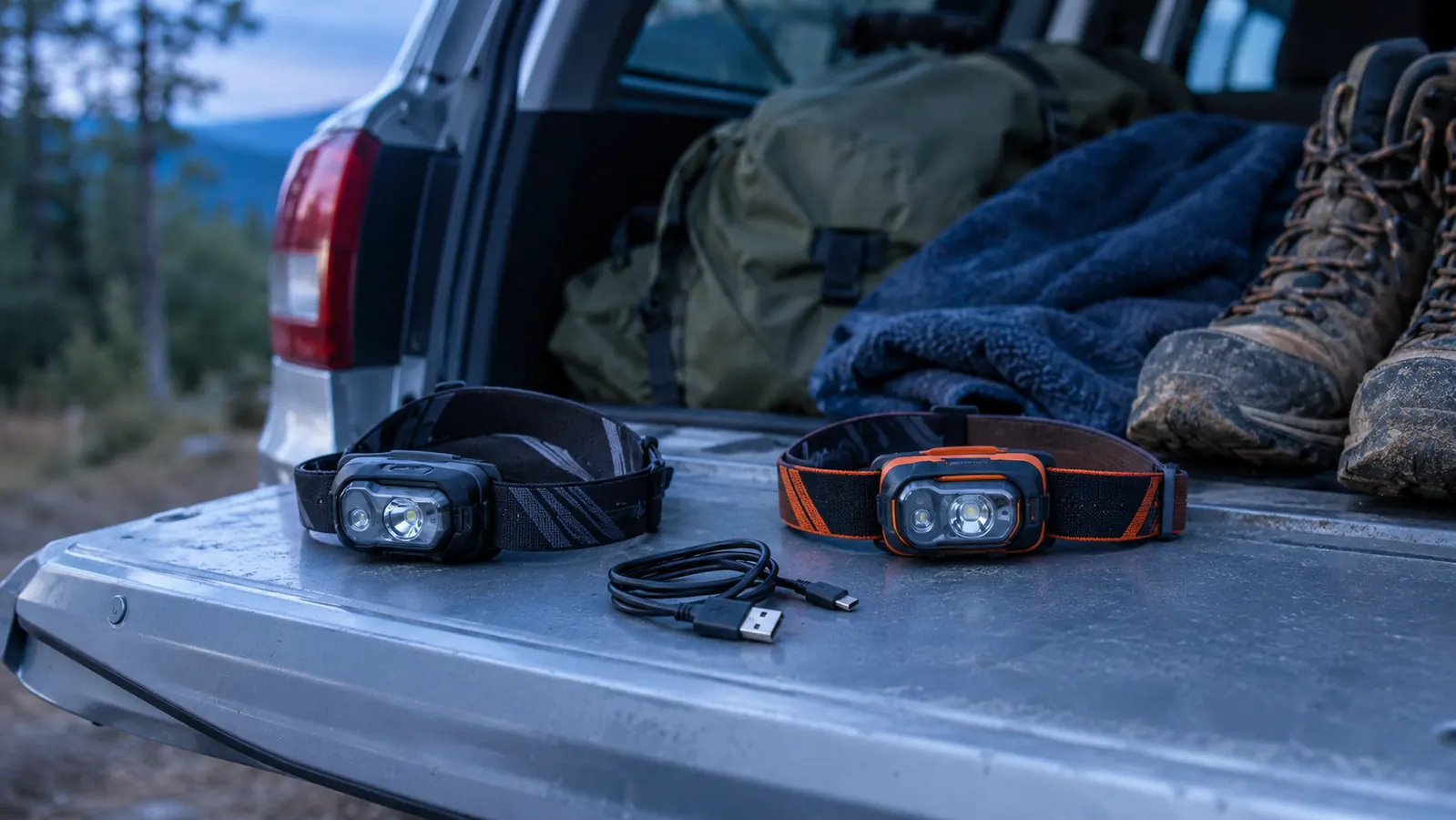
A week later I put a Lepro rechargeable headlamp in my day pack and stopped thinking about it. The two-pack lives in the front pocket of the silver Outback, one lamp for me and one for Ray. It charges by USB, throws up to 2000 lumens, and weighs 75 grams, about the same as a bag of trail mix. Six modes cover spot high and low, flood high and low, and red light. I have used it on Red Rock Canyon evenings and on one wet afternoon at Mount Charleston. Here is why it stays in the pack.
The lamp that ended my phone-flashlight downhill walks
Two headlamps, a USB cable in the box, and enough light to get off the trail after the sun quits. Charge it Friday, forget it until you need it.
Amazon Check Today's Price on Amazon →Dusk arrives before your turnaround does
Almost every trail near Henderson hands you less light than you planned for. Canyon walls at Red Rock swallow the sun early, and a four mile out-and-back turns into a walk back in blue light if you stop to watch the colors. I treat a headlamp like water now, not like an optional extra. It rode through rain on Mount Charleston and one careless drop onto granite without a complaint, and I have stopped leaving it in the car.
Both hands stay free on the loose stuff
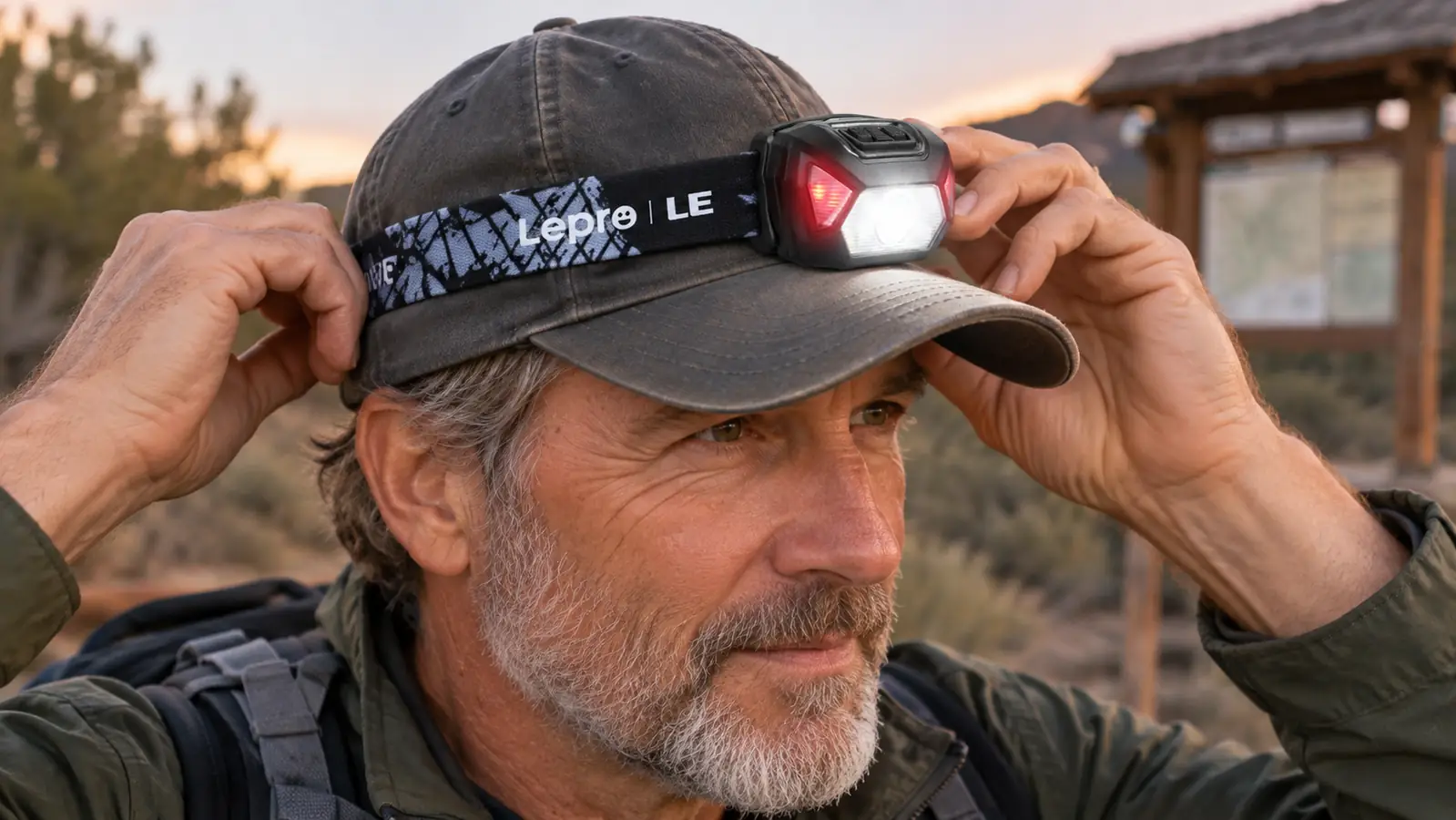
The downhill into Pine Creek Canyon is where my left knee reminds me it is 58 years old. With the light on my forehead, both hands stay on my poles and my eyes stay on the ground instead of on a phone screen. Ray noticed before I said anything. On the last stretch he told me I was moving like I was not hurt, which is the nicest thing he has ever said about a piece of gear.
Spot mode finds the trail marker well past your feet
When the route bends and I am not sure which way it went, spot high reaches farther than my footing needs. I use it to pick out cairns and the reflective tags on trail posts. Spot low does the same job at a gentler level when the path is obvious and I only want the next switchback. The focus is adjustable, so I can tighten the beam for a distance check and widen it again without taking the lamp off my head.
Flood mode lights the ground right in front of you
Flood is the setting I use most, and the one that saves my knee. It spreads light across the width of the trail, so roots, rocks and the edge of a wash all show up at once. A tight beam makes every stone on gravel look the same. Flood flattens that out and lets me read the surface I am actually stepping on. I drop to flood low when Ray is ahead of me and I do not want to throw his shadow onto the ground.
Red light saves your night vision and spares your partner
Red light is the mode I did not expect to use. Now it is what I reach for at the trailhead before we start, checking the map or digging a layer out of my pack. It does not blow out my eyes the way white light does, so when I switch it off I can still see the shape of the ridge. It also stays out of Ray's face while he ties a bootlace. Small thing. It prevents a surprising amount of bickering.
2000 lumens turns a moonless wash into daylight
There is a stretch on the way back from the Grand Canyon rim where the trail disappears into a wide sandy wash and the markers are easy to miss. On a moonless night, spot high at 2000 lumens lit the whole crossing, including the far bank and the post on the other side. I do not run that setting for long, since it is more light than walking pace needs, but knowing it is there changes how late I am willing to start back.
USB charging means no dead batteries in the glovebox
My old headlamp ate batteries and I never had spares when I needed them. The Lepro charges from a USB cable, and the cable comes in the box. I plug it into the Outback on the drive home from a hike, and by the time I am unpacking at the kitchen counter it is ready again. I check it every Friday before a weekend hike, the same way I check tire pressure. It has not caught me out yet.
Up to 15 hours on a charge covers a whole weekend
The listed run time is up to 15 hours, far more than any single day hike needs. In practice that means one charge on Friday evening covers Saturday at Mount Charleston and Sunday at Red Rock, with light left over for the walk from the car to the trailhead. I am not an overnight backpacker, so I do not need a lamp that runs for three nights. I need one that is still alive when I forget to think about it.
75 grams is light enough that you stop noticing it
The lamp weighs 75 grams, and the band adjusts to sit over a ball cap or a beanie without pinching. I wore it through a whole rainy afternoon at Mount Charleston just to see whether it would bother me, and I forgot it was there by the second mile. The housing is small, about 2.48 by 1.77 by 1.38 inches, so it does not catch on the roof of the car when I lean in for my pack.
Two lamps in the box means nobody gets left in the dark
The two-pack is the reason I bought this instead of a single lamp. One lives in my day pack, one lives in Ray's, and the spare stays charged in the Outback for the drives home from Zion and Bryce where the last hour of road is dark and the signal is gone. Buying them as a pair covered both of us, and I stopped being the person who has to remember everyone else's gear.
What I'd Skip
If you only hike in the middle of the day, from April through September, with a six in the morning start, you can skip this. A headlamp is insurance, and you may never file a claim. I would also skip it if you want a caving light or something for all-night backpacking, because this is not built for that job. On spot high I would not plan to run it for hours, since the brightest setting is the one that eats the charge. And if pressure on your forehead bothers you, wear the band a touch looser than feels natural at first. This is a day-hike lamp doing day-hike work, and that is exactly what I wanted from it.
One more honest note. The lamp does not make you a night hiker. It makes a late finish survivable, which is a different and more useful thing. For the full breakdown of the light itself, the long-term Lepro headlamp review on this site goes deeper than I can here.
Spot high lit the far bank of the wash and the post on the other side. I do not run it long. I am glad it is there.
Put one in the pack before your next late start
Two Lepro headlamps, one USB cable, six modes and up to 15 hours of run time. Charge it Friday, forget it until the trail goes dark.
Amazon Check Today's Price on Amazon →