
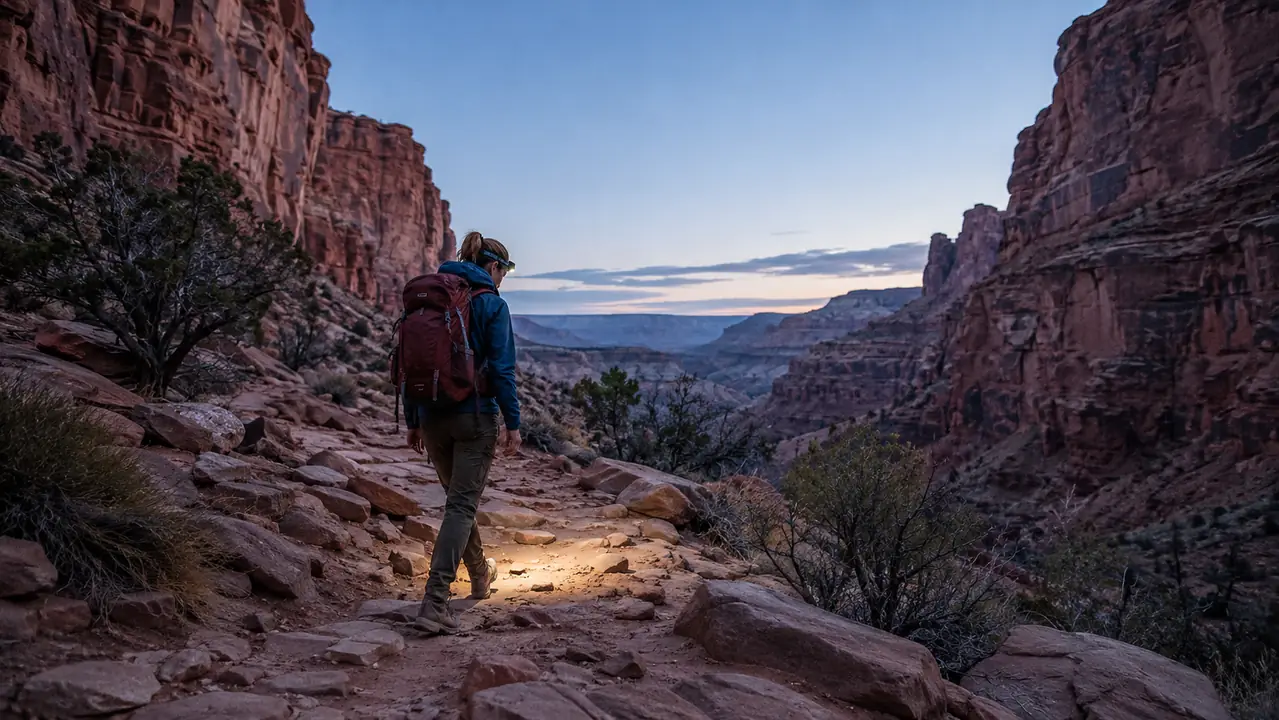
The first time I walked into Red Rock Canyon before sunrise, I carried a flashlight in my hand for the first mile and a half. That was the last time. Ray had been telling me for a year that I needed my hands free on the loose gravel past the Calico Tanks turnoff, and he was right, which he enjoys. I have now used the Lepro Rechargeable LED Headlamp on close to forty early starts and late finishes over about four months, from the sandstone at Red Rock to a cold morning on the Rim Trail at the Grand Canyon, and one very dark walk back from a viewpoint in Bryce.
This is a two pack, and that detail matters more than it sounds. Ray took the second one and stopped borrowing mine, which ended a small and recurring marital negotiation. Between us we have recharged them maybe a dozen times each, worn them through fine red dust, light drizzle, and one genuinely wet afternoon, and neither unit has quit. The lamp is bright enough that it now lives in my pack on every hike, not only the dark ones. What follows is what I actually noticed over those four months, including the two things that still bother me and the specific hiker who should spend their money elsewhere.
The Quick Verdict
Bright enough to light a whole trail corridor, light enough that I forget it is on my head, and it arrives as a pair. The mode button fights back in cold weather and the top setting drains fast. A solid buy for day hikers who start before dawn.
Amazon Check Today's Price →The headlamp that ended my flashlight-in-hand habit
Two lamps, USB charging, six modes, and a spot beam that reaches the next trail marker. Ray and I have carried these on every early start since spring, and neither has failed.
Amazon Check Today's Price on Amazon →How I've Used It
I hike four to ten miles at a time, almost always as a day hike, and I do not backpack overnight. That shapes everything below. I am not testing this for a week-long through-hike or a winter summit push. I am testing it for the 5:40 a.m. trailhead at Red Rock when the parking lot is still empty, for the last forty minutes of a dusk descent when the rocks go the same shade as the shadows, and for the drive home in the dark when a lamp is the only light you have left.
Ray and I split the pair. He is 61 and walks faster than me on the flats, so he usually ends up twenty yards ahead with his lamp on low while I keep mine on high to pick out roots and loose rock. We charged them off the car's USB port and off a wall block at the hotel in Springdale. After each hike I kept a running note in my phone, mostly about whether the battery made it and whether the strap had started to dig in. That note is where most of this review comes from, not from the listing page.
One thing I want to be plain about up front. This is a bright lamp, and bright is not automatically better. The first time I clicked it on at full power in a dark parking lot, I briefly blinded a man loading a bike rack twenty feet away. I have learned to point it at the ground when someone is near. That is not a flaw in the lamp. It is a thing you have to learn, the same way you learn to dim your high beams for oncoming traffic.
What 2,000 Lumens Looks Like on a Real Trail
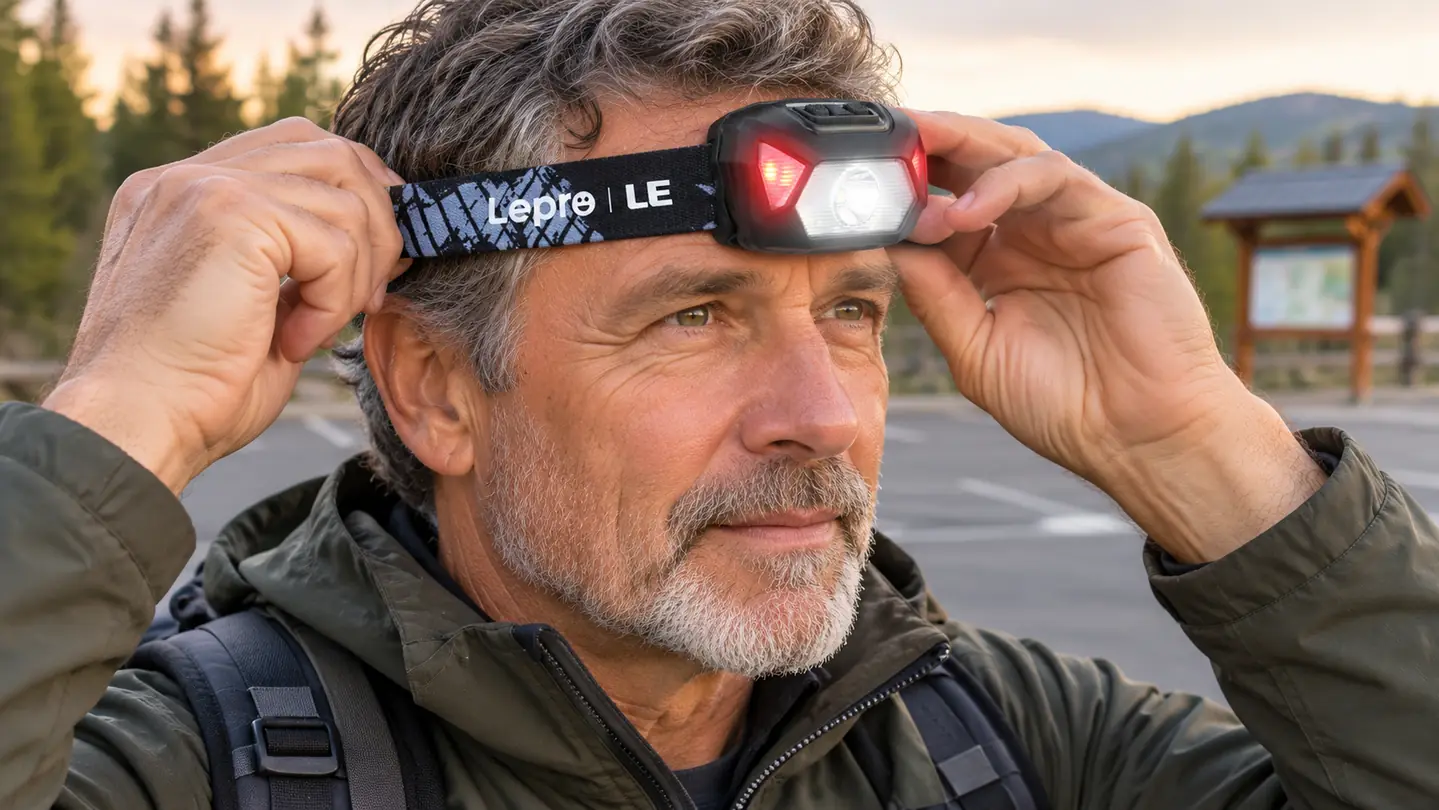
The listing says 2,000 lumens, and I have no way to meter that on a trail. What I can tell you is what it does. On the high spot setting, the beam throws far enough that I can pick out the next trail marker from a distance that genuinely surprised me, and it lays a defined cone of light on the ground rather than a general glow. That is the difference between seeing the path and guessing at it. On the sandy washes near Red Rock, where the trail is more suggestion than line, that cone is the whole reason I trust the lamp.
The flood setting is the one I use most, and it is the one I would miss if it disappeared. Spot is a narrow beam that reaches. Flood spreads light across a wide area, so I can see the rocks to either side of my feet and not just the patch I am about to step on. When the trail curves and I need to find where it went, flood shows me the whole face of the slope at once. When I need to know whether that shape ahead is a juniper or something with eyes, spot answers the question.
There is an adjustable focus as well, so you can tighten or widen the beam inside those modes. I used it twice and then left it alone, mostly because the two preset modes already covered what I needed. If you like to tune a beam for a specific job, the adjustment is there and it works smoothly. If you are like me and would rather not think about anything in the dark, the presets are enough on their own.
Six Modes, and the Two I Actually Use
The lamp has six lighting modes. Spot has a high and a low, flood has a high and a low, and there is a red light. I use flood high for the first twenty minutes of a pre-dawn start, flood low once my eyes adjust and I stop needing the whole world lit, and spot high when I am trying to read terrain ahead or find a junction. The red light I have used exactly once, at a viewpoint near the Grand Canyon, because it keeps your night vision intact and does not wreck the dark for the people standing next to you.
The mode button cycles through all six in order, which means going from flood high back to flood low takes a few extra presses. In practice I have learned the sequence and can work it without looking. What I have not managed is working it without looking while wearing gloves. The button is small and the click is subtle, and on a 34 degree morning at Mount Charleston I pressed it four times trying to land where I wanted. That is my main gripe with the controls, and it is the one that shows up every cold morning.
Battery Life Against the Hikes I Actually Do
Lepro rates this at up to 15 hours of continuous light on a single charge, and that figure is real in the sense that it is achievable on the lower settings. On high, running spot or flood at full brightness, you will not get 15 hours. Nobody does, from any brand. What matters for me is whether the lamp survives one hike, and it does that easily. A four to six mile hike with an hour of dark at each end uses a fraction of the charge. Even a long Bryce day that started before light and ended after it left plenty in the tank.
Charging happens over USB with the cable that comes in the box. There is no wall adapter included, so plan for that before your first trip. I top both lamps up after every third or fourth hike, and I have never had one die mid-trail, which is the only battery statistic that means anything to a person doing day hikes. If you are the type to leave a lamp in a pack for two months and then need it in a hurry, charge it before you go. That is not a knock on Lepro. That is how rechargeable things work.
Weight, Fit, and the Left Knee Problem
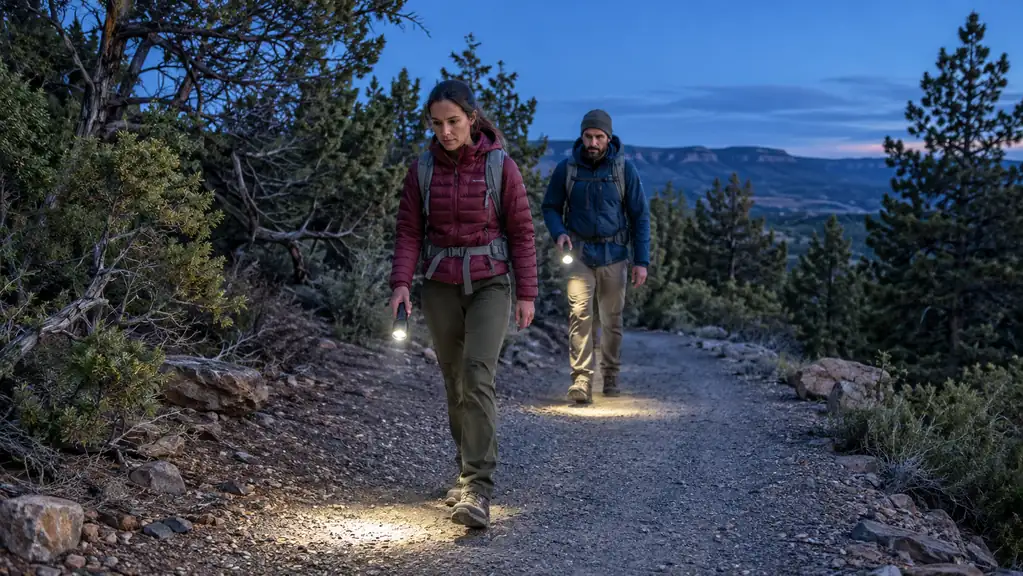
The lamp weighs 75 grams. I put it on, forgot about it, and that is the review. My left knee is the part of me that complains on long downhills, and I am careful about adding anything to my head or my stride that makes me compensate for it. This did not make me compensate. The housing measures 2.48 by 1.77 by 1.38 inches, small enough that it does not catch on branches when I duck under a juniper or lean past a rock wall.
The strap adjusts and holds. I wore it over a thin beanie on the cold mornings and directly on my head on the warm ones, and it stayed put through a fast descent on loose rock where I was watching my feet more than the trail. The one adjustment I made was tightening it more than I expected to, because a headlamp that shifts when you look down is worse than no headlamp at all. Once tight, it did not need to be touched again, though it did leave a line in my hair that Ray found funny.
On flood low, with the beam spread wide across the wash, I could see the whole trail bed and the rocks to either side of it. That is the setting I would argue to keep if someone tried to take it away.
Dust, Drizzle, and One Wet Afternoon
The lamp is rated for impact and water resistance, and I have tested the water part modestly. It has been through the fine red dust at Red Rock that coats everything you own, light rain on the Rim Trail, and one afternoon where the weather turned on us and we walked out in a steady soaking drizzle for close to an hour. It kept working the whole way. I dried it off with a bandana at the car and it has been fine ever since.
I want to be careful here, because this is where reviews start overpromising. Water resistant is not the same as waterproof, and I would not swim with this or drop it into a creek on purpose. It has survived what a day hiker realistically meets, which is rain, dust, sweat, and being dropped on rock. That is the honest boundary of what I can tell you. My pair has been dropped twice, both times by me, and both units still work.
What I Liked
- Bright enough to light a full trail corridor, with a spot beam that reaches the next marker
- Flood mode spreads light wide so I can see the rocks beside my feet, not just the ground ahead
- 75 grams, light enough that I stopped noticing it was on my head
- Two lamps in the pack, so Ray carries his own and I stopped sharing mine
- USB rechargeable, with no disposable batteries to buy or carry
- Survived trail dust, drizzle, and one genuinely wet afternoon without a hiccup
Where It Falls Short
- The mode button is small and hard to work with gloves on a cold morning
- The top setting drains the charge much faster than the 15 hour rating suggests
- No wall adapter in the box, only the USB cable
- The strap needs to be tighter than you would guess to keep the lamp from shifting on descents
Who This Is For
This is for the day hiker who starts before the sun or finishes after it, and who wants their hands free on the rocky parts. It is for a couple or a pair of friends who both want a lamp and would rather buy once, since two come in the box. It is for the person who is tired of hunting for AA batteries at the last minute on a Friday night. If your hiking looks like mine, four to ten miles, real trailheads, a headlamp in the pack as a matter of habit, this does everything you need it to do.
It is also a reasonable lamp for the campsite, the garage, and the glove box, which is where the second one has spent a few weeks when Ray was not using it. The beam is strong enough to be useful for anything short of a search and rescue, and the price of a two pack means you are not reserving your only good light for special occasions. That matters more than people admit.
Who Should Skip It
Skip it if you need a lamp you can operate with thick gloves without looking, because the button will fight you. Skip it if you are backpacking overnight and need many hours of full brightness across several nights, because you want a larger cell and a genuinely dim low setting. Skip it if you want the red light to be easy to find in the dark, since it is the last mode in the cycle and you will click through everything else to reach it. And skip the two pack if you only ever hike alone, and you know it.
If your hikes start in the dark, this is the lamp I'd hand you
Two Lepro headlamps, USB charging, six modes, and 75 grams on your head. Mine have been on every pre-dawn start since spring and neither has failed me yet.
Amazon Check Today's Price on Amazon →