
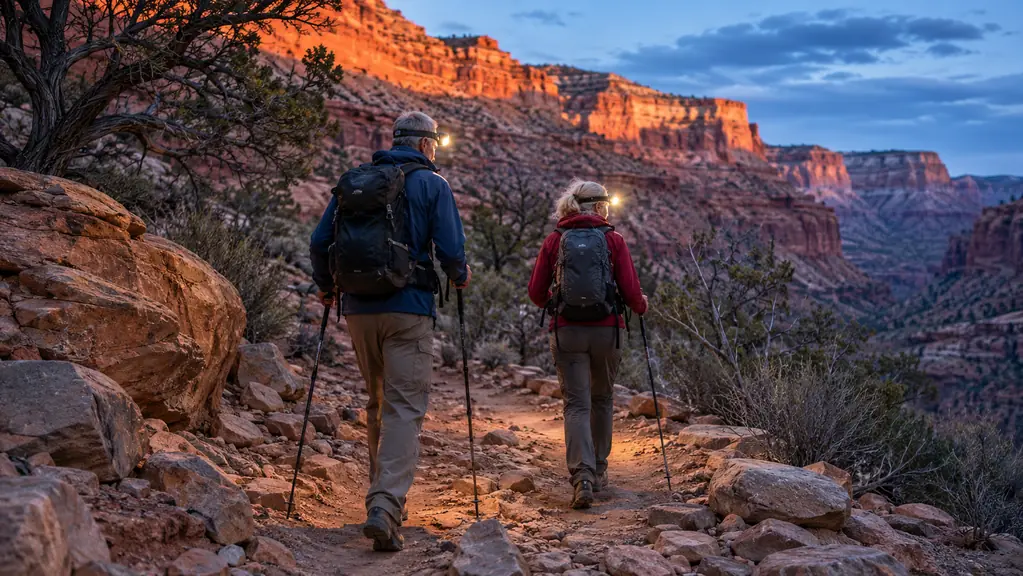
The sun dropped behind the ridge at Red Rock Canyon about twenty minutes earlier than Ray and I had planned for. We were maybe a mile and a half from the trailhead with the last of the daylight going fast, and my left knee had already started its usual complaints on the downhill. I had a headlamp in my pack, a Lepro rechargeable one I'd bought two months earlier and never actually needed. That evening I needed it.
Up to that point I'd been doing what most people do, which is carry a small flashlight and hold it in one hand. On flat ground that's fine. On a rocky descent in the dark it is not. I had one hand for balance instead of two, and the beam bounced with every step I took. Ray was behind me doing the same thing, and between us we could see maybe six feet of trail at a time.
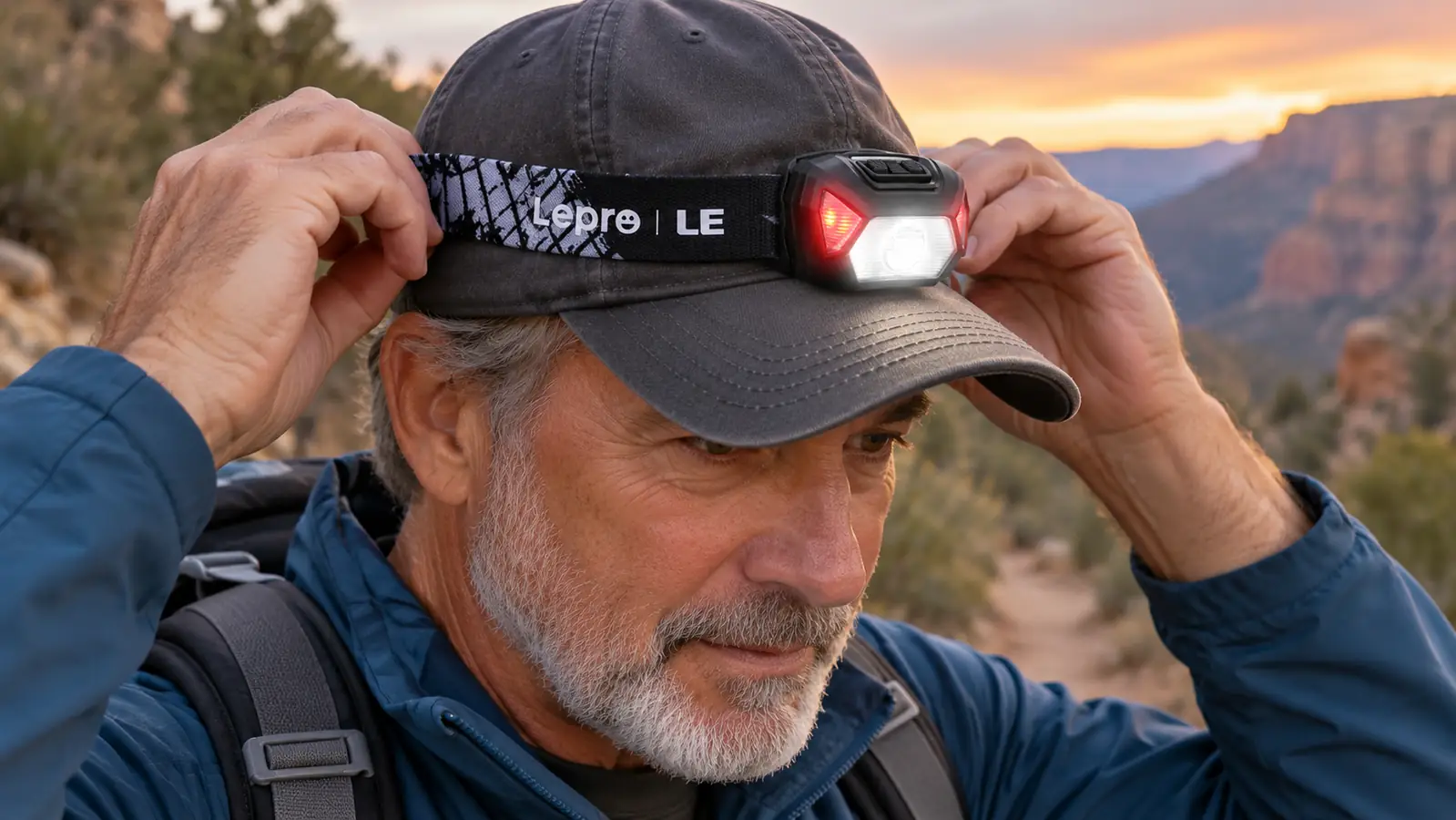
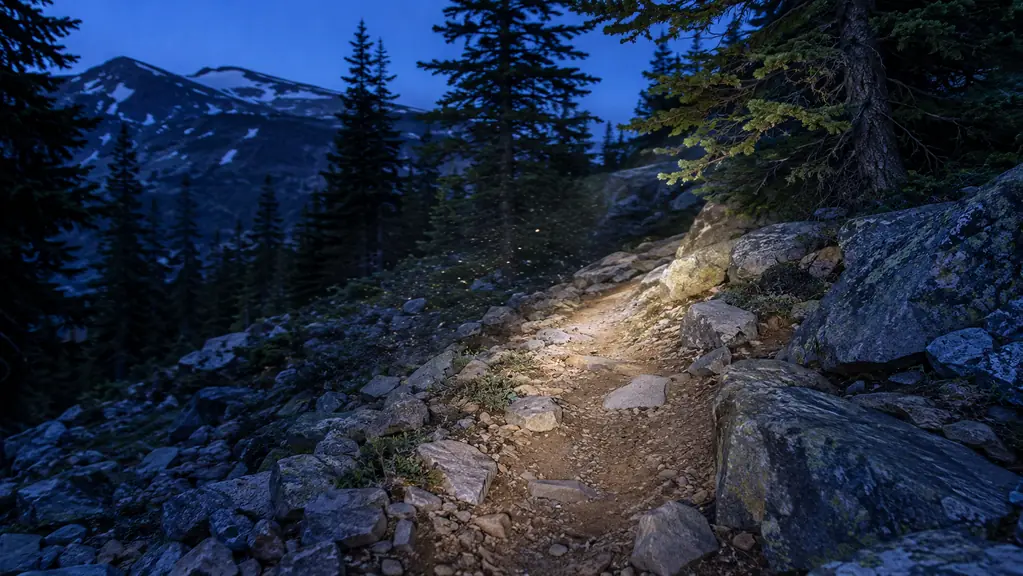
So I stopped and dug the Lepro out of the side pocket and put it on my head. The difference was immediate and a little embarrassing, given how long we'd been fumbling along. Both hands free. The light pointed wherever I looked. The rock under my feet went from a vague grey shape to something I could actually read before I stepped on it.
We got down in about forty minutes. Nobody fell. Nobody had to be talked down. It was not a dramatic rescue, just two people in their late fifties finishing a hike they should have finished an hour earlier, because one of us had packed a small thing that worked.
Both hands free. The light pointed wherever I looked. The rock under my feet went from a vague grey shape to something I could actually read.
Since then the Lepro has gone on every hike I've taken. A predawn start at Mount Charleston in October. A day at Zion where the last mile took longer than the map suggested. It lives in the top pocket of my pack now, and I don't think about it until the light starts to go.
The light I stopped hiking without
Two rechargeable headlamps, a USB cable, and head bands in the box. Up to 2000 lumens, six lighting modes, and up to 15 hours of light on a single charge. Mine has ridden in the top pocket of my pack for a full season and never once failed to turn on.
Amazon Check Today's Price on Amazon →Here is what the thing actually does, in plain terms. It puts out up to 2000 lumens, which is more than I need on a marked trail and about right when I am trying to pick out a cairn at the far end of a wash. There are six lighting modes: spot high and low, flood high and low, and a red light. I walk with flood on the low setting and switch to spot high for the one or two places on a trail where I have to figure out which way it goes. The focus adjusts, so I can widen the beam to see the whole path or narrow it when I am hunting for a trail marker.
It weighs 75 grams, which is light enough that I forget I have it on until I catch my reflection in a car window. It recharges over USB, and Lepro lists up to 15 hours of continuous light on a single charge. I charge it the night before a hike and it has never run out on me, including a long day at Bryce that started well before sunrise.
Two things bother me. The modes cycle in order, so getting from flood low back to spot high means tapping through the rest, and in the dark that is more fiddling than I want while I am standing still on a slope. And the band takes a couple of adjustments to sit right over a hat. Water resistance has held up in light rain and in the dust at Red Rock, though I have not tested it in a real downpour and do not plan to.
The two pack matters more than I expected. One lives in my pack and one stays in the glovebox of the silver Outback, so there is always a light in the car whether or not I remembered to repack the night before. Ray has taken to borrowing the glovebox one on weekend hikes, which means I will probably buy another set before our next trip to Utah.
What I'd Tell You If We Were Sitting at My Kitchen Table
I would tell you not to buy a headlamp because a website told you to. Buy one because you have had the walk back in the dark, or because you have watched the sun go down while you were still a mile out and felt your stomach drop. Then put it in your pack and leave it there. A light that lives in a kitchen drawer is not a light. The only thing I would add is that you do not need to spend much. This Lepro set has done everything I have asked of it for a season of day hikes, and my honest complaints are the kind you learn to live with in about a week.
One more piece of advice. Check it before you leave the house, not at the trailhead. Charge it the night before, put it on your head once while you are standing in the kitchen, and make sure the band sits where you want it. I know a woman who found out her light was dead at the worst possible moment, and I have not made that mistake since.
Pack it before the next hike runs late
Two rechargeable headlamps, a USB cable, and head bands. Up to 2000 lumens, six lighting modes, up to 15 hours per charge. Mine has been through a season of Red Rock and Mount Charleston hikes and it still turns on every time.
Amazon Check Today's Price on Amazon →