

I used to think blisters were just part of hiking. My left knee already complains on long downhills, so by the time I reached the Outback after a 9 mile day at Red Rock Canyon, I was usually limping for two reasons. Then Ray bought us each a pair of Darn Tough Hiker socks, the men's midweight micro crew, and I started paying attention to what was actually happening inside my boots. The sock did not magically fix my knee. It did change the blister conversation.
Here is the short version. Merino wool helps manage moisture, reduce friction, and keep its shape when it gets damp. The Darn Tough Hiker is 61% merino wool, 36% nylon, and 3% Lycra spandex, with a crew height and a midweight knit. I wear the smallest men's size, Ray wears his own pair, and we both use them for day hikes from Mount Charleston to Zion. These are the ten reasons they earn the space in my pack.
The sock I reach for before a 9 mile day
The Darn Tough Hiker is a men's midweight micro crew with 61% merino wool, 36% nylon, and 3% Lycra spandex. I wear the smallest men's size. Ray wears his own pair. It is the first sock I pack for Red Rock and Mount Charleston.
Amazon See the Darn Tough Hiker on Amazon →Merino moves moisture away from your skin
A blister often starts with a hot, damp spot. Cotton holds that moisture against your foot. Merino wool, the main fiber in the Darn Tough Hiker, helps move moisture along and lets it evaporate. On a dry 6 mile hike at Red Rock, that difference is pleasant. On a sweaty climb up Mount Charleston, it is the difference between a sock that feels clammy and one that feels merely used. The 61% merino content is doing real work here, not just sounding good on the label.
The blend holds its shape when damp
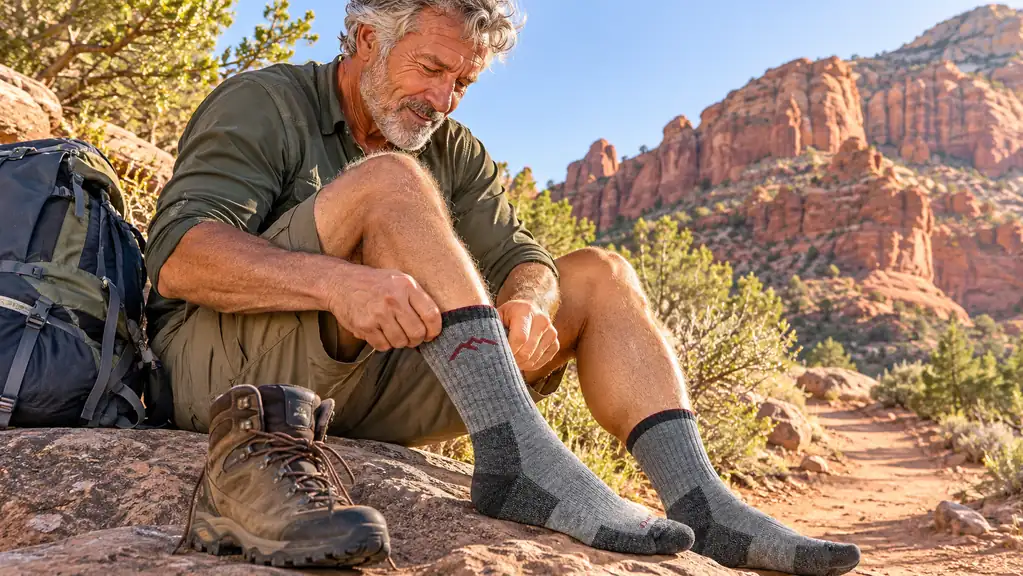
A sock that bunches is a sock that rubs. Wool alone can stretch out when wet. The nylon and Lycra in the Darn Tough Hiker help the sock keep its fit through a long day. I have pulled these socks off after a rainy hike near Bryce and found them damp, but still sitting where they should around my foot. That matters more than any single feature, because a loose sock creates folds, and folds create friction.
Crew height keeps trail grit out of your boot
The Hiker is a crew length sock, and that height is not decoration. On dusty trails, grit finds its way in through the collar of a low sock and settles under your heel. A crew sock gives the boot collar something to sit against. I still shake out my boots at the trailhead, but I deal with far less sand and small gravel than I did with ankle socks. Ray noticed the same thing on our last trip to Zion.
Midweight knit adds a buffer without crowding your boot
The title says midweight, and that is the right word for a day hike sock. It is not a thick winter sock and it is not a paper thin liner. That middle ground gives your foot a little buffer against laces and boot seams without making the boot feel tight. If your boots already fit snugly, try the sock on with them before a long hike. I made that mistake once with a thicker sock and spent the last two miles thinking about my toes.
Fine wool fibers reduce the rub that starts a blister
Merino wool is known for fine fibers. Fine fibers feel smoother against skin, and smoother means less of the microscopic catch and drag that can lead to a hot spot. This is not a license to ignore a bad fit. It is one more reason the Darn Tough Hiker feels comfortable on the first mile and still comfortable on the eighth. I notice it most on downhills, when my left knee is sore and every step presses my foot forward in the boot.
Wool helps regulate temperature so your feet sweat less
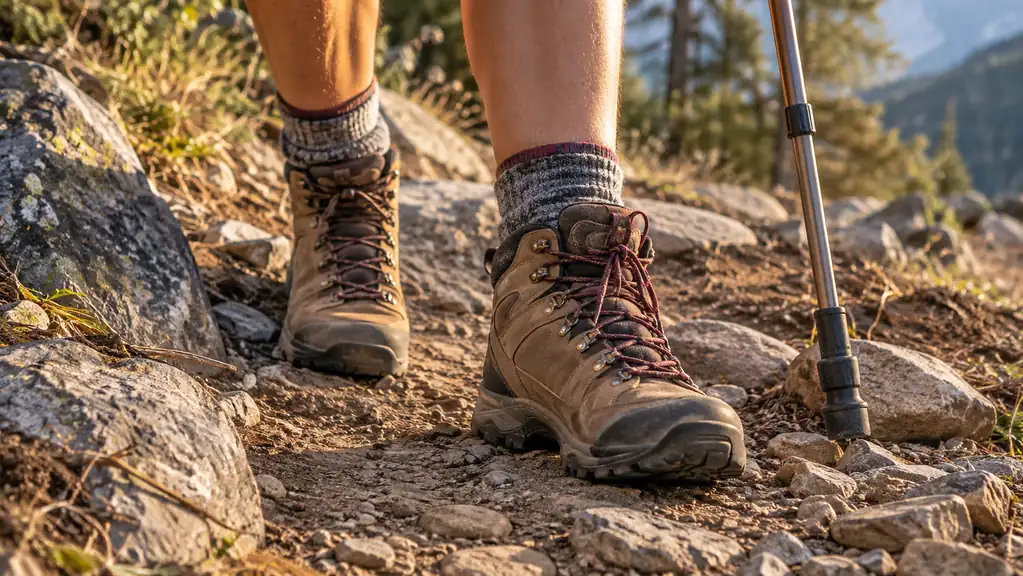
Hot feet sweat. Sweaty feet soften. Soft skin tears more easily. Merino wool helps your foot stay in a more even temperature range, which can mean less sweat on a warm climb and less chill when you stop for lunch. On a cool morning at Mount Charleston, I have been glad for that. The sock is not a climate control system. It simply gives your foot a better chance to stay dry and comfortable.
The Darn Tough Hiker is 61% merino wool. On a long day, that number matters more than any slogan on the packaging.
The fit stays consistent wash after wash
The care label says machine wash, and that is how I treat them. A sock that shrinks or stretches out after a few washes becomes a different sock. The Lycra in the blend helps the Hiker hold its shape, and the crew height stays where I expect it. I have a pair that has been through many laundry cycles and still sits snugly without feeling tight. Consistent fit is a quiet blister preventer, because your boot and sock keep the same relationship.
One sock covers hiking and walking
The listing names hiking and walking as the sport types, and that matches my use. I wear the Darn Tough Hiker on Red Rock trails, on paved park paths, and on the drive to Utah. Ray wears his pair for the same mix. A sock that works for a 4 mile walk and a 10 mile day means one less thing to think about when I pack. I do not need a separate sock for every trail.
The men's cut works for both of us
This is the men's Hiker, and I want to be clear about it. I wear the smallest men's size. Ray wears his own size. The men's size chart is the one to use. The point is that the sock fits both of us well enough to do the job. If you are between sizes, pay attention to the size chart rather than guessing. A sock that fits properly is the first step in preventing a blister, not an afterthought.
A US made sock that earns its place in the pack
The Hiker is made in the USA and weighs 3.2 ounces per the listing. That is light enough for a day pack and substantial enough to feel like a real hiking sock. I like knowing where it was made, but the real test is the trail. After a season of day hikes, these are the socks I reach for first. They have not ended every blister. They have made the bad ones less frequent and less angry.
What I'd Skip
Two honest notes. If you are backpacking overnight in cold weather, this midweight micro crew may not be enough sock for you. I do not backpack, so I cannot speak to that use. If you want a thin liner sock to wear under another sock, this is not that either. And no sock prevents every blister. Boot fit, lacing, and stopping to deal with a hot spot still matter. I would skip the Hiker if you refuse wool or if the men's sizing does not work for your foot. For day hikes of 4 to 10 miles, it is the pair I pack.
Pack the sock that makes the next day hike easier
The Darn Tough Hiker is a men's midweight micro crew with 61% merino wool, 36% nylon, and 3% Lycra spandex. I wear the smallest men's size. Ray wears his own. Start with a short hike, check the fit with your boots, and see how your feet feel.
Amazon See the Darn Tough Hiker on Amazon →