
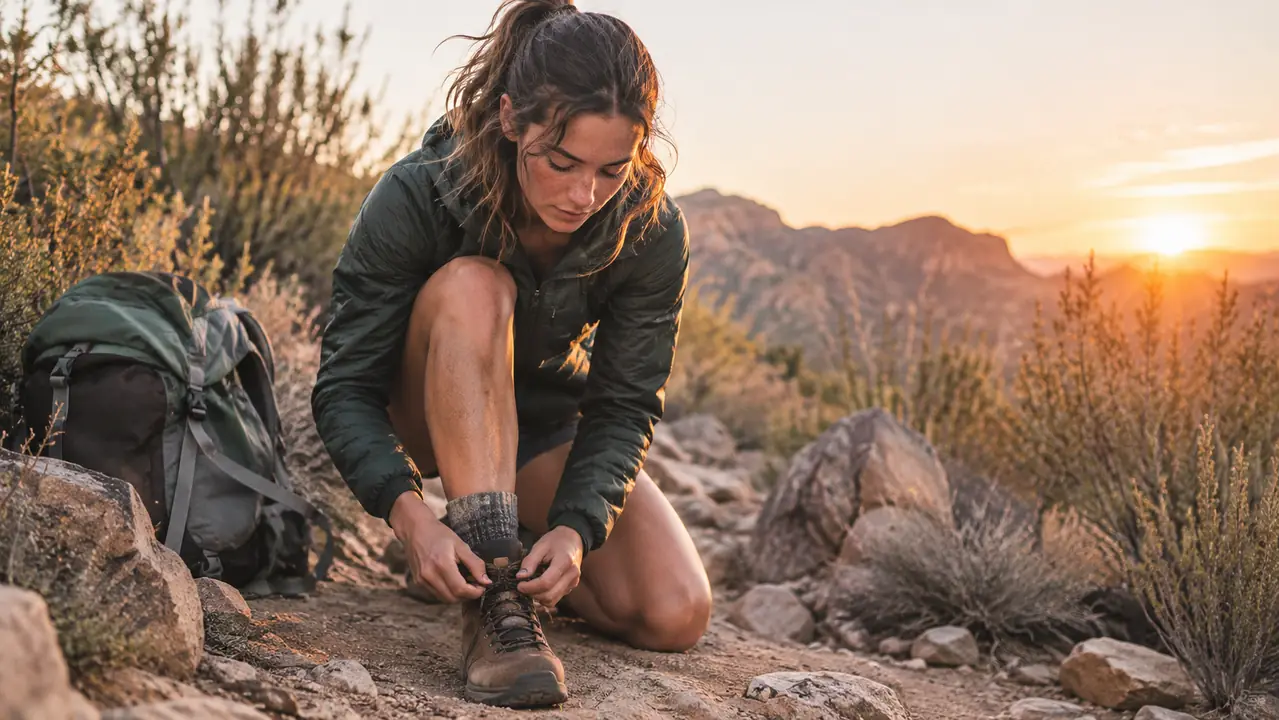
I used to treat socks as an afterthought. I would grab whatever pair was clean, drive our silver Subaru Outback to the trailhead, and start walking. Then I did an 8 mile loop at Red Rock Canyon in cotton crew socks on a warm morning. By the third mile, the sock under the ball of my foot felt like a wet rag. By the last descent, I had a hot spot the size of a coin. That was the day I stopped pretending socks did not matter. The pair I pack now for day hikes is the Darn Tough Hiker Midweight Micro Crew. Ray wears the same men's cut in his size, and I wear the smallest men's size. Here is what I have learned about Darn Tough versus cotton socks for hiking, including where cotton is still the right call.
Short answer: for a 4 to 10 mile hike with sweat and downhill miles, the Darn Tough Hiker is the better sock. The listed blend is 61% merino wool, 36% nylon and 3% Lycra spandex, and that blend handles moisture and friction better than cotton. Cotton wins on availability and on very short dry walks. It is not a trail sock for a hot day in Zion or a long descent off Mount Charleston. If you want one pair for real day hikes, start with the Darn Tough Hiker. If you are walking to the mailbox, cotton is fine.
| Darn Tough Hiker | Cotton socks | |
|---|---|---|
| Material | 61% merino wool, 36% nylon, 3% Lycra spandex | Cotton, often blended with polyester or spandex |
| Moisture | Wool blend moves sweat off the skin and stays warm when damp | Cotton holds sweat next to the skin and dries slowly |
| Blister risk on long descents | Less friction when damp, with a crew fit that stays put | Wet cotton bunches and rubs |
| Durability | Made in the USA, machine wash, built for hiking and walking | Thins at heel and toe with regular trail use |
| Fit | Crew length, athletic sock form, midweight micro crew | Loosens and slides after sweat |
| Care | Machine wash | Machine wash |
| Availability | Ordered online or from outdoor stores | Sold in almost any grocery or drugstore |
| Short dry walks | More sock than a quick mile needs | Fine for a dry walk to the mailbox |
Where Darn Tough Wins
The first win is moisture. Wool gets a lot of credit, and the 61% merino figure is the reason. Merino can move sweat away from skin and keep some warmth when it is damp. The nylon adds strength, and the 3% Lycra spandex helps the sock hold its shape. I am not a textile engineer. I am a 58 year old day hiker with a left knee that complains on long downhills, and I know what a wet sock feels like by mile four. The Darn Tough Hiker does not turn into a wet rag. After a sweaty climb, the sock feels damp on the outside but not soaked against my skin. That difference is why I stopped getting hot spots on the same Red Rock loop.
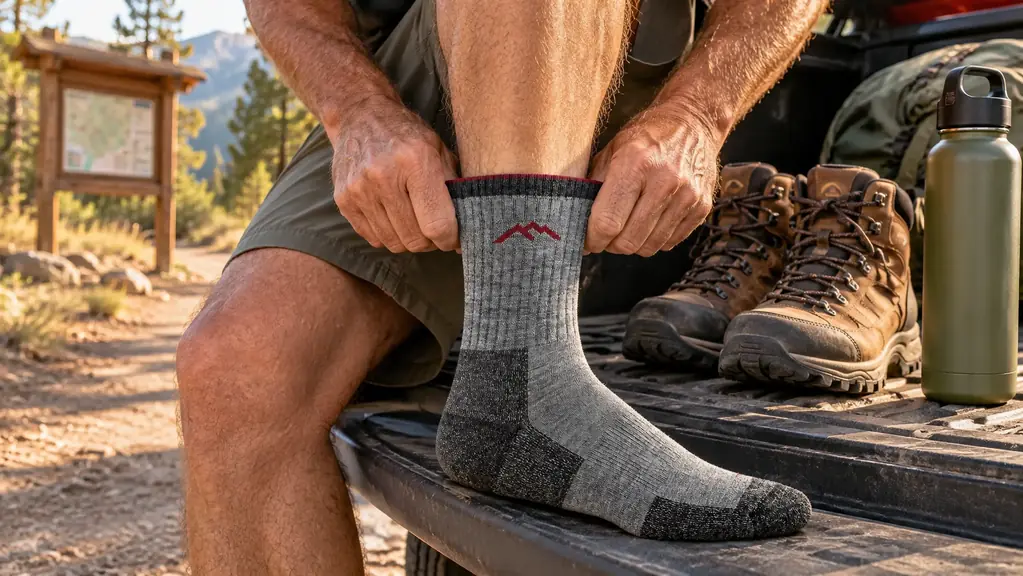
The second win is fit. The title calls this a midweight micro crew, and the specs list crew length and athletic sock form. That matters with hiking boots because the sock stays up around the ankle instead of sliding down into the heel. The Darn Tough Hiker is listed at 3.2 ounces, made in the USA, and machine washable. I have washed mine with regular laundry after every trip and they have kept their shape. Ray's pair has done the same. The cotton socks I used to wear would stretch out after one sweaty hike and bunch under my heel on the downhill. The Darn Tough pair stays where I put it. That is not a small thing when you are trying to watch your footing on loose rock.
Where Cotton Wins
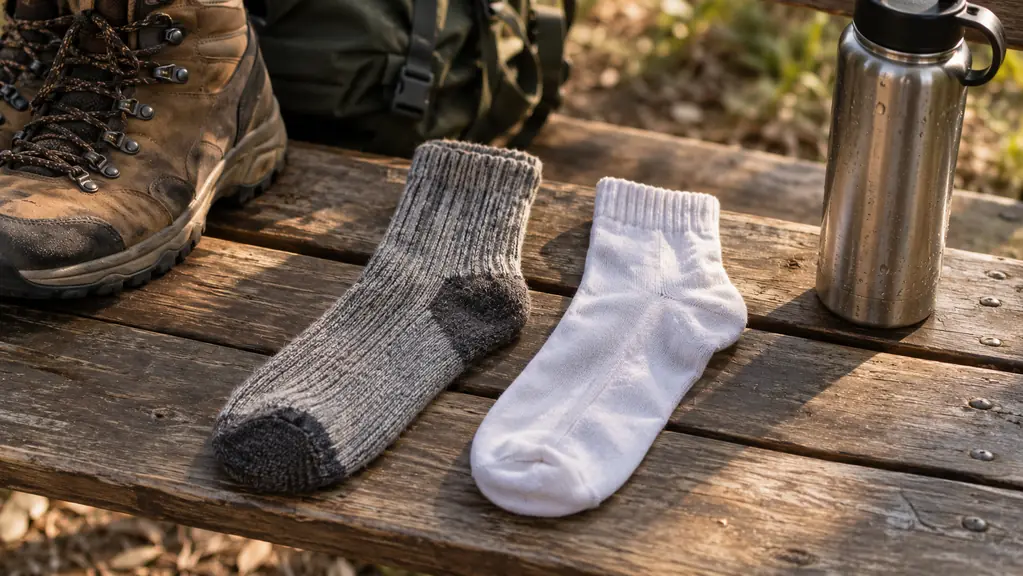
Cotton wins on availability. You can find cotton crew socks in almost any grocery store, drugstore or big box store. If you forget socks on a road trip, cotton is easy to replace. Cotton also wins the already in the drawer contest. Most of us have a few pairs, and they are familiar. For a short dry walk on a paved path, cotton is fine. I still keep a pair in the car for the drive home after a hike. I would not choose cotton for the hike itself, but I am not going to pretend it has no place.
Cotton also wins on simplicity. There is no special fabric to think about, and no one needs to learn a new care routine. You throw it in the wash. But that simplicity comes with a trail tradeoff. Cotton holds sweat next to the skin and dries slowly. On a dry 1 mile walk, that does not matter. On an 8 mile loop with a climb, it does. The fabric gets heavy, the fit loosens, and the rubbing starts. Cotton is not a bad sock. It is a bad sock for the job of a long, sweaty hike.
The sock I reach for when the trail is longer than a stroll
The Darn Tough Hiker is the pair I pack for Red Rock loops and Mount Charleston climbs. Crew length, midweight, machine wash, made in the USA.
Amazon See the Darn Tough Hiker on Amazon →How I Tested These on Real Trails
I test gear on the trails I actually hike. Most of my walks are day hikes of 4 to 10 miles near Henderson, usually at Red Rock Canyon or up at Mount Charleston. I do not backpack overnight. Once or twice a year, Ray and I take the silver Subaru Outback to national parks in Utah or Arizona, and I bring the same socks. I have worn the Darn Tough Hiker in the men's cut in the smallest size on repeated 6 and 8 mile days. Ray wears the same men's cut in his size. I compared those days against cotton crew socks I already owned, on the same kind of trails and in similar heat.
I paid attention to three things: how wet the sock felt against my skin, whether it stayed in place on descents, and how it held up after washing. I did not run a lab test. I walked, sweated, stopped for water, and kept notes on my phone at the trailhead. My left knee gets sore on long downhills, so I notice when my foot slides inside the boot. That slide is often the start of a blister. A sock that stays put makes the downhill less annoying. A sock that bunches makes it worse.
Sweat, Blisters and the Fabric Difference
A blister usually needs three things: friction, moisture and heat. Cotton supplies two of the three in a hurry. It absorbs sweat and holds it against the skin. Once the fabric is wet, it loses shape and rubs. The Darn Tough Hiker does not stop sweat. No sock does. What it does is move moisture through the wool blend and keep some structure. On a warm morning at Red Rock, my cotton sock was damp by mile three. The Darn Tough sock was damp on the outside by mile five, but my skin did not feel soaked. That is the difference that matters to me.
I am not going to tell you a sock prevents every blister. If your boot is too small or your laces are wrong, no sock will save you. I still tape a hot spot if I feel one coming. But the right sock removes one variable. The Darn Tough Hiker gives me a better chance on a long descent. The cotton sock gives me a wet layer and more friction. On the Grand Canyon rim walk we did last spring, I was glad I had the wool blend. Ray said his feet stayed comfortable too. That is as technical as I need to get.
The cotton sock was damp by mile three. The Darn Tough sock was still doing its job on the last descent.
Fit and the Downhill Problem
The downhill is where I judge a sock. My left knee is not what it was, and I take descents slowly. When my foot slides forward in the boot, I brace harder and my knee feels it. A loose cotton sock makes that slide worse. It bunches under the ball of my foot and around the heel. The Darn Tough Hiker is a crew length sock with an athletic sock form, and the blend includes 3% Lycra spandex. That helps it stay close to the foot without feeling tight. I can feel the sock hold its place when I step down. That matters more to me than any label claim.
The micro crew height also matters with hiking boots. It covers the ankle area where the boot collar sits. I have worn low cut socks with boots and got a rub line. The Darn Tough Hiker is tall enough for my boots and not so tall that it feels like a knee sock. The midweight knit is warm enough for a cool morning at Mount Charleston and not so thick that my boot feels tight. I wear the men's cut in the smallest size. If you are a woman reading this, that is the pair I know. I cannot speak to a women's version because I have not worn one.
Durability and Care
The Darn Tough Hiker is made in the USA and listed as machine wash. I wash mine with regular laundry and let them air dry on a rack. I have not seen holes at the heel or toe. The sock has kept its shape after repeated washes. The cotton socks I used to wear would thin at the heel within a season of weekend hikes. They would also stretch out at the cuff. The Darn Tough pair still fits the same. That matters if you hike often. A sock that lasts is one less thing to think about before a trip.
The listed weight is 3.2 ounces. That is not a number I notice on my foot. What I notice is that the sock does not feel bulky inside my boot. The blend is 61% merino wool, 36% nylon and 3% Lycra spandex. The nylon and spandex give it strength and stretch. The merino does the moisture work. I would not call this a winter sock. It is a midweight hiking sock for three season day hikes. For a cold morning, it is enough. For a hot afternoon, it is still the pair I want because it handles sweat better than cotton.
What I Tell Friends Before a Trip
When a friend asks what to pack for a first hike, I do not start with boots or a pack. I start with socks. Bring the Darn Tough Hiker if the walk is more than a couple of miles, especially if there is a climb or a long downhill. Bring a second pair if the weather is wet. Cotton socks go in the car bag for the ride home, not in the hiking bag for the trail. That advice has saved more than one friend from a hot spot on the way down.
I also tell them not to overthink the sock search. The Darn Tough Hiker is a crew length, midweight micro crew with a listed blend of 61% merino wool, 36% nylon and 3% Lycra spandex. It is machine washable and made in the USA. That is enough information to make a sensible choice. You do not need a drawer full of options. You need one pair that fits, stays put, and handles sweat. Cotton can be the backup. The wool blend should be the trail sock.
Who Should Buy Which
Buy the Darn Tough Hiker if you take day hikes of 4 to 10 miles, if your feet sweat, or if you have long downhills that make your foot slide. Buy it if you want a sock that stays put and can go in the washing machine. I wear the men's cut in the smallest size; Ray wears the same men's cut in his size. If you are shopping for a woman, that is the fit I can speak to. Buy cotton socks if you are walking a short dry path, if you need a pair for the drive home, or if you already own them and the hike is under a mile. Do not buy cotton for a hot climb or a long descent. That is the honest split.
If your next hike is 4 miles or more, start here
The Darn Tough Hiker is the pair I would put in my own pack. It is the men's cut; I wear the smallest size and Ray wears his own.
Amazon Check Availability on Amazon →