
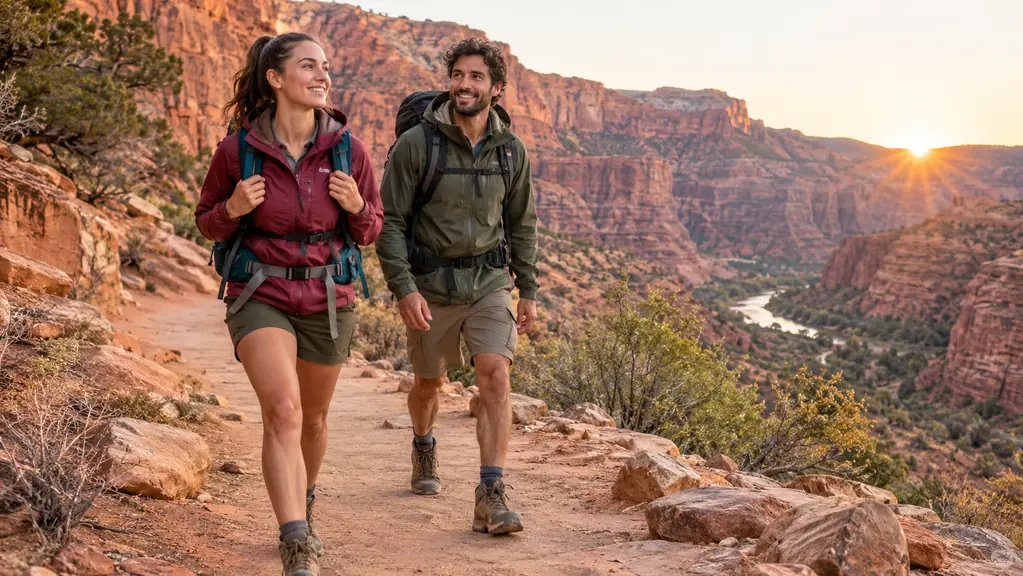
The blister showed up at mile six of the Kayenta Trail in Zion, on a bright September afternoon when the only thing I wanted was to see the Emerald Pools and get back to the shuttle. I felt the hot spot first, a small grain of sand under the ball of my right foot, and then the sting. By the time Ray and I reached the junction, I had a nickel sized bubble on my heel and a thirteen year hiking habit that suddenly felt like a mistake.
I had tried everything the drugstore sells. Cotton crew socks, which hold water like a dish towel. Two pairs at once, which just moved the rubbing from my heel to my toes. Thin liner socks that slid down into my boot by mile two. Powder, tape, and a blister block that lasted about as long as a piece of gum. Every trip ended the same way, boots off in the car, socks peeled away, and a fresh bandage on a heel or a toe. I started planning hikes around my feet instead of around the view.
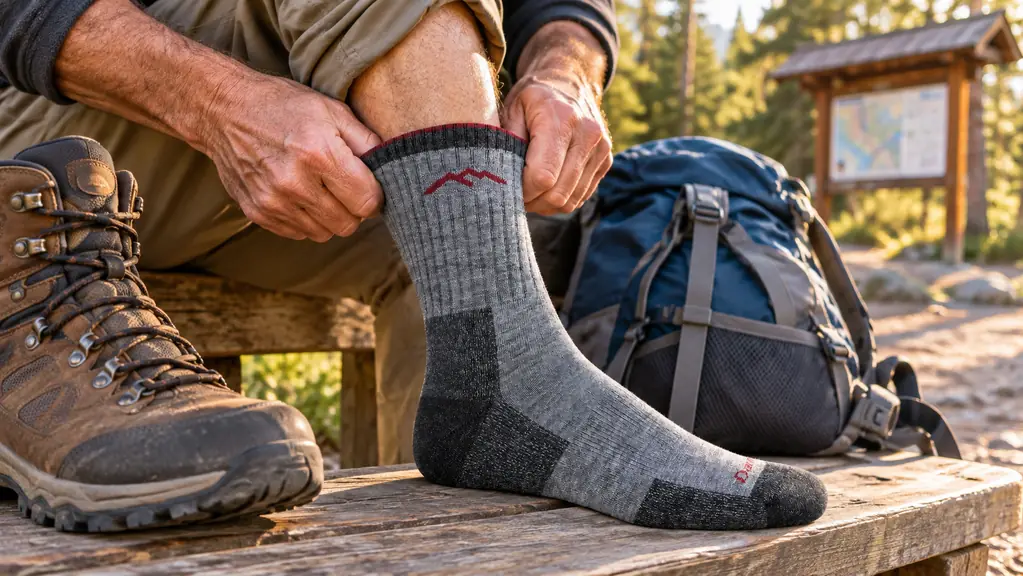
Ray is the one who brought home the Darn Tough socks. He had read about them on some gear forum, probably late at night, and bought two pairs at the outdoor store in Henderson before our next Red Rock hike. I looked at the label and told him he had lost his mind. He said, try them once. That was eighteen months ago, and I have not hiked in anything else since.
The sock is the Darn Tough Vermont Men's Hiker Midweight Micro Crew, style 1466. The label reads 61 percent merino wool, 36 percent nylon, and 3 percent Lycra spandex. It is a men's cut, so I wear the smallest men's size and Ray wears his usual. The first thing I noticed was the fit at the heel. Most socks I had worn either pulled tight across the top of my foot or bunched under the arch. This one sat where it was supposed to sit, and it stayed there through the first mile.
We hiked six miles at Red Rock that Saturday, the Calico Tanks route, with the usual sandstone steps and the loose gravel that gets into everything. I waited for the hot spot. It never came. That evening I checked my heel and found skin, just skin, no redness and no sting. I did not throw the socks in a drawer and forget about them. I wore them the next weekend, and the weekend after that.
I waited for the hot spot. It never came.
The pair I reach for on Saturday mornings
Darn Tough Hiker Midweight Micro Crew, style 1466, in 61% merino wool, 36% nylon and 3% Lycra spandex. Machine washable, made in the USA, and sold in men's sizing, so women should size down.
Amazon Check today's price on Amazon →Here is what the label says, because I think it matters more than the marketing. The sock weighs 3.2 ounces, it is a midweight knit, and it comes up to crew height, which on me lands just above the collar of my hiking boot. The wool is the part that made the difference for me. Cotton held the sweat against my skin, and wet skin is what rubbed. With these, my feet came out of my boots dry at the end of a hot hike, and warm on a cold morning at Mount Charleston when there was frost on the boardwalk.
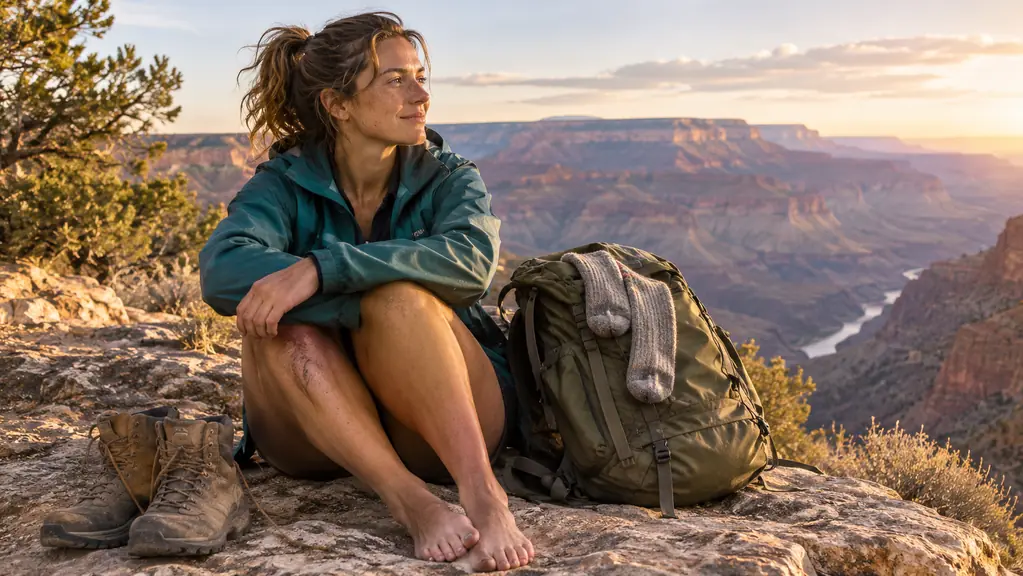
I wash them in the machine with the rest of my hiking clothes and let them air dry over the back of a kitchen chair. Eighteen months in, with maybe forty hiking days on two pairs, the heels are not thin and the cuffs have not gone slack. They look worn, which I expected. What I did not expect was that the fit would hold. The cotton crews I used to buy were ready for the rag bag by the end of one summer.
Last spring we drove the Outback to the Grand Canyon and hiked the South Kaibab Trail down to Cedar Ridge and back, about three miles down and three miles up. The downhill is what bothers my left knee, and by the time we climbed out I was ready for the car and a cold drink. My feet, though, were fine. The socks were damp at the end of the day, which is normal for any sock after six miles in the heat, and they dried overnight draped over the motel room chair.
They are not perfect. The midweight knit is too warm for July hikes in full sun, and I switch to a thinner sock for those. They take longer to dry than a synthetic sock if they get soaked, so on a wet trip I carry a second pair. And because this is the men's cut, women need to size down, which is not always obvious when you are ordering. I wear the smallest men's size and it fits without bunching at the toe.
I have recommended them to two friends, both of whom complained about blisters on the same trail, and both of whom now wear them. One of them called me from the trailhead to say thank you, which is not something that happens often. That call meant more to me than any gear review I have ever read.
What I'd Tell You If We Were Sitting at My Kitchen Table
If we were sitting at my kitchen table, with the coffeepot between us and a map of Zion spread out, here is what I would tell you. Buy one pair first. Wear them on a short trail near home, the way I did at Red Rock, before you trust them on a big trip. Wash them the way the label says and let them air dry. Do not expect a sock to fix a boot that does not fit. My blisters came from wet cotton and a heel that moved, and the Darn Tough socks solved the first problem. A better lacing job solved the second. But if your feet are the part of a hike you dread, if you plan the route around where you can sit down and take your boots off, this is the simplest fix I know that actually works. I resisted it for years. Ray was right.
One pair, one short trail, then decide.
Darn Tough Hiker Midweight Micro Crew, style 1466. 61% merino wool, 36% nylon, 3% Lycra spandex, machine washable, made in the USA. Men's sizing, so women size down.
Amazon Check today's price on Amazon →