
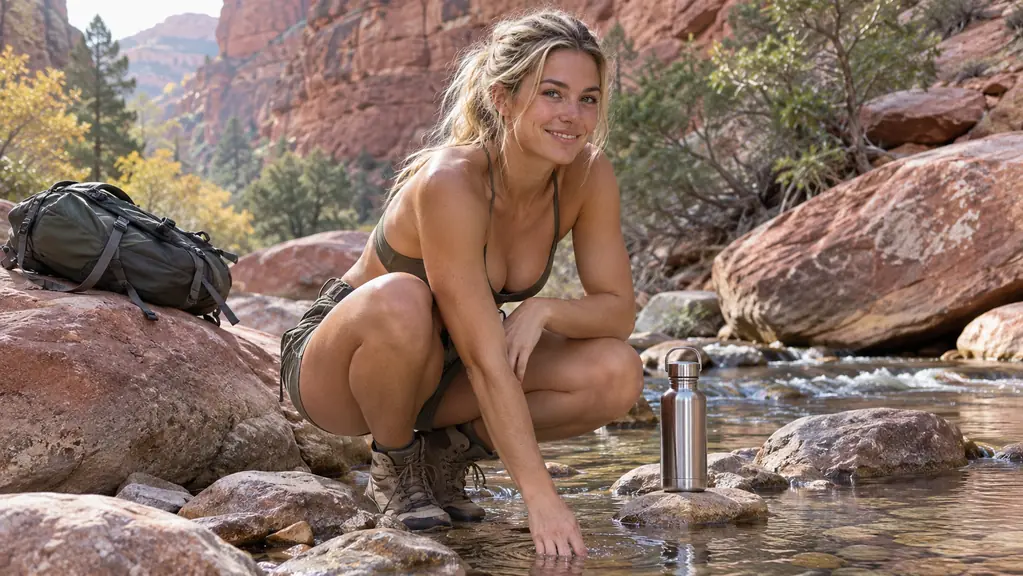
Somewhere around mile four at Red Rock Canyon, my mouth goes dry and I start doing arithmetic I am not qualified to do. How much water is left in the bottle. How far it is to the next junction. Whether the next junction has anything worth drinking. For years my answer was to carry more, which meant a heavier pack, which meant a sore left knee on every downhill. I am 58 and that knee has opinions. Hauling four liters of water through a six mile day hike stopped making sense to me a long time ago, so I changed how I plan water instead of how much of it I carry.
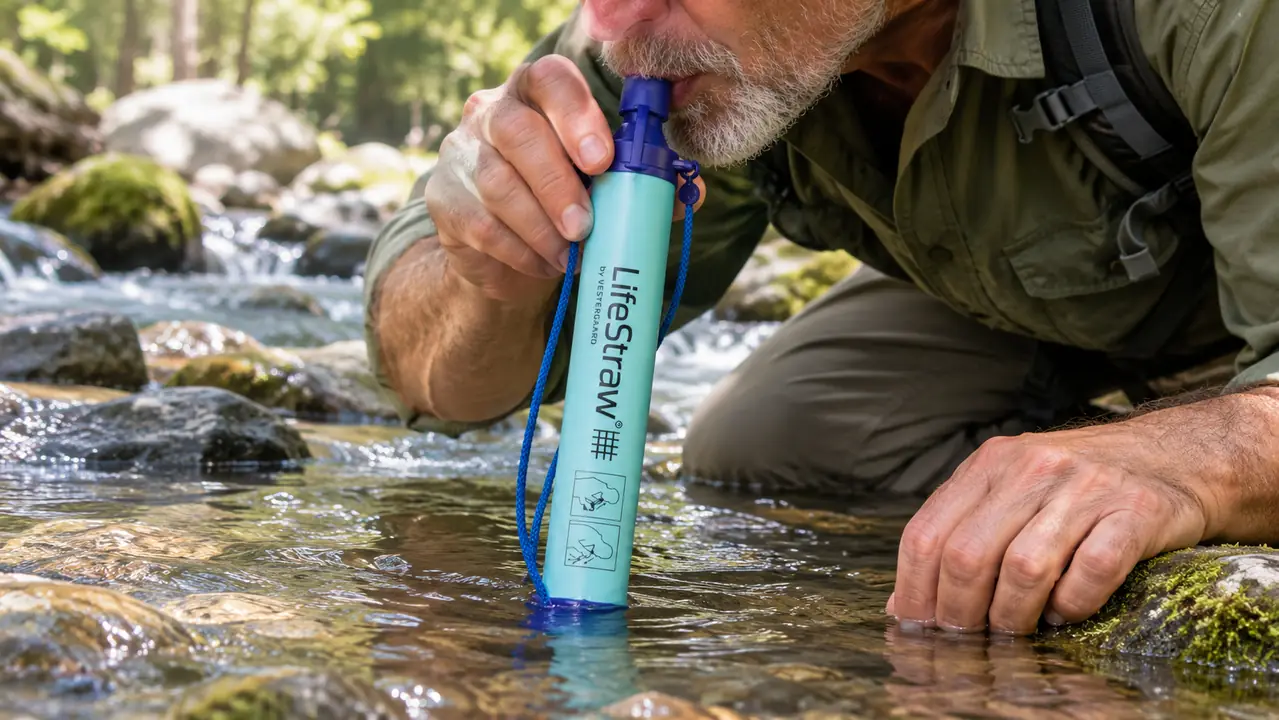
The change was a LifeStraw. Not as an emergency item buried at the bottom of the pack, but as the actual plan. The LifeStraw Personal Water Filter weighs 1.62 ounces and the listing rates it for 1,000 gallons, which is more clean water than I will drink on day hikes for a very long time. It runs on nothing. No battery, no electricity, no pumping. You put the lower end in the water, you drink through the top, and that is the whole procedure. Once I trusted that, the arithmetic at mile four stopped being frightening and started being boring, and boring is exactly what I want out on a trail.
1.62 Ounces That Replaced Four Pounds of Water
No battery, no pumping, no moving parts. Mine rides in the top lid of my day pack and comes out at every creek crossing between March and November.
Amazon Check Today's Price on Amazon →The Five-Step Routine I Use on Every Hike
Step 1: Map Your Water Sources Before You Leave the House
This is the step I ignored for years and it is the one that decides everything else. Before a hike I open the trail map and mark every creek, spring and stock tank along the route, then I read the elevation profile to see where each one sits. A source the map promises at the bottom of a canyon in August is often a dry wash with a nice name and a lot of gravel.
Then I check with the ranger station. On Mount Charleston the higher creeks generally run into late summer and I can count on them. At Red Rock most of what the map labels a spring is gone by June, and the rangers will tell you that plainly if you ask. Ray and I plan around one source we are confident in rather than three we are hoping for. Hope is not a water plan.
I also write down the mileage to that source and match it against what I am carrying. If the reliable water sits at mile five of an eight mile loop, then my two liters only has to cover five miles, not eight. That single number is what lets me leave the house with a lighter pack. I do the figures on the back of the same map I marked up, in pencil, because a plan I can hold in my hand beats one I am trying to remember in the sun.
Step 2: Carry Less Water, but Keep the Filter Where You Can Reach It
On a route with one good source in the middle, I carry two liters instead of four. Two liters is roughly four and a half pounds, and cutting that in half is the difference between a pack that rides well and one that grinds on my shoulders by the second hour. On a long downhill my left knee can tell the difference by mile six.
Placement matters more than most people expect. My LifeStraw lives in the top lid of the day pack, not in the main compartment under a rain shell and a sandwich. If getting to it means stopping, setting the pack down and unpacking, I will talk myself out of using it. Gear you cannot reach in ten seconds is gear you do not really have with you.
It is also the backup for the day the creek is dry. Two liters gets me to the source. The filter covers me if the source turns out to be a puddle, which happened to me once on a side road near Mount Charleston and does not need to happen twice. I would rather carry the ounce and a half and never need it than stand at a mud hole doing arithmetic. I tried the alternative first, a folding bottle stuffed in a side pocket, and it swung against my hip for six miles and annoyed me more than the water weight ever did. The filter in the lid pocket solved the same problem without any swinging at all.
Step 3: Drink on a Schedule, Not on Thirst
Thirst is a lagging indicator. By the time my mouth feels dry I have been behind for a while, and the fix is not to chug a liter at once and feel terrible for twenty minutes. I drink a few swallows every half hour or so whether or not I feel like it, and I start on the first climb rather than waiting for the heat to build.
The signs I watch for in myself are a dull headache, a sudden bad mood and the feeling that my legs are working harder than the slope deserves. Any of those and I stop, drink and eat something. Ray is worse about this than I am. He will hike four hours on half a bottle and then wonder why the last mile feels like punishment.
The reason a schedule is easier with a filter is that rationing stops being necessary. When the only water you have is what is on your back, every swallow feels like it costs something, so you sip less than you need and you pay for it later. When you know you can refill at the next crossing, you drink like a person who is going to be fine. I set a small alarm on my watch for the first two hours of a summer hike, mostly as a reminder to check in with myself, and I turn it off once the habit takes over for the day.
Step 4: Filter at the Source and Treat the Fill Like a Small Project
Pick moving water over still water when you have the choice, and look uphill before you drink. I skip anything with a dead animal in it, an algae mat on the surface, or a camp upstream. Clear, cold, fast water is what I want, and I will walk another quarter mile to get it.
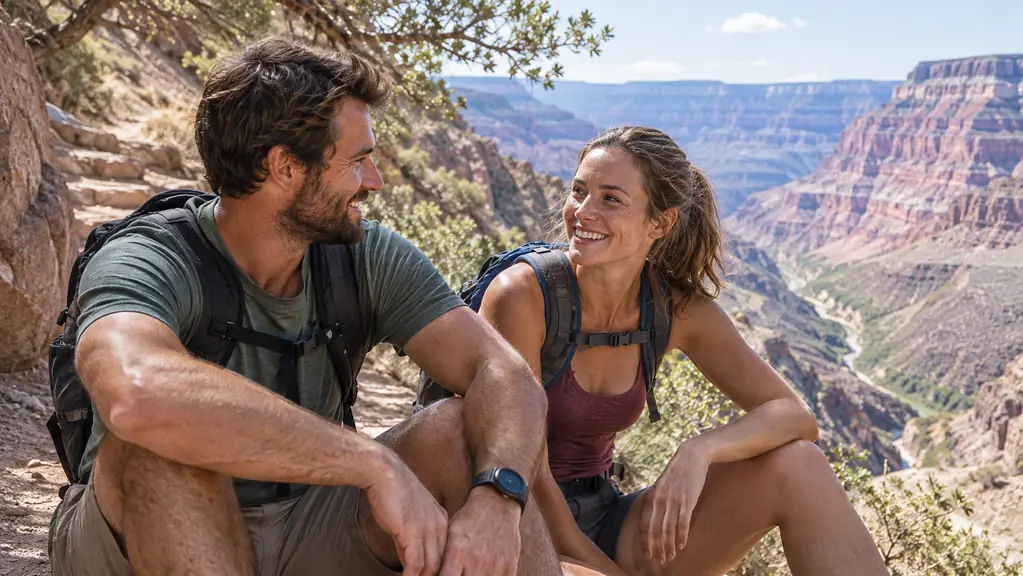
Then I crouch, brace one hand on a rock so I do not end up in the creek, and drink until I am done. The hollow fiber membrane inside the LifeStraw takes out 99.999999% of waterborne bacteria and 99.999% of parasites according to the listing, along with microplastics down to 1 micron, and it reduces turbidity on the way through. What the listing does not claim is virus removal. On clear high country water in the mountains and canyons I hike, I am comfortable with that trade. On a creek running through a heavily used camp or a pasture, I am not, and I would rather walk out thirsty and drive to a faucet.
The listing puts the low end of the operating range at 1°C, which is just above freezing. I have drunk from snowmelt that was close to that and the flow got slow. It still worked, it just took patience, and patience is cheaper than a stomach bug three days before a road trip. One October morning on the North Loop at Mount Charleston the water was cold enough that I had to hold the straw still and wait, and the whole business took maybe two minutes longer than it does in July. That is the entire cost of a cold source.
The filter weighs 1.62 ounces. The water it replaced weighed closer to four and a half pounds. My knee noticed before I did.
Step 5: Top Off Before the Last Climb, Then Clean the Filter at Home
Most of the people I see running out of water on a day hike run out in the last two miles. The car is close, the sun is high, the pack feels heavy, so the bottle stays shut and the headache arrives in the parking lot. I stop at the final source, drink my fill and top off the bottles before the last climb, even when the trailhead is only twenty minutes away. Ray used to skip this step to save time. After one July afternoon at Red Rock where he sat in the passenger seat with the air conditioning on his face for twenty minutes before he felt like driving, he stopped skipping it.
At home the filter gets rinsed and set out to dry with both ends open. It goes back into the pack loose, not crushed under a water bottle where it can sit damp for a week. In winter it comes inside with me, because a low end of 1°C means a freezing night in the Outback is not doing it any favors. The listing rates the whole thing for 1,000 gallons, so at my pace it will be a long while before that number matters.
One more thing. I check the filter every spring before the first real hike of the season. Not because it is fragile, but because gear that has sat in a pack since October deserves a look before I trust it with a long day. I hold it up to the kitchen window, run a little tap water through it, and make sure it draws the way it did the year before. It has not failed me yet, and the check takes less than a minute.
What Else Helps
Electrolytes are worth a thought on hot days. I keep a tube of tablets in the lid pocket and drop one into a bottle at the halfway point. It does not replace water and it does not fix dehydration, but on a 95 degree afternoon at Red Rock it keeps me from feeling wrung out by the time I reach the truck.
Trekking poles are the other thing I will not hike without, for the same reason I stopped carrying four liters. The downhill is where my left knee complains, and two poles take a real load off it. I also try to be off the exposed sections before eleven in the summer, which is less about gear and more about arithmetic I can actually do.
Socks and shoes get more attention than they deserve until you have had a bad day in the wrong pair. I wear the Darn Tough Hiker sock, which is the men's cut, in the smallest men's size. Ray wears the same sock. Neither of us has had a blister worth mentioning since we switched, and that matters when you are stopping more often to drink.
A bandana or a small cloth is the last item. I wet it at the source and put it around my neck on the hot stretches. It is not complicated and it weighs almost nothing, but it makes the second half of a July hike feel like a different hike.
If you want a fuller picture of how this filter has held up over several seasons, and how it stacks up against the Sawyer Mini, both write-ups are on this site and worth a few minutes before you decide. The short version is that the LifeStraw has stayed in my pack and the Sawyer lives in the glove box as a spare, which tells you what I reach for first.
One Less Piece of Arithmetic at Mile Four
If your hike runs 4 to 10 miles with a creek somewhere in the middle, this is the lightest way to stop counting bottles. It weighs 1.62 ounces and needs nothing but the water in front of you.
Amazon Check Today's Price on Amazon →