
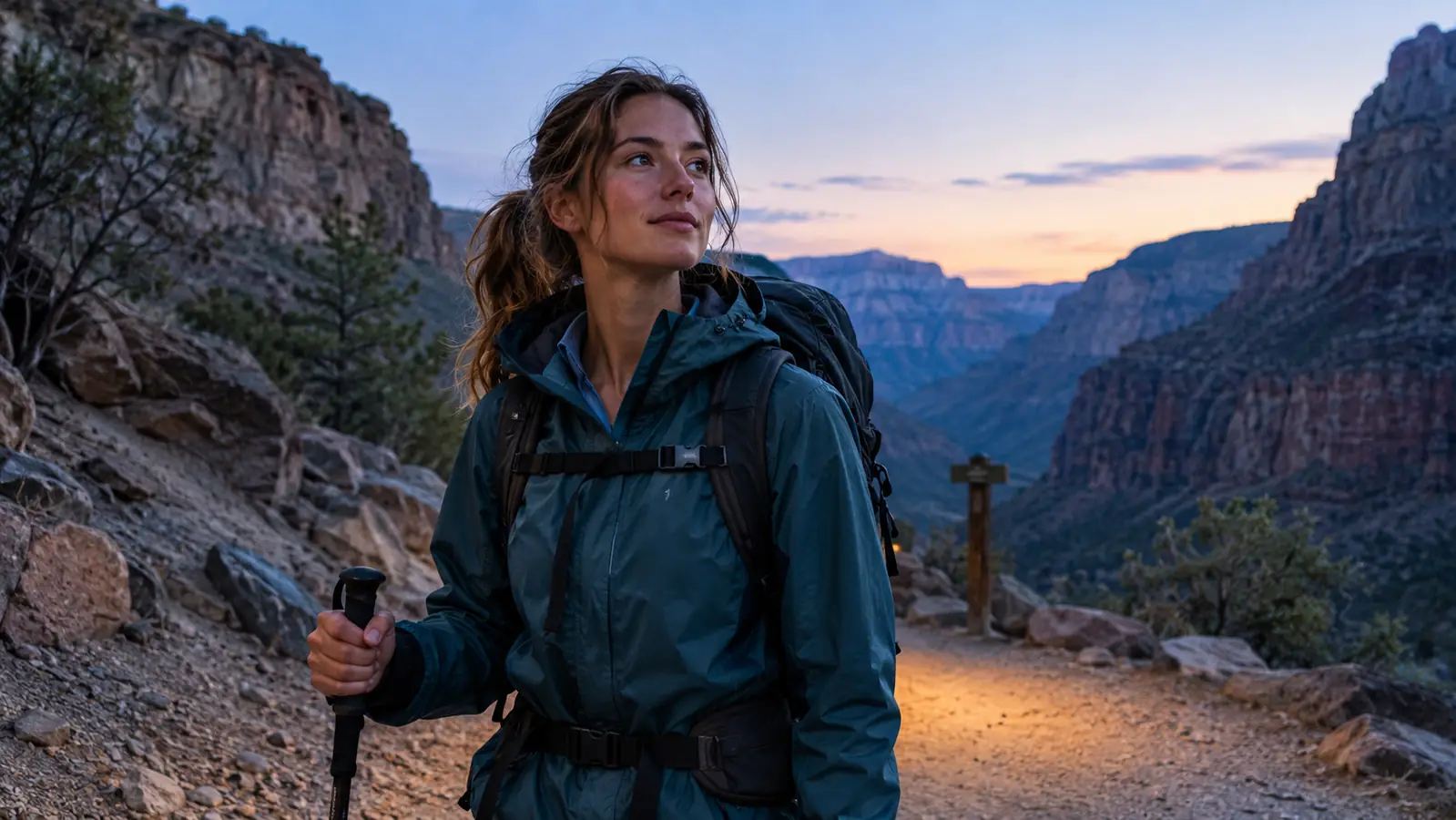
The band is the part that decides. I have owned three headlamps and two of them were plenty bright for anything I do, and neither one survived past the second hike, because by mile six the strap had pressed a hot line into my forehead and I was carrying the thing in my hand like a lantern. So when I started wearing the Lepro rechargeable headlamp, I was not judging the beam first. I was judging the band, and the weight, and whether I would still want it on my head at the turnaround.
I wore it on Red Rock Canyon trails that start before sunrise, on Mount Charleston in the afternoon shade, and for a week in Utah where the only light after dinner came from whatever was strapped to my head. Ray wore the second one, since the Lepro two-pack gives you two lamps whether you need them or not. There are things about this headlamp I do not love, and I will get to all of them. But I keep reaching for it, and that tells you more than a spec sheet will.
The Quick Verdict
Bright enough to spoil you, light enough to forget, and honest about 15 hours only on the settings you will not spend the day on. The band is why I kept wearing it.
Amazon Check Today's Price →One in the pack, one in the glove box, both charged
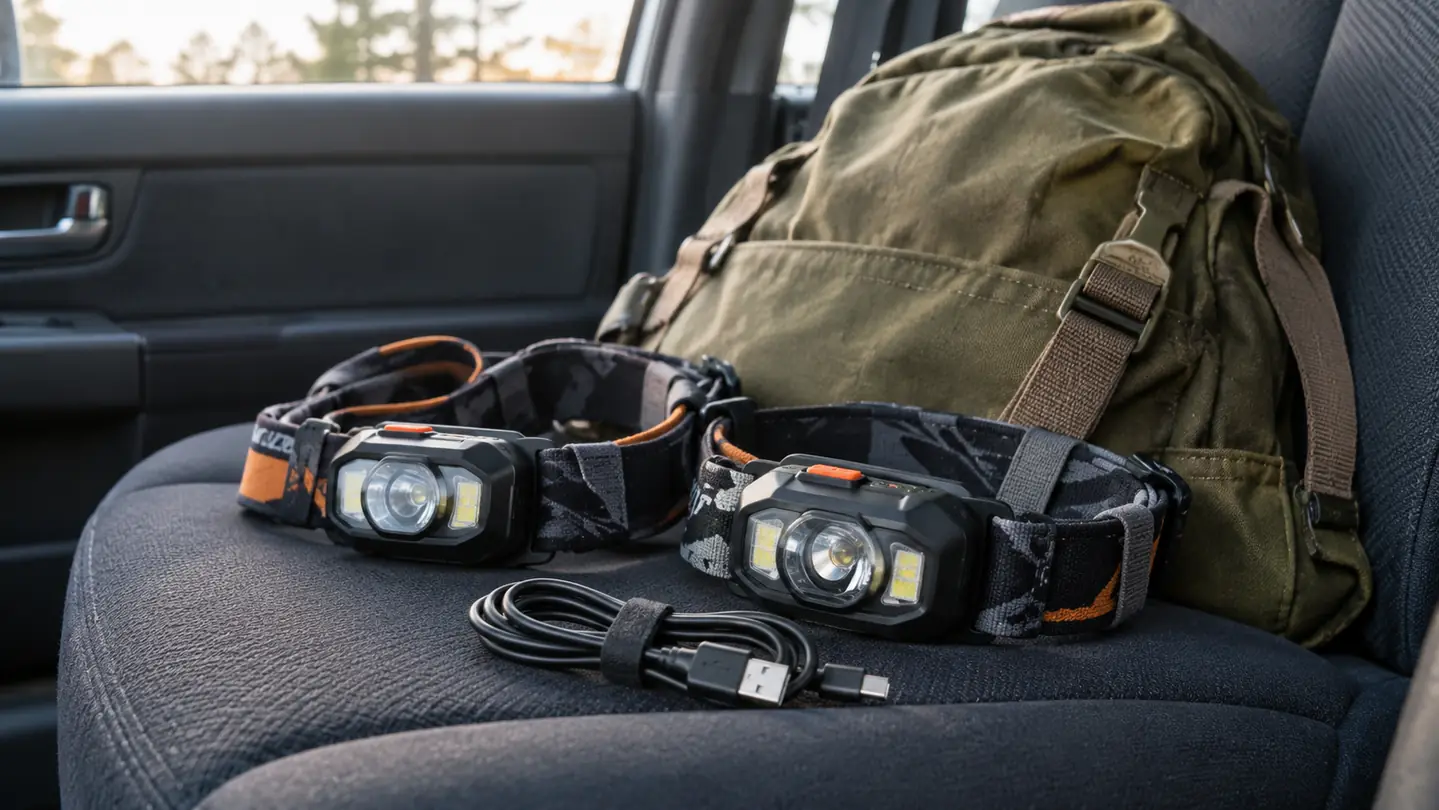
The two-pack is the version that made sense for us. Ray takes one on weekend hikes and the other stays in the silver Outback, so a late start at the trailhead does not turn into a drive home. Two lamps, two batteries, one USB cable in the box.
Amazon Check Today's Price on Amazon →How I Tested the Lepro Headlamp
I am 58 and I day hike, 4 to 10 miles, mostly at Red Rock Canyon and Mount Charleston, with one or two road trips a year to the parks in Utah and Arizona. I do not backpack overnight, so I cannot tell you how this behaves on a three-day trip. What I can tell you is how it behaves on a Saturday.
The routine was the same each time. I charged both lamps the night before, put one on at the trailhead before I turned the car off, and left it on my head for the whole walk unless I stopped to eat. Ray wore the other and complained less than I did, which is normal in our house. Between us the Lepro pair has been out somewhere around fifteen times since spring, in dark, in drizzle, and once in a wind that made me glad I had the band tight.
I also did something less realistic. I walked the block behind our place in Henderson after dark, cycling the modes in order so I could see the difference between spot and flood without a trail to distract me. Nobody uses a headlamp that way, but it is how you find out what the settings actually do.
The first morning I wore it was a Saturday in April, out at Red Rock on a trail I know well enough to walk in the dark but not well enough to enjoy it. We parked at 5:40 and the sky was still that flat grey that makes every rock look like every other rock. I had the lamp on spot high before I locked the car. By the time we reached the first switchback I had stopped looking at the light and started looking at the trail, which is the only test of a headlamp that means anything. Ray turned his on ten minutes later, after deciding he did not need it, which is how Ray does everything.
What the Battery Really Does on a Real Hike
Lepro advertises up to 15 hours of continuous light on a single charge. That number is real, and it is also the number you get on the settings you will not be using most of the time. On spot high, which is what I want when the trail turns loose and I need to see where my feet are going, you are not getting fifteen hours out of anything rated at 2000 lumens. I have never run one flat on a day hike. I have never come close.
Here is the honest version. After a four hour pre-dawn walk at Red Rock, with spot high most of the way and flood on the flat sections, there was still charge in the lamp when I got back to the car. On the Utah trip I charged both every second night out of habit rather than need. If your hikes run 4 to 10 miles like mine, the battery is a non-issue. If you are out for two nights, put the included USB cable in the car and top up on the drive between trailheads.
On the Utah trip I kept a small notebook in the door pocket and wrote down when I charged. That sounds fussier than it was. Day one, both lamps went on the cable in the motel room and came up from nearly flat in about two hours. Day two we hiked at Bryce in the late afternoon and finished in the dark, roughly three and a half hours of lamp time, and both still showed charge. Day three I left the cable at the motel and did not miss it. Four nights, two charges, and no point on any trail where a lamp went dark on us. That is the entire battery story and it is a boring one, which is exactly what I want from a battery.
Rechargeable means you plan around a cable, not around spare cells. That is the tradeoff, and it is worth naming plainly. The lamp takes a charge over USB and the two lithium polymer batteries come in the box, so there is nothing extra to buy. What you give up is the ten seconds of swapping in fresh batteries at the turnaround. Carry a small power bank instead and you have also solved your phone.
The Beam, the Modes and the One Setting I Use Most
Six modes: spot on high and low, flood on high and low, and the red setting. The lamp is rated at 2000 lumens, which I cannot verify with a light meter, but I can compare it to the two headlamps I have owned before. It is meaningfully brighter than both. On spot high at Red Rock before sunrise, it put a pool of light far enough down the trail that I stopped thinking about the dark at all.
Spot is the mode I live in. Tight, and it reaches. Flood is what I switch to when I am eating lunch or digging something out of a pack, because it lights the space in front of me instead of throwing a circle down the trail. The red setting is the one I did not expect to use and now use every trip. It is enough to read a map or find the car keys without wrecking the night vision of whoever is standing next to me. Ray uses it to get dressed in the dark at a motel without waking me, which is worth more than it sounds.
Where the spot earned its keep was a November evening at Mount Charleston when we misjudged the light and came down the last mile in full dark on loose rock. I had the lamp on spot high and walked the outside edge of the trail, and the beam picked out the pale rock at the switchback corners early enough that I could plan where to put my feet instead of reacting to them. That is what the brightness actually buys you on a hike. Not the ability to see. The ability to see a couple of seconds sooner.
The modes cycle in order, and if you overshoot the one you wanted you go around again. On a cold morning that small annoyance becomes a slightly bigger one. I have learned to count.
Spot high is not a fifteen hour setting. On a day hike that does not matter. On a second night out, it is the whole question.
Comfort at Mile Eight, Which Is Where It Counts
The lamp weighs 75 grams and the housing measures about 2.48 by 1.77 by 1.38 inches. Small enough that I stopped noticing it, which is the entire job. My left knee gets sore on long downhills, so I spend the last two miles of any hike looking straight at my feet, and a lamp that slides or throws a shadow every time I look down makes a sore knee worse. This one stayed put through the descent off Mount Charleston without me reaching up once to fix it.
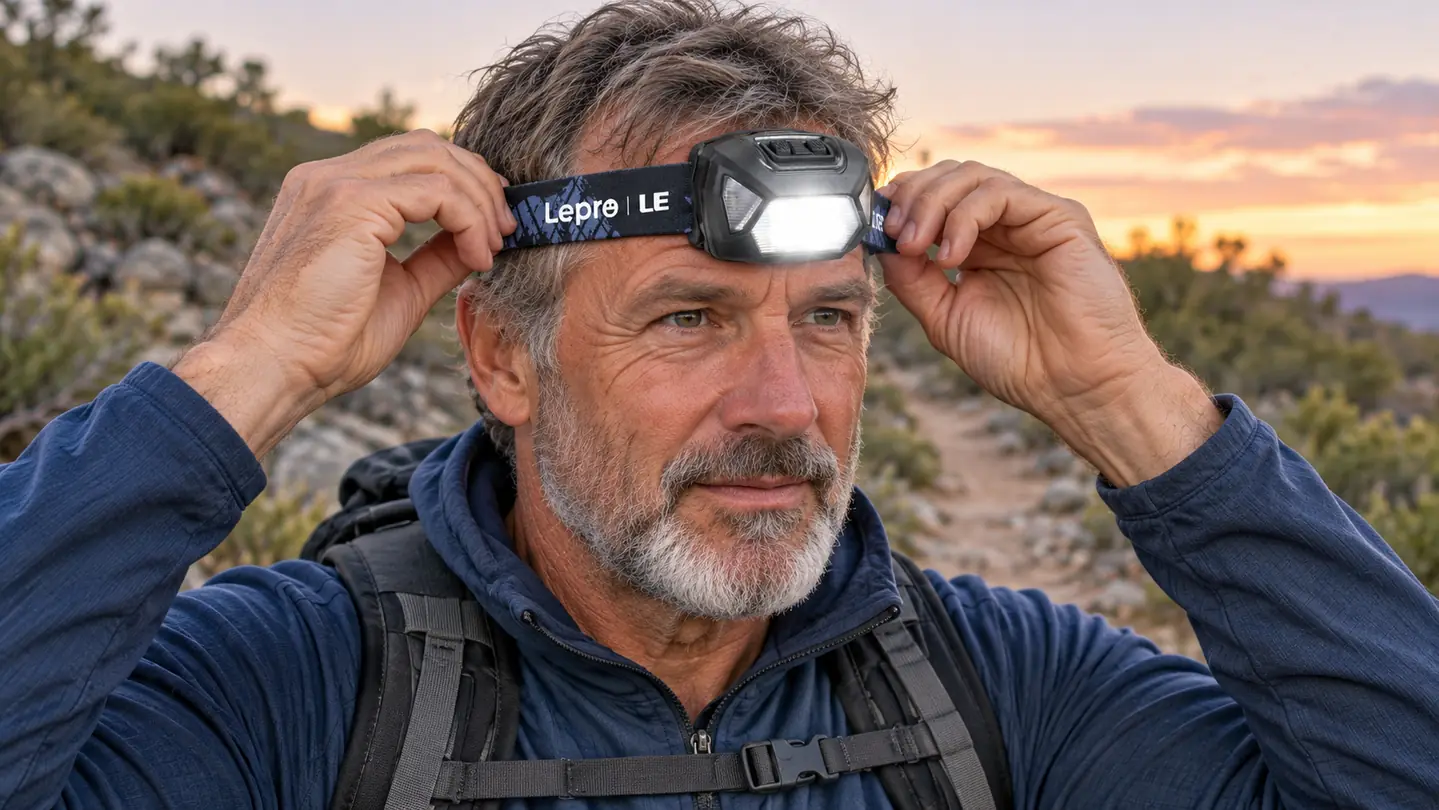
The band adjusts and I found the right fit in the first mile. It does leave a faint mark on my forehead after three hours. Every headlamp I have worn does that, so I am not holding it against this one, but if your forehead is sensitive or you hike in a cap, sort out the fit before you commit to a long day. The band is the part you cannot fix later.
I tried it over a ball cap one afternoon and did not care for the combination. The band sits over the cap and the brim cuts the top of the beam on spot high, so I lost the far edge of the light exactly where I wanted it. Bareheaded, the beam lands where I expect. If you wear a hat on every hike, wear it on the first hike with the lamp and see whether the brim gets in the way, because that is a fit problem the lamp cannot solve for you.
What Two Lamps in One Box Actually Gets You
The two-pack is why I went this way instead of a single lamp, and it changed how we use them more than I expected. One lives in my pack. One lives in the glove box of the Outback. That second one has earned its spot: we get to a trailhead later than planned more often than I would like, and having a charged lamp already in the car means we walk instead of turning around and driving home.
The glove box lamp gets charged when I think of it, maybe once a month, and it has held better than half its charge every time I have checked it. Sitting in a car through a Henderson summer is not obviously kind to a lithium battery and I have no long term data on that. So I check it, I charge it, I put it back. So far it has started every pre-dawn walk I have asked it to start.
It also means Ray has his own and neither of us is negotiating at the trailhead. If you hike alone, the second lamp becomes a spare that sits in a drawer until a neighbor borrows it. Not a bad outcome, just not the one the listing is selling.
How It Compares to the Headlamps I Have Owned
My last lamp was lighter and dimmer and it took three AAA batteries I never had when I needed them. The one before that had a separate battery housing on the back of the band that bounced against my head on every step. The Lepro sits between those two in weight and ahead of both in light, and it solved the battery problem by making the battery something I plug in rather than something I remember to buy.
The AAA lamp did have one virtue this one cannot match. When it died I could fix it in thirty seconds at a gas station. That is worth a great deal on a long road trip and worth nothing at all on a Saturday morning at Red Rock. Know which kind of trip you actually take before you decide which one you want.
What it does not solve is the fit question. If a band does not suit your head, no amount of brightness fixes it. That is the one thing I would tell anyone to check first, and it is the reason I led with the band instead of the beam.
The Annoyances Nobody Puts in the Listing
The 2000 lumen figure is the high setting, and high is not where you will spend the day. On spot high the lamp warms up against my forehead after a while. Not hot enough to bother me, but noticeable in a way the low settings are not. Read the brightness claim as headroom. You have plenty of light in reserve and you will rarely need all of it.
The title says waterproof. The spec sheet says impact and water resistance. I have worn it in real rain on Mount Charleston and it kept working, and I would still not swim with it. That gap between the listing and the spec sheet is the kind of thing I want to know before I buy, not after.
And twice I have pulled the lamp out of my pack with less charge than I left it with, which is my own fault for packing it loose next to a water bottle. If you are the kind of person who tosses gear in a bag, put it in a pocket or a stuff sack. Small thing, but it cost me a walk.
What I Liked
- 2000 lumens on spot high, more light than any day hike needs
- 75 grams and roughly 2.5 inches across, small enough that I stopped noticing it
- Band stayed put through a two mile descent with a sore knee
- Two lamps and two batteries in the box, so two people each carry their own
- Red setting is enough to read a map without killing night vision
- Up to 15 hours on a charge if you are not running spot high all day
Where It Falls Short
- Modes cycle in order, so overshooting means starting the cycle over
- Spot high warms up against the forehead after a while
- Water resistance, not waterproof, whatever the title says
- No spare cells to swap at the turnaround, you charge instead
- Band leaves a faint mark on the forehead after about three hours
Who This Is For
Day hikers doing 4 to 10 miles who start before sunrise or finish after sunset, which is most of the people I meet at Red Rock. Anyone who wants a second lamp for a partner or for the car without buying two separate products. Anyone upgrading from a lamp that runs on AAA batteries they keep forgetting to buy. If you want to see the trail clearly, keep both hands free, and stop thinking about your light once it is on your head, this does that.
Who Should Skip It
Backpackers on multi-night trips who want to carry spare cells and swap them in the cold, because a rechargeable lamp makes you plan around a cable. Anyone who needs a beam that floods a very wide area for moving fast, since spot is where this lamp is strongest and flood is a working light, not a running light. And if you have a forehead that fights every elastic band you have ever worn, try the fit before you commit, because the light is not the part that will send you back to the car.
The honest summary: bright, light, and easier to live with than to brag about
Fifteen hikes in, both lamps still charge, both bands still hold, and neither one has ended up in the bottom of a drawer. If that is the bar you care about, look at the current price on the two-pack and stop reading reviews.
Amazon Check Today's Price on Amazon →