
Most people buy the LifeStraw Personal after reading a list of disasters. I bought it after an ordinary Tuesday at Red Rock Canyon, when my water ran out two miles before the trailhead and my husband Ray handed me the last of his. I took it. Then I felt bad about it for the whole drive home in the Outback. I am 58, I do day hikes of four to ten miles, mostly at Red Rock and Mount Charleston, with one or two road trips a year to Zion or Bryce. I am not preparing for the end of the world. I just wanted to stop rationing water on a hot afternoon.
So the LifeStraw has lived in a lid pocket for two years now, through three states. It works. It also has a temperament, and the temperament is that it is slow and it wants you on your knees. That is the part the glowing write-ups leave out, and it is the part that decides whether the thing stays in your pack or ends up in a drawer. Here is the honest version, including the trips where I stopped bringing it.
The Quick Verdict
A real 1.62 ounce backup that has never let me down at a creek, as long as I am willing to kneel down and drink slowly.
Amazon Check Today's Price →The 1.6 Ounces That Stayed in My Pack
No battery to charge, no cartridge to swap, nothing to assemble at the water. It sits in the lid pocket until the day I need it.
Amazon See the LifeStraw Personal on Amazon →What It Is, Stripped Down
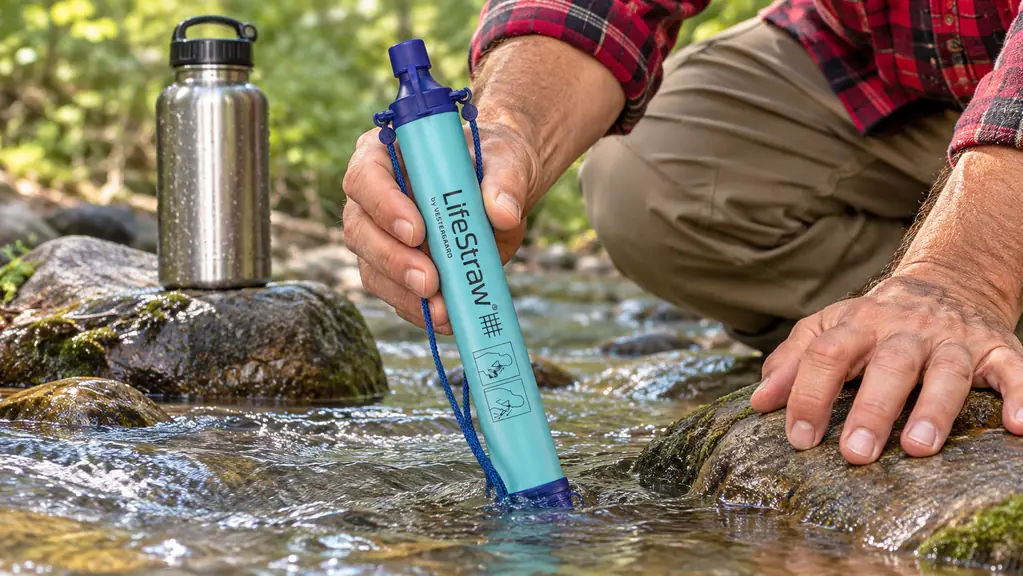
Underneath the emergency branding it is a hollow fiber membrane inside a tube. You put one end in the water, the other in your mouth, and you pull. LifeStraw rates the membrane to remove 99.999999% of waterborne bacteria, including E. coli and Salmonella, and 99.999% of parasites. It also removes the smallest microplastics found in the environment, down to one micron, and reduces turbidity, which is the polite word for the water being cloudy. It needs no electricity or battery. It weighs 1.62 ounces.
Those are the company's numbers and I am not going to pretend I verified them in a lab. What I can tell you is the practical version: it turned creek water into water I could drink without thinking about it, and it did it without a single thing that runs down or needs replacing mid hike. The rest of this is the part you only learn on the second trip.
Two details in the listing explain more about how this behaves in your hand than any of the marketing copy does. The first is the purification method, hollow fiber membrane. That is not a chemical dose and it is not a ceramic element you scrub clean. Water passes through a bundle of tubes with walls full of holes at a scale you cannot see, and anything larger than the holes stays on the outside. You are not treating the water, you are straining it. The second is the temperature floor, listed at 1 °C. That is cold but not frozen, and the distinction matters more than it sounds. A membrane holding water that freezes is not the same membrane when it thaws. I have never tested that on purpose. I have simply stopped leaving my pack in the car overnight in February, and I check the overnight low before a Mount Charleston morning in a way I never used to.
How I've Actually Used It
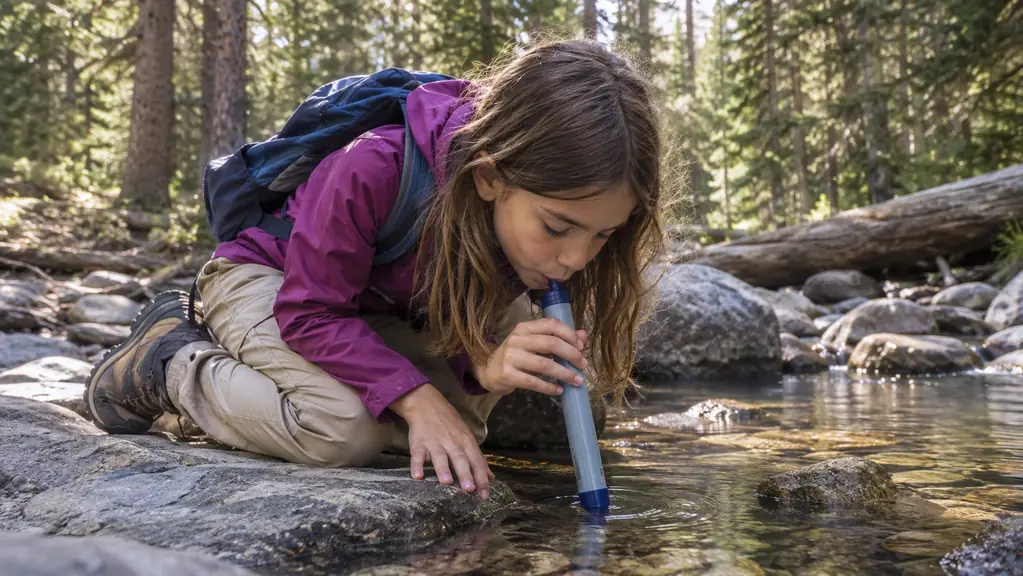
The first real test was a creek on Mount Charleston in June, runoff still high, water moving fast over rock. I knelt on a flat stone, put the base of the straw in, and pulled. It took a couple of seconds before anything reached my mouth, and then it came up cold and clean. Filling a one liter bottle took me about ninety seconds, working in stages, because the straw gives you a mouthful at a time and you keep having to go back down for more. It was not elegant. It was effective.
The second was the tail end of a ten mile day at Red Rock, in a stretch where I had plainly misjudged the heat. I found a seep with just enough water to cover the end of the straw and drank until I stopped feeling foolish. The third was a spring outside Zion on a road trip, where I wanted water that had not been sitting in a warm car since a gas station outside Mesquite.
Before the straw I carried purification tablets, and I want to be fair to them, because they are not useless. They weigh less than the straw and they work on viruses, which the straw does not claim. What broke me was the clock. You drop a tablet in and then you sit there watching a bottle of water you are not allowed to drink yet, on a day when the whole reason you stopped is that you are already thirsty. Thirty minutes is a long time to hold a bottle you cannot open. The taste was the second thing. Tablets leave a pool-chemical edge I could never talk myself past, and I started skipping water rather than drinking it, which is the opposite of what you want. The straw gives you a mouthful in about four seconds. I still carry tablets on road trips for the virus gap. For the ordinary creek on an ordinary Saturday, the straw won on both the clock and the taste.
Ray uses it too, and that is where the design shows its seams. It is one straw, one person, one mouthful at a time. We take turns, which is slower than a pump and much slower than a bottle with a filter built in, but it also means there is nothing to break and nothing to lose except the straw itself.
What Nobody Tells You About the Flow
It is slow, and no product photo can show you that. You are pulling water through a membrane, so the straw asks for suction, not gravity. A bottle tips and the water comes to you. A straw makes you work for every swallow. My first liter took ninety seconds of steady pulling. By the third liter on the same stop, the pull was noticeably harder, which is the membrane doing its job and holding onto what it caught.
The bigger issue is posture. To drink from moving water you kneel, or you crouch, or you lie on your stomach on a rock and reach down. I have a left knee that gets sore on long downhills, and the getting down and getting up is what I notice, not the drinking. There is no graceful way to do it. If you have ever watched someone drink from a filter straw at a creek, you have watched them look ridiculous, and that includes me.
Two things make the pull harder than it needs to be, and both are manageable once you know about them. The first is air. The first pull of any trip comes with a gurgle and a hesitation while the tube fills, and if you let the straw drain between sips you pay that cost all over again. I keep the base end down and the tube wet between swallows. The second is the angle. Held straight up and down at the edge of a creek, you are fighting the current and pulling at the same time. Lay it flatter, closer to the surface, with the base just under the water, and the pull gets noticeably easier. It took me two seasons to work that out, which I am not proud of. And on the third liter of a stop, expect to work harder. The membrane is loading up with everything it just took out of the water, and the flow tells you so long before anything looks different.
So I plan around it now. I drink at the crossing instead of carrying water away from it, I look for a flat rock at a comfortable height, and I do not try to top off a bottle while standing in the middle of a current. Twenty seconds spent picking a better spot saves a lot of kneeling.
Ninety seconds of pulling, on my knees on a cold flat rock, for one liter of water. That is the honest shape of it.
The Taste Question
People ask whether the water tastes like anything. It does not. There is no chemical aftertaste, no iodine edge, nothing to mask. Creek water comes out tasting like cold water, which is a strange thing to be surprised by and was the thing I appreciated most. The only odd note is the water that stays in the straw between sips, which warms in the tube and tastes flat on the first pull after.
Turbidity is the other half of it. The straw reduces cloudiness, but on a silty seep the water still looked faintly brown in the bottle even though it drank clean. Looking at it was harder than drinking it. If you need your water to look perfect before you trust it, budget some mental effort for that.
Ray is less fussy than I am and his verdict was shorter: it tastes like water, and it beats being thirsty. He is right, and I have thought about that on more than one dry stretch since.
The Limits I Ran Into
The straw stores nothing. This is the limitation that matters most and the one least mentioned. You cannot fill it and walk away with a full bottle unless you are carrying a bottle. I bring a one liter stainless bottle for exactly this reason, and the filter feeds the bottle, not the other way around. Without a container you are drinking at the source and leaving with a wet face.
Here is the concrete version of that problem. On a ten mile loop at Red Rock in April, I carried one liter and finished it by mile seven, which is normal for me in that heat. I had the straw and I had a seep, and I still had no water in the bottle, because the straw does not fill anything. I knelt, I drank until I was not thirsty, and then I stood up and walked away with the same empty bottle I arrived with. That is fine when your plan is to drink at water. It is not fine when your plan is to leave water with water still in it. The fix is a bottle, and the bottle weighs more than the filter does. Nothing about the straw changes that math, and anyone claiming a filter straw replaces a water bottle has not carried one up a hill.
It filters for one person at a time. If Ray and I both need water, one of us waits. On a hot day with a long climb out, that waiting is not a small thing. If you hike in a group of four or five, this is the wrong tool and you will resent it by the second stop.
The listing claims bacteria, parasites and microplastics. It does not claim viruses. That gap matters if you are drinking from a source downstream of a town or a lot of people, and it is one reason I would not treat this as my only method on a trip outside the country.
The lifetime figures in the listing also disagree with each other. One bullet says the microbiological system provides 4,000 liters, or 1,000 gallons, of clean water. The spec table lists a capacity of 1,000 liters. I cannot tell you which number is right, and I have not come close to either on day hikes, but it is worth knowing before you build a season around one straw. The spec sheet lists a low temperature of 1 °C, so do not leave it in the Outback overnight in January and then trust it.
How I Carry It
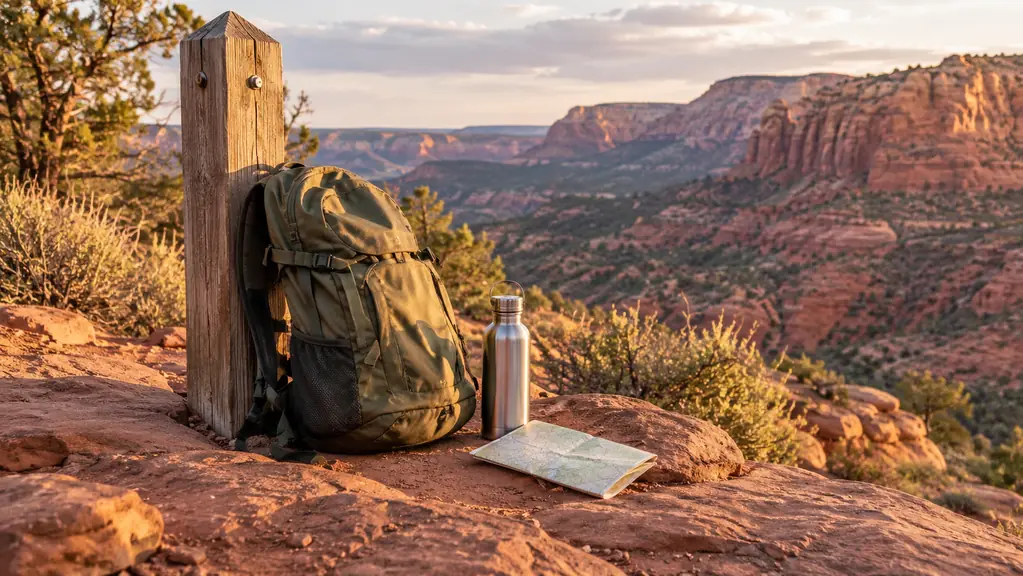
It lives in the lid pocket of my daypack, loose, next to a lighter and a spare hair tie. No case, no pouch. Two years of that and it still works. I check it before each trip the way I check the lid on the bottle, and I have never had to do anything else to it. That simplicity is the whole reason it comes along, and it is the reason I stopped carrying a second bottle on short hikes.
I learned to check the pocket the hard way. One morning in March I pulled the pack out of the Outback at the Red Rock trailhead and found the lid pocket unzipped, with the straw still inside by luck and a hair tie gone. Nothing dramatic happened. But it reset how I pack. Now the straw goes in first, the lighter on top of it, and the zipper gets a tug before the pack goes in the car. It takes four seconds and it has saved me a walk back to the parking lot at least once. The other habit is seasonal. When the overnight lows at Mount Charleston drop toward freezing, the pack comes into the house with me instead of riding in the car, because the spec sheet's low end is 1 °C and I would rather not find out what a frozen membrane does to a filter I am depending on.
Pros and Cons
What I Liked
- 1.62 ounces, lighter than a second water bottle
- No electricity or battery, nothing to charge or replace mid trip
- Hollow fiber membrane removes bacteria, parasites and microplastics down to one micron
- No chemical taste and no aftertaste to mask
- One piece, nothing to assemble when you are already thirsty
- Rated for a very long life, far past anything a day hiker will use
Where It Falls Short
- Slow. A liter takes about ninety seconds of steady pulling
- Requires kneeling or crouching at the water
- One person at a time, awkward in a group
- Stores no water, so you need your own bottle
- Does not claim virus removal
- Flow stiffens as the membrane loads up
- Listing gives two different lifetime figures
- Cannot be allowed to freeze
Who This Is For
Day hikers doing four to ten miles who cross a creek, a seep or a spring and would rather drink than ration. Road trippers who stop at a spring outside a park and want water that did not come out of a warm car. Anyone building a small emergency kit for the trunk, where a filter that needs no battery and takes up almost no space makes obvious sense. If your plan has always been some version of if I run out, there is a creek, this closes the gap between the plan and the thirst.
Who Should Skip It
Backpackers filtering liters at camp should buy a squeeze system instead, because a straw makes you kneel once per mouthful and you will hate it by the second night. Groups should skip it too, since a filter that serves one person adds a queue to every water stop. Skip it if your trails are dry, because a filter cannot help you at a crossing that is not there. And skip it if you want to fill a bottle without getting down on the ground, since that is the one thing this design will never do for you.
If You Cross Water, Carry It. If You Don't, Don't.
Two years in a lid pocket, no battery, no cartridge, no fuss. It earns its 1.62 ounces on the days the creek is the only water around.
Amazon Check the LifeStraw Personal on Amazon →