
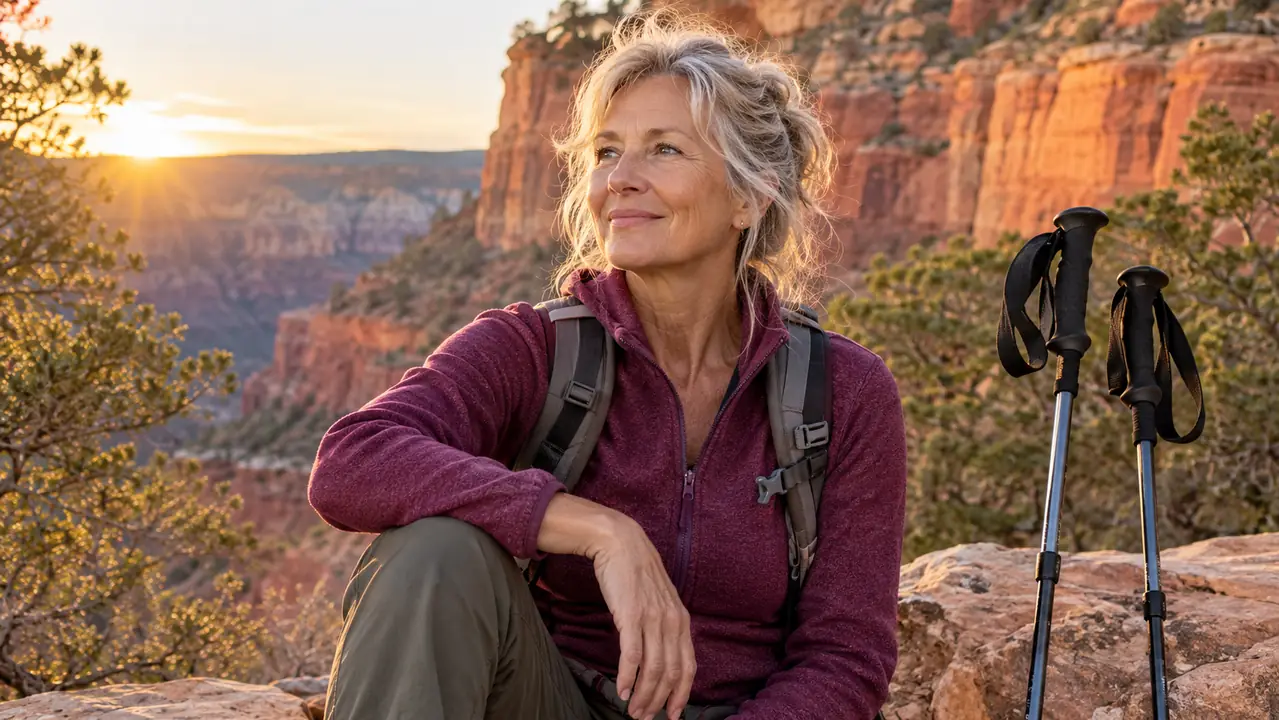
I used to plan hikes around the downhill. Not the views, not the mileage, not where we would stop for lunch. The descent. The night before a hike I would pull up the elevation profile and do the math on how much of it pointed down, because somewhere in the second mile of any steep descent my left knee starts sending up a signal I cannot ignore. Red Rock Canyon is twenty minutes from my house in Henderson, Nevada. Mount Charleston is a little farther. Both have trails I love, and both end the same way, with me picking my way down like the ground might give out.
Ray noticed before I did. My husband is 61, walks faster than me on flat ground, and had been keeping a pair of TrailBuddy poles in the back of the Outback for two years. He suggested I try them maybe three separate times. I said no three separate times, mostly because I thought poles would make me look like I needed help, and partly because I did not want one more thing to carry.
Then a friend handed me hers on a loop at Mount Charleston and I understood in about ten minutes. I ordered the TrailBuddy Trekking Poles that same week, mostly because they were the pair she used and she had nothing but good to say about them. Ray got a quiet I told you so, which he was gracious enough not to say out loud.
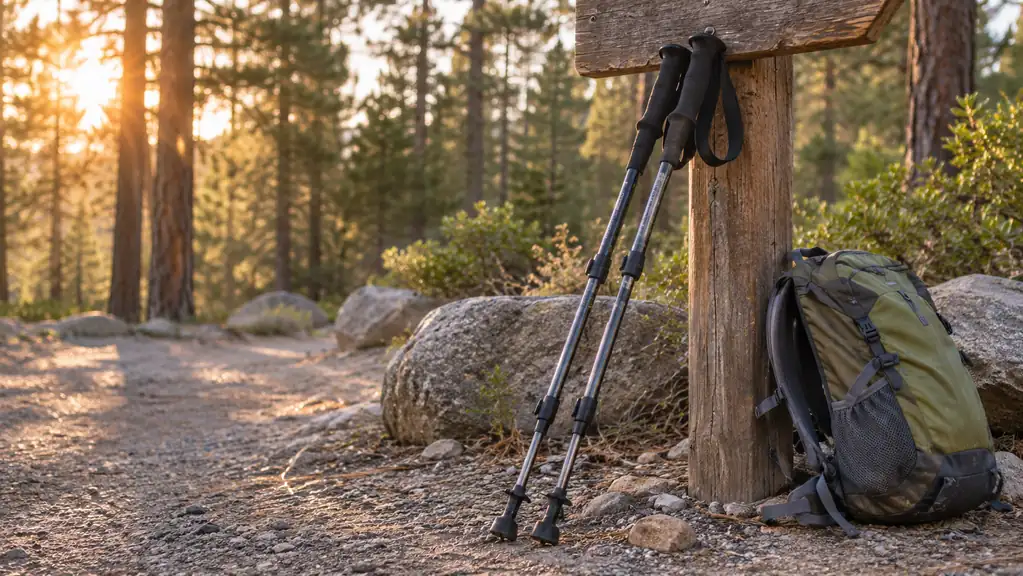
Here is what you actually get. Two poles made from 7075 aircraft-grade aluminum, 9.7 ounces each, with the whole set listed at 1.2 pounds. They extend to 54 inches and collapse down to 24.5 inches. The locks are levers rather than the twist style, and they open with one hand, which sounds like a small thing until you are standing on a slope trying to adjust a pole with both hands while your daypack pulls you backward.
The first hike with them was a six mile out and back with about 1,400 feet of gain, which meant 1,400 feet of loss on the way home. I planted, stepped, planted, stepped, and somewhere around the halfway point of the descent I realized I had not thought about my knee once.
Somewhere around the halfway point of the descent I realized I had not thought about my knee once. That had not happened on a downhill in four years.
The poles that gave me back the second half of the hike
Two poles, 9.7 ounces each, 7075 aluminum, lever locks you can work with one hand. Check today's price and the current listing details on Amazon.
Amazon See the TrailBuddy Trekking Poles on Amazon →What surprised me is that the poles did not make my knee stronger. They simply moved some of the work. On a descent my arms were now doing a share of what my knee had been doing alone, and by the bottom of the trail I felt like I had walked six miles instead of survived six miles. Ray says I talk more on the way down now. I think he is right.
The details I actually notice now
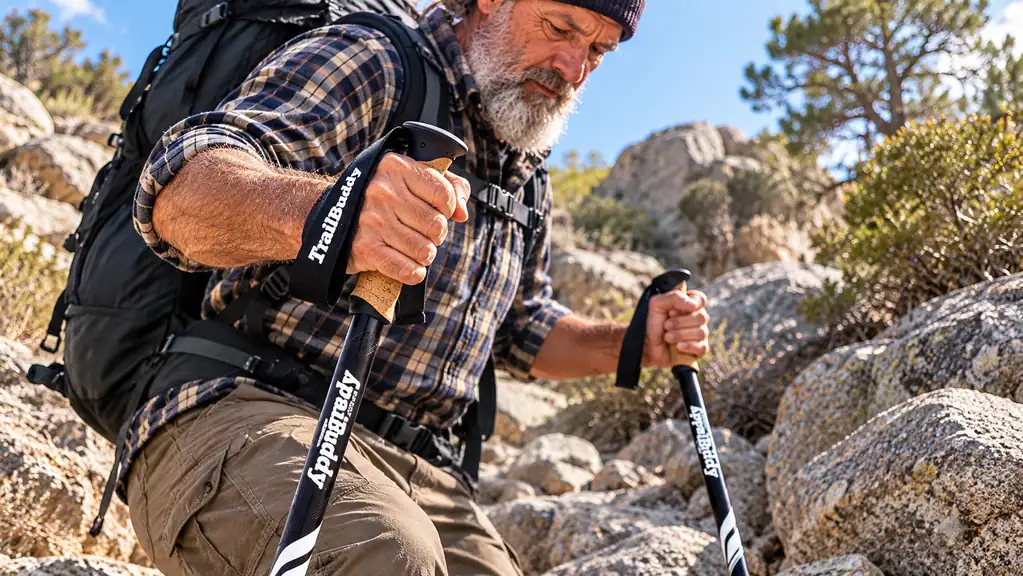
The TrailBuddy set comes with a carry bag, mud baskets and snow baskets, and the pole tips are threaded so the baskets stay screwed on. That last part matters more than it sounds. My friend's older poles shed a basket in wet clay once and we spent ten minutes hunting for it. I keep the mud baskets on from November through March and swap to the bare tips the rest of the year, and the carry bag lives behind the passenger seat so I am never the person who forgot her poles.
Honest complaints, because I always have some. The lever locks on the TrailBuddy poles took me two hikes to trust. I over tightened them the first time out, which is easy to do when you are used to twist locks, and then had to loosen both poles back down. The padded straps also took a few tries to set at the right length, and I got a small hot spot on one thumb before I stopped gripping the handle like a ski pole. None of that is a defect. It is just a short adjustment period, and it is worth knowing about before your first steep day.
They are also backed by a five year limited warranty covering defects, which I have not had to use. If you want a fuller accounting of how they have held up over a whole season, there is a long-term review that goes deeper, and a head-to-head against cork grip poles if you are deciding between styles.
What I'd Tell You If We Were Sitting at My Kitchen Table
I would tell you that poles are not a piece of gear that makes you look like you need help. They are a piece of gear that lets you keep doing the thing you already love doing. My knee is not fixed and I am not pretending otherwise. I still take the shorter descent when the trail offers one. But I stopped planning my weekends around what my knee might do at mile four, and that is worth more to me than any line on a spec sheet.
I would also tell you who should skip them. If your hikes are flat greenway loops of two or three miles, you probably do not need poles and they will just be weight in your hands. If you are counting ounces for an overnight trip, these are a solid everyday pair but not the lightest thing on the market. And if your knee hurts enough that you are changing how you walk, see someone about the knee first. A pole is a tool, not a treatment. For a day hiker doing four to ten miles with real elevation, though, the TrailBuddy pair is the one I would put in your hands and the one I would tell you to stop arguing with your husband about.
One more downhill you don't have to white-knuckle
Lever locks you can work one-handed, 54 inch max height, collapses to 24.5 inches for the drive home. Take a look at the current listing on Amazon.
Amazon Check Today's Price on Amazon →