
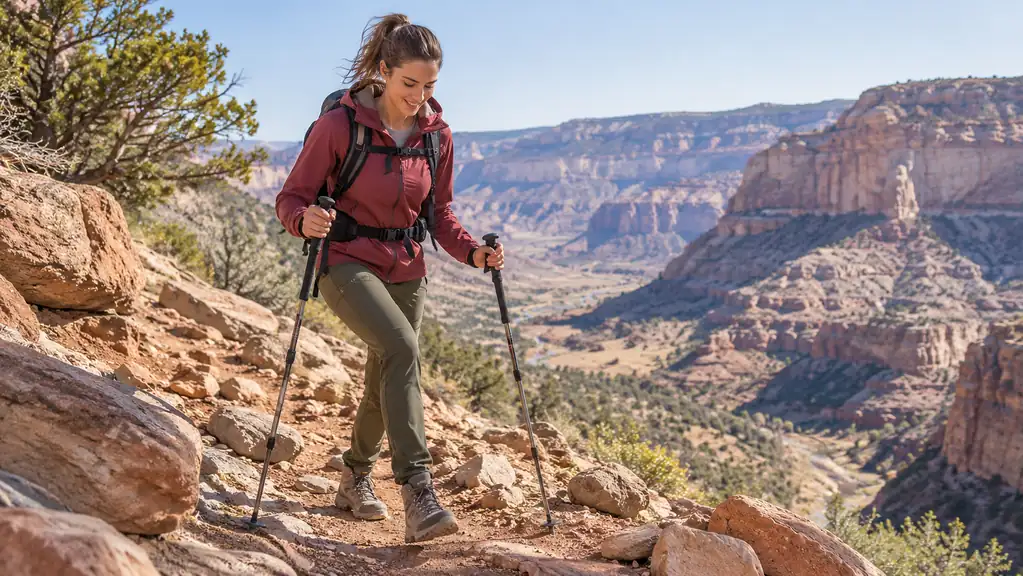
For most day hikers who walk 4 to 10 miles at a time, the TrailBuddy Trekking Poles are the easier pair to live with. The lever locks adjust with one hand, the poles collapse to 24.5 inches, and the set includes a carry bag, mud baskets, snow baskets, and a 5 year limited warranty. Cork grip poles have a real advantage too: cork manages sweat and molds to your palm in a way that many synthetic handles do not. The right pick comes down to whether you value fast adjustment and a simple lock, or the feel of cork against your hand.
I'm Marisol Reyes. I hike Red Rock Canyon and Mount Charleston most weekends with my husband, Ray, and I take one or two road trips a year to Zion, Bryce, or the Grand Canyon. My left knee gets sore on long downhills, so I care about how a pole feels on the descent, not just how it looks in the box. I have used both lever-lock aluminum poles and cork grip poles on the same trails. This is the practical breakdown I would give a friend.
| TrailBuddy | Cork Grip Trekking Poles | |
|---|---|---|
| Handle and strap | Padded straps and ambidextrous hand orientation | Cork handle with brand-specific strap design |
| Lock type | One-hand lever locks | Varies by model; check before you buy |
| Max height | 54 inches | Varies by model |
| Packed length | 24.5 inches collapsed | Varies by model |
| Weight | 1.2 pounds per pair; 9.7 ounces per pole | Varies by model |
| Warranty | 5 year limited warranty | Varies by brand |
| Included pieces | Carry bag, mud baskets, snow baskets | Varies by model |
| Best for | Day hikers who adjust length often and wear gloves | Hikers with sweaty hands who prefer a cork feel |
Where TrailBuddy Wins
The lever locks are the reason I would hand the TrailBuddy set to a friend first. You flip a lever open, set the pole to the height you want, and press it closed with one hand. On a cold morning at Mount Charleston, when I have a glove on and the other hand is holding a map or a water bottle, that matters. Twist locks ask for two hands and a few turns. The TrailBuddy lever is a simple tool that does one job, and it does it without a fight. Ray noticed it too. He is 61 and he adjusts his poles more than I do. He set both poles at the trailhead in less time than it takes to pull on a pack.
The packed size is the second win. At 24.5 inches collapsed, the TrailBuddy poles fit in the back of our silver Subaru Outback without a fight. The 54 inch max height gives tall hikers room, and the 1.2 pound pair weight, or 9.7 ounces per pole, is light enough for a 4 mile walk and steady enough for a 10 mile day. The 7075 aircraft aluminum shaft, padded straps, and ambidextrous hand orientation are all listed details. Add the carry bag, mud baskets, snow baskets, threaded pole tips, and the 5 year limited warranty, and the package is easy to recommend. That warranty is not a marketing line to me. It is the difference between a tool I trust and a tool I baby.
Where Cork Grip Wins
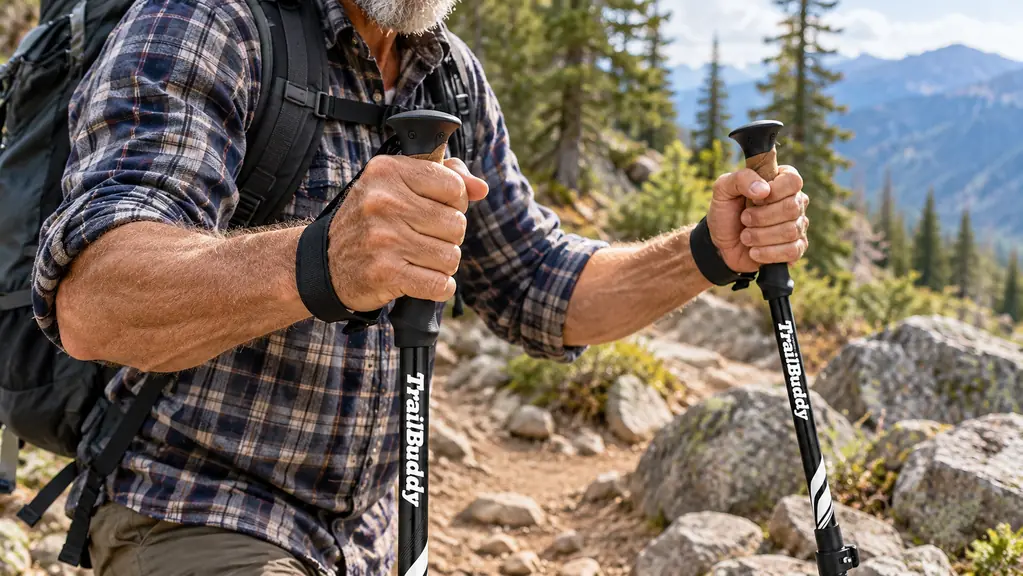
Cork is not a gimmick. On a hot climb out of Red Rock, my palms sweat, and a cork handle keeps its grip better than a smooth surface. Cork also softens and molds to the shape of your hand over time. If you have ever had a pole handle turn slick on a steep section, you know the difference. For hikers who run hot, hike in humid places, or simply prefer a natural feel, cork earns its place. It is the one part of the cork design I would not argue with. Ray has sweaty hands and he noticed it on the climb. He still likes the lever lock, but he admitted the cork felt better at the top.
Cork has a break-in period and a maintenance bill in time. It can dry out, get dirty, and need cleaning. Some cork handles feel rough at first. It also is not automatically better for everyone. A cork handle on a pole with a slow lock is still a pole with a slow lock. That is the tradeoff. Cork wins on hand feel. It does not win on convenience, packed size, or warranty unless the specific brand offers those things. I would not buy a cork pole just for the cork. I would buy it if the whole pole fits my hand and my trail.
Want the one-hand lock and the 24.5 inch pack size?
The TrailBuddy set gives you lever locks, a 54 inch max height, padded straps, and a carry bag for day hikes. Check the current listing for details.
Amazon Check the TrailBuddy Listing on Amazon →How I Compared Them
I compared the TrailBuddy set against a pair of cork grip poles on the same trails, with the same day pack and the same shoes. My loop at Red Rock is about 6 miles with a rocky climb and a long, loose descent. The Mount Charleston day was 9 miles with a more steady grade. I swapped poles at the halfway point on both hikes. I paid attention to four things: whether the lock slipped, how the grip felt when my hands got sweaty, how the poles packed in the Outback, and how my left knee felt the next morning. I did not test them on an overnight trip because I do not backpack. This is a day hiker's comparison.
A note on the cork side: cork grip poles are a category, not one model. Handle shape, lock type, weight, and warranty vary by brand. I am comparing the idea of a cork handle against the specific TrailBuddy build. If you are shopping a cork pole, check its lock and its packed length before you buy. The TrailBuddy numbers are fixed: 54 inches max, 24.5 inches collapsed, 1.2 pounds per pair, 9.7 ounces per pole, 7075 aircraft aluminum, lever locks, and a 5 year limited warranty. Those are the hard points I could verify.
Length And The Downhill Knee
Pole length is not a set-and-forget number. On a steep descent, I shorten the poles a little and plant them ahead of me. On a flat stretch, I lengthen them. The TrailBuddy lever locks make those changes quick. I can do it while walking, with one hand, without stopping to wrestle a twist lock. That is the difference between a pole I adjust and a pole I leave at one height because changing it is annoying. On the Mount Charleston day, I changed length four times. I would not have done that with a twist lock.
On the downhill, the pole takes some of the load off my left knee. The lever lock held on the loose gravel at Red Rock. I did not feel the pole slip or shorten under weight. The cork grip also felt good on the descent, but the cork pair I used had a twist lock, and I found myself leaving it at one length. If your knee is the reason you carry poles, the lock matters as much as the grip. The TrailBuddy set wins that part of the test for me.
Weight, Packing, And The Car Test
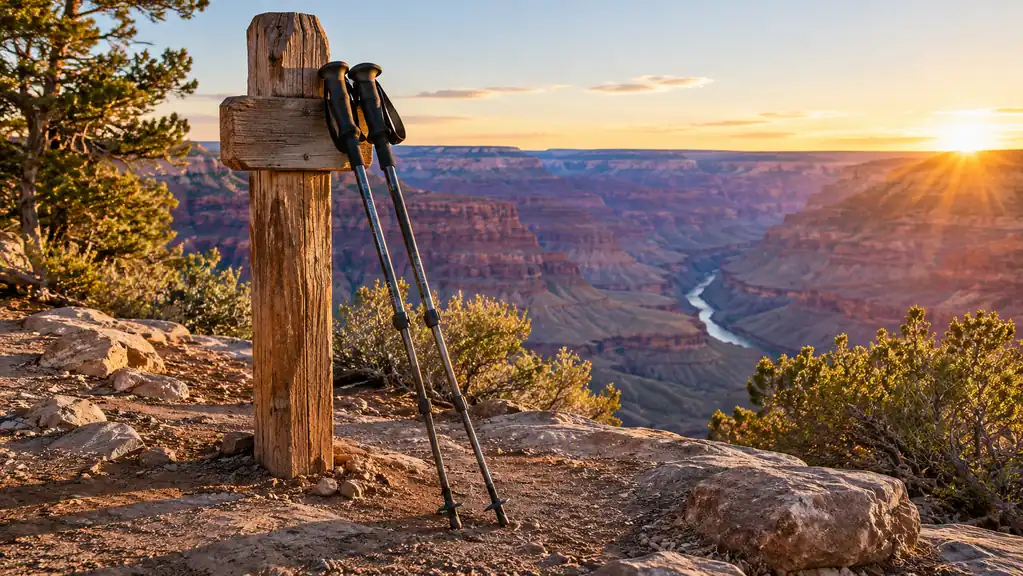
At 1.2 pounds for the pair, the TrailBuddy poles do not feel like a burden on a long day. The 9.7 ounce per pole weight is light enough that I forget I am carrying them on the flats. The cork pair I used was in the same range, so I would not call weight the deciding factor. The difference is how the poles pack. The TrailBuddy set collapses to 24.5 inches and slides into the cargo area of the Outback next to a day pack and a cooler. That is the kind of detail that matters when you are loading up before sunrise.
The carry bag is a small thing that I use more than I expected. It keeps the poles together in the car and keeps mud off the seats. The mud baskets and snow baskets are included, and the threaded pole tips keep the accessories attached. If you hike in wet or snowy conditions, that is a practical detail. Not every pole set includes those pieces. I would still check the accessories on any cork pole you consider, because that is where some brands cut corners.
The Warranty And The Small Parts
The 5 year limited warranty on the TrailBuddy set is a real part of the comparison. Cork grip poles vary by brand, so check the warranty on the model you are considering. Some brands state a warranty clearly. Others do not. I have had a pole lock fail on an old pair, and the replacement process was a headache. A clear warranty does not make a pole better on the trail, but it does make a problem easier to solve. For a day hiker who uses poles a few times a month, that matters.
The small parts are the other quiet advantage. The TrailBuddy set includes a carry bag, mud baskets, snow baskets, and threaded pole tips that keep the accessories attached. If you lose a basket in mud, you can replace it. If you hike in snow, you have the basket you need. Cork grip poles sometimes come with fewer accessories, and sometimes the baskets are an extra purchase. Check the box contents before you buy any pole, cork or aluminum. The TrailBuddy box is clear about what you get.
What I'd Change About Each
On the TrailBuddy side, I would like the handle shape to be a little more contoured for long descents. The padded strap is comfortable, but after 9 miles I noticed the strap more than I wanted to. I also would like a simple length marker on the shaft so I can set both poles to the same height faster. Those are small things, not deal breakers. The carry bag is useful, and the baskets are a nice touch for mud and snow.
On the cork side, I would want a one-hand lever lock. Cork feels good, but if the lock is slow, I adjust less. I would also want a clear maintenance note. Cork handles need cleaning and occasional care, and some brands do not tell you that. Cork is a material, not a complete design. A cork handle on a pole with a poor lock is still a pole with a poor lock.
A cork handle can win your hand. A lever lock wins the trail.
Who Should Buy Which
Buy the TrailBuddy if you adjust pole length often, wear gloves, want a one-hand lever lock, and like the idea of a 24.5 inch collapsed size plus a 5 year limited warranty. It is the pair I would hand to a day hiker who wants a simple setup. Buy cork grip poles if your hands sweat heavily, you prefer the feel of cork, and you do not mind checking the lock and packed length on the specific model. If you have knee pain on downhills, the lock and the length range matter more than the handle material. For most day hikes in the 4 to 10 mile range, the TrailBuddy set is the easier recommendation.
That does not mean cork is wrong. It means cork is a handle choice, not a whole-pole answer. Match the lock, the length range, and the warranty to the way you hike, then pick the handle you like. If you want the short version, the TrailBuddy is the safer pick for a day hiker who wants quick adjustments and a compact pack size. Cork is the pick for the hiker who knows the handle is the part that bothers them most.
The day hiker's pick: TrailBuddy lever locks and a 24.5 inch pack size.
If you want a pole set that adjusts in seconds and packs small in the car, start with the TrailBuddy listing. Check the details and the current availability.
Amazon Check the TrailBuddy Listing on Amazon →