
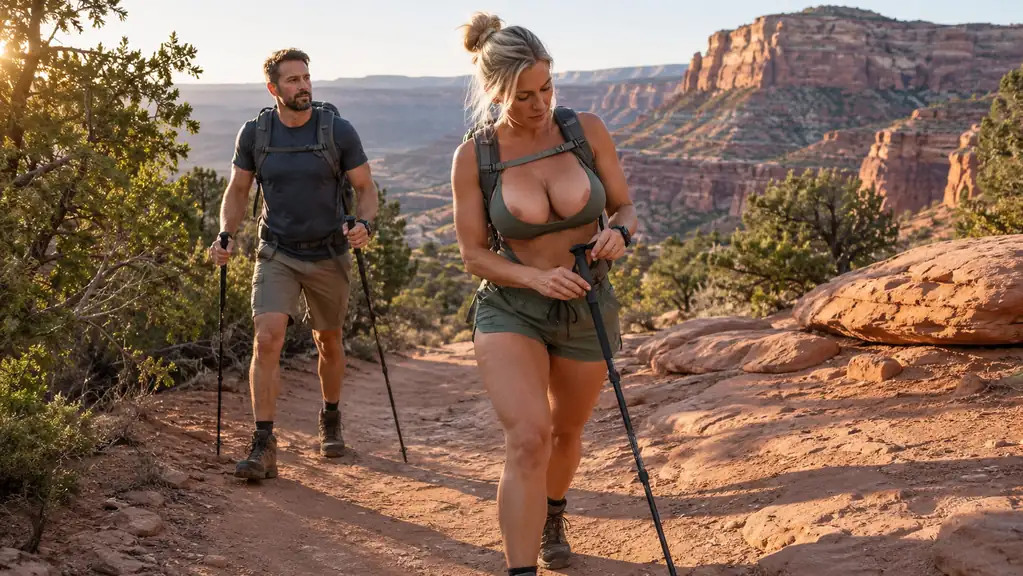
Two summers ago I stood at a trailhead in Red Rock Canyon holding a pair of borrowed trekking poles I had no idea how to use. I set them too long, planted them too wide, and spent four miles feeling like I was walking with two extra legs that had opinions of their own. The poles were not the problem. I was. It took me another season to sort out which poles were worth learning on, and the TrailBuddy Trekking Poles are the pair I ended up with. This is the honest version of that story, including the parts of the pole I do not like.
I am Marisol Reyes. I am 58, I live in Henderson, Nevada, and most of my hiking happens at Red Rock Canyon or up Mount Charleston, with one or two road trips a year to the parks in Utah and Arizona. My husband Ray comes with me on weekends. My left knee gets sore on long downhills, which is the whole reason I started carrying poles instead of just saying I would. My outings are day hikes, four to ten miles, and I do not backpack overnight. So read this as the opinion of a day hiker with a bad knee, not a mountaineer.
The Quick Verdict
Light, simple, and the easiest pole to adjust that I have used, with one-hand lever locks and a five year limited warranty. The thin strap padding and the 24.5 inch collapsed length are where you feel the compromise.
Amazon Check Today's Price →The lever lock is the whole argument for these poles
Two poles, four baskets, a carry bag, and a lock you can open with one thumb while you are still walking. Check the current price and the height range on the TrailBuddy listing before you commit.
Amazon Check Today's Price on Amazon →How I Have Used Them, and What That Actually Tests
Three hiking seasons, one pair, no replacements. That is the short version. The longer version is that this pair has been up the Calico Tanks trail more times than I can count, down the South Kaibab to Cedar Ridge at the Grand Canyon, and along the rim at Bryce on a morning so cold that Ray and I ate breakfast in the car with the heater running. I have used them on sand, on slickrock, on wet gravel, and on a mile of pavement at the end of a Zion shuttle stop when my knee had already decided it was finished for the day.
What I watch for on any pole is boring and specific. Does the lock slip under weight. Does the tip wear to a nub. Does the strap hold its shape or go soft. Does the length stay where I set it after a full day of adjusting. I keep a running note on my phone after each hike, mostly so I stop trusting my memory. The entry from the second season reads: right pole, carbide tip, dulled by maybe a sixteenth of an inch, still biting on granite. A pole fails quietly, and you do not notice it is bad until the moment you lean on it going downhill and it gives. I have leaned on this pair a lot, on purpose, to see whether it would. So far it has not.
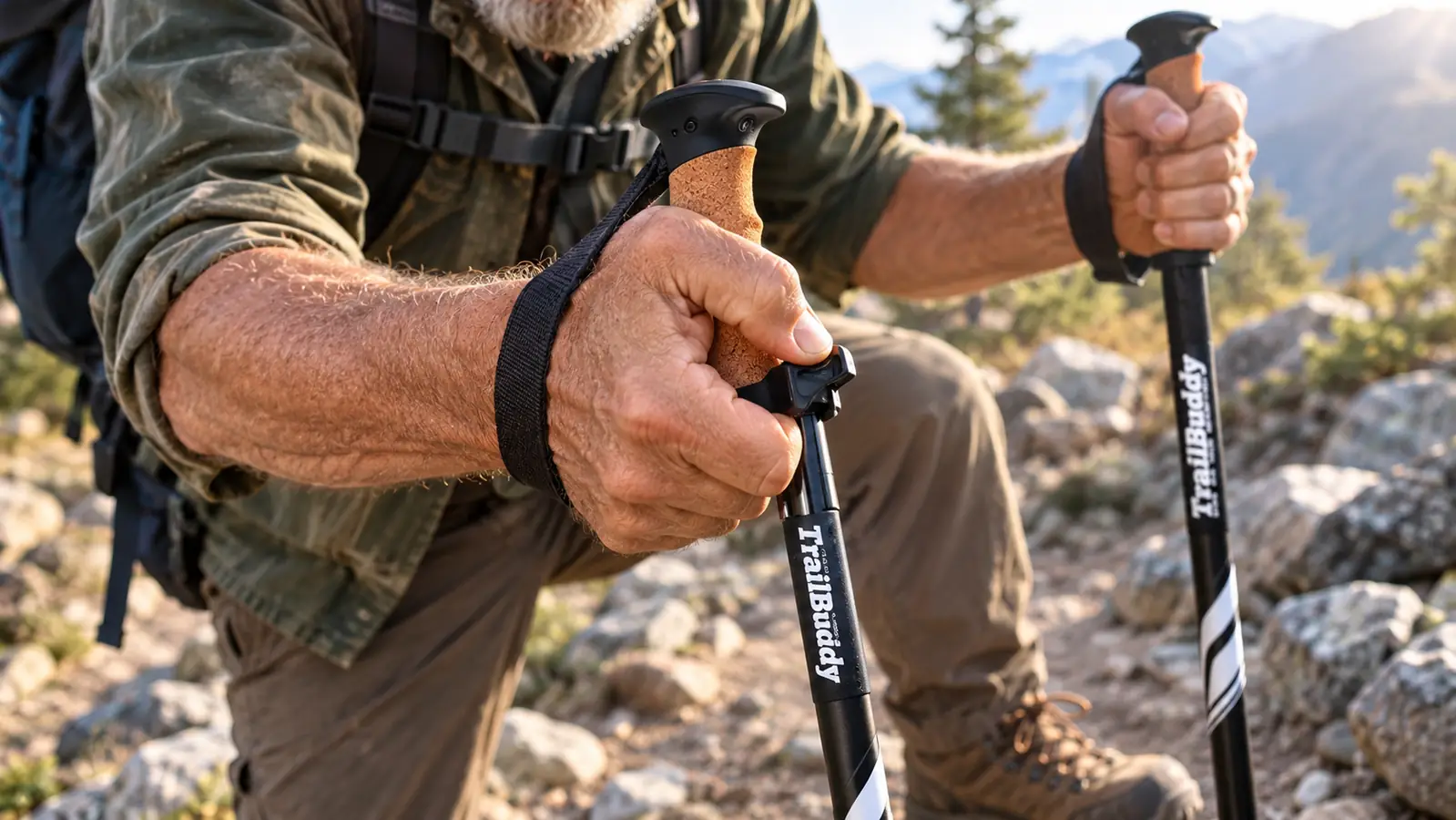
Setup is the part that sold me. The lever locks open with one hand, and the pole slides from its 54 inch maximum down to 24.5 inches fully collapsed. I set mine at around 46 inches on flat ground, drop them a notch when the trail climbs, and add a notch back for a long descent when my knee starts talking. On a trail where the grade changes every few hundred feet, that matters more than any number on the box.
Two Days That Told Me the Most
The first was the South Kaibab, descending to Cedar Ridge and back. That route runs about three miles round trip with 1,100 feet of gain, which does not sound like much until you are climbing it in the afternoon sun with a knee that has already filed a complaint. Downhill is where my knee usually makes its case, and it is also where poles either help or get in the way. I shortened them coming down, planted each one ahead of my foot, and let my arms carry some of what my knee had been carrying. I finished that hike tired but not limping, which is not something I could say before I started using poles. Nothing about the pair announced itself that day. It just did the job quietly for six miles.
The second was a spring morning on Mount Charleston with snow still in the shaded sections and mud everywhere else. I had swapped to the snow baskets at the car, and this is where the threaded tips earn their keep. The baskets stay attached in the slop instead of popping loose halfway up a drainage, which happened constantly with a borrowed pair I used years ago. I came back with wet boots and dry socks, and the poles came back with both baskets still on.
The Lever Locks Are the Real Reason These Poles Get Recommended
I spent two seasons with a borrowed pair of twist-lock poles before this, and the difference is not marketing. A twist lock needs two hands and a certain amount of patience. You loosen it, you pull, you guess, you tighten, you check, and by then Ray is twenty yards up the trail wondering where you went. Lever locks are a single motion. Open, slide, close. That is the whole interaction. I can do it without stopping, and I can do it while holding a water bottle in my other hand.
The place this really shows up is cold. On that Bryce morning my hands were stiff enough that fine motor work was a real problem, and I still adjusted both poles without pulling my gloves off. If you hike in shoulder seasons, or your hands do not love the cold, this is the feature that decides the purchase. It is also what makes these easy to hand to someone who has never used poles, which is how I ended up teaching two neighbors on a Saturday in March.
After three seasons the levers still close firmly and hold. I check them at the start of each season the way I check the straps on a pack, and I have not had one slip under my weight on a descent. The adjustment I make most often is a single notch, roughly an inch and a half of shaft, and the lever takes that change without any fiddling at all. What I have not done is take a lever apart to clean it, which the instructions may well recommend. I wipe the hinge down with a damp cloth at the end of the season and leave it at that. That is an honest report, not a promise yours will behave the same for a decade, because a pole that sits open in a hot garage collects grit in places you cannot see.
Weight, Collapsed Length, and the Number That Surprised Me
Each pole weighs 9.7 ounces, and the pair comes in at 1.2 pounds. In my hand that reads as light. I notice it most on the climb, when I am carrying a pole rather than leaning on it, and I notice it at the end of a ten mile day when my shoulders are already tired. I put the pair on the kitchen scale in June out of plain curiosity and got a hair over 1.2 pounds, which matches the listing. The number I actually care about is how they feel at mile eight, and the answer is that I forget I am holding them. Ray still owns the aluminum poles he bought in the nineties, and switching to his mid-hike is like picking up a fence post. If you are counting ounces for a multi-day trip, 1.2 pounds for the pair is reasonable but not remarkable. For day hikes it is not a number that will change anything either way.
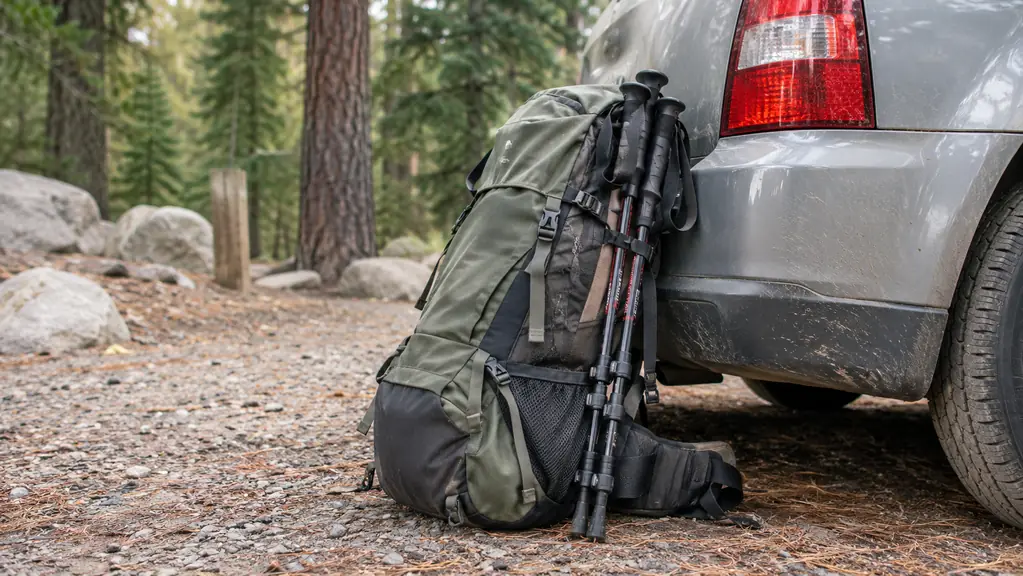
The collapsed length is where I had to adjust my expectations. Fully collapsed, each pole is 24.5 inches. That does not fit inside the daypack I carry, the one with the narrow main compartment, so the poles ride strapped to the outside on the stretches where I do not want them in my hands. In the back of the Subaru they live in the included carry bag and take up less room than a pair of boots. If you were picturing these tucked inside a small pack, measure first.
Three seasons, one pair, no replacements, and not one lever has slipped under my weight on a descent.
The Parts That Genuinely Annoyed Me
The grips are not the part of these poles I would frame on a wall. On a July morning last summer the thermometer in the car read 104 when we parked at the Red Rock loop, and by the second mile my palms were sliding enough that I stopped twice to dry them on my shirt. That is the desert more than the pole, but a grip with more texture to it would have made that morning easier. I have since started carrying a small towel in the side pocket, which solved it well enough that I stopped thinking about it. Nevada heat is unforgiving, and on a July morning my hands get damp enough that I am aware of the grip the entire way up. The padded straps help on a long climb, and I do use them the right way with my hand up through the loop, but that padding is on the thin side compared with the wider straps I have tried on friends' poles. After six or seven miles I can feel the edge of the strap against the back of my hand.
Swapping baskets is the other small irritation. The threaded tips are genuinely good, because the baskets stay on in mud and snow instead of popping off halfway up a wash. The same threading means moving from the mud baskets to the snow baskets takes a few turns, and doing that with cold hands at a trailhead is a fiddly two minutes. I have learned to decide at the car which basket the day needs and leave it alone after that.
The last thing is a preference more than a flaw. These are a straightforward aluminum pole, and on hard packed ground you feel every tap come back up your arm. I noticed it most on the paved section at the end of that Zion shuttle stop, when the trail was done and my knee was not. Plenty of hikers will never care. If you have used a pole with more softness in it and liked that feeling, you will notice the difference here.
What I Liked
- Lever locks adjust with one hand, even through gloves
- Light enough to forget on the climb at 9.7 ounces per pole
- Extends to 54 inches and collapses to 24.5 inches for the drive home
- Threaded tips keep the mud and snow baskets attached in slop
- Five year limited warranty covering defects, longer than the two pairs I owned before
Where It Falls Short
- Strap padding is thin and noticeable after six or seven miles
- 24.5 inch collapsed length will not fit inside a small daypack
- Changing baskets takes a few turns with cold hands
- You feel every tap on pavement, with no softness in the pole
What Ray Thinks, Since He Borrows Them Half the Time
Ray is 61 and comes out on weekends, and he has ended up carrying my pair often enough that his opinion counts as a second data point. He likes that he can set them once and forget them, and he has never once complained about the locks, which for Ray is close to a rave. His one note is the same as mine in reverse: he sets his longer than I set mine and finds the strap padding fine, because his hands are bigger and the strap sits differently against them. Fit is personal that way.
He also pointed out something I had stopped noticing. Because the poles collapse to 24.5 inches and not shorter, he leaves his fully extended in the car between hikes rather than breaking them down, which is fine for a day hiker driving to a trailhead and annoying if you are trying to stow them in a suitcase. That is the honest tradeoff of a pole built for trail use rather than travel.
What the Five Year Warranty Actually Gets You
The listing describes a five year limited warranty covering defects. I have not had to use it, so I cannot tell you how a claim feels from the inside, and I will not pretend otherwise. What I can tell you is that a five year term on a pole that gets leaned on is a meaningful statement of confidence, and it is a longer term than either of the pairs I owned before this one came with. That is the entire value of it to me so far: peace of mind, not a repair story.
What a limited warranty usually does not cover is wear. Tips dull, baskets crack, straps fray, and those are the parts that take the real abuse on a rocky trail. Before you buy, read the actual terms on the listing rather than trusting my summary of them, and keep your order record somewhere you can find it later. That is dull advice, but the people who end up frustrated with any pole warranty are usually the ones who cannot produce a receipt.
Who This Is For
If you are a day hiker with knees that have opinions, these are a sensible pair. The one hand locks mean you will actually adjust them instead of leaving them at a compromise height all day, and adjusting them is most of the benefit a pole offers. They suit someone who wants a light pole, a simple pole, and a warranty longer than a single season. They also suit a first time buyer who does not want to learn on something fussy. My neighbor Deb, who is 64 and walks the same trails I do, borrowed mine for one loop and ordered her own that night.
Who Should Skip It
Skip these if you need a pole that packs down small. At 24.5 inches collapsed they are not a travel pole, and if your daypack has a short main compartment or you fly carry-on only, that length is a genuine constraint. Skip them if you want softness in the pole on hard surfaces, because you will feel the taps. Skip them if you are backpacking and counting every ounce, since 1.2 pounds for the pair is honest but not featherweight. And skip them if a wide cushioned strap is what your hands need, because that is the compromise on this pair. None of that makes them bad. It makes them the wrong pole for a different hiker.
If the lever lock is what you came for, check the height range before you order
Two poles, mud and snow baskets, a carry bag, and a five year limited warranty on defects. Confirm the current price and the 54 inch maximum against your own height on the TrailBuddy listing.
Amazon Check Today's Price on Amazon →